A charcoal bedroom can feel calm and textured. Start with the light you actually use, then give the bed one pale surface and keep the route beside it clear.
3 min read
Build the look around a dark background, pale bedding and one useful lamp. Test the combination after sunset before painting or buying more furniture; keep the pieces you can still use comfortably.
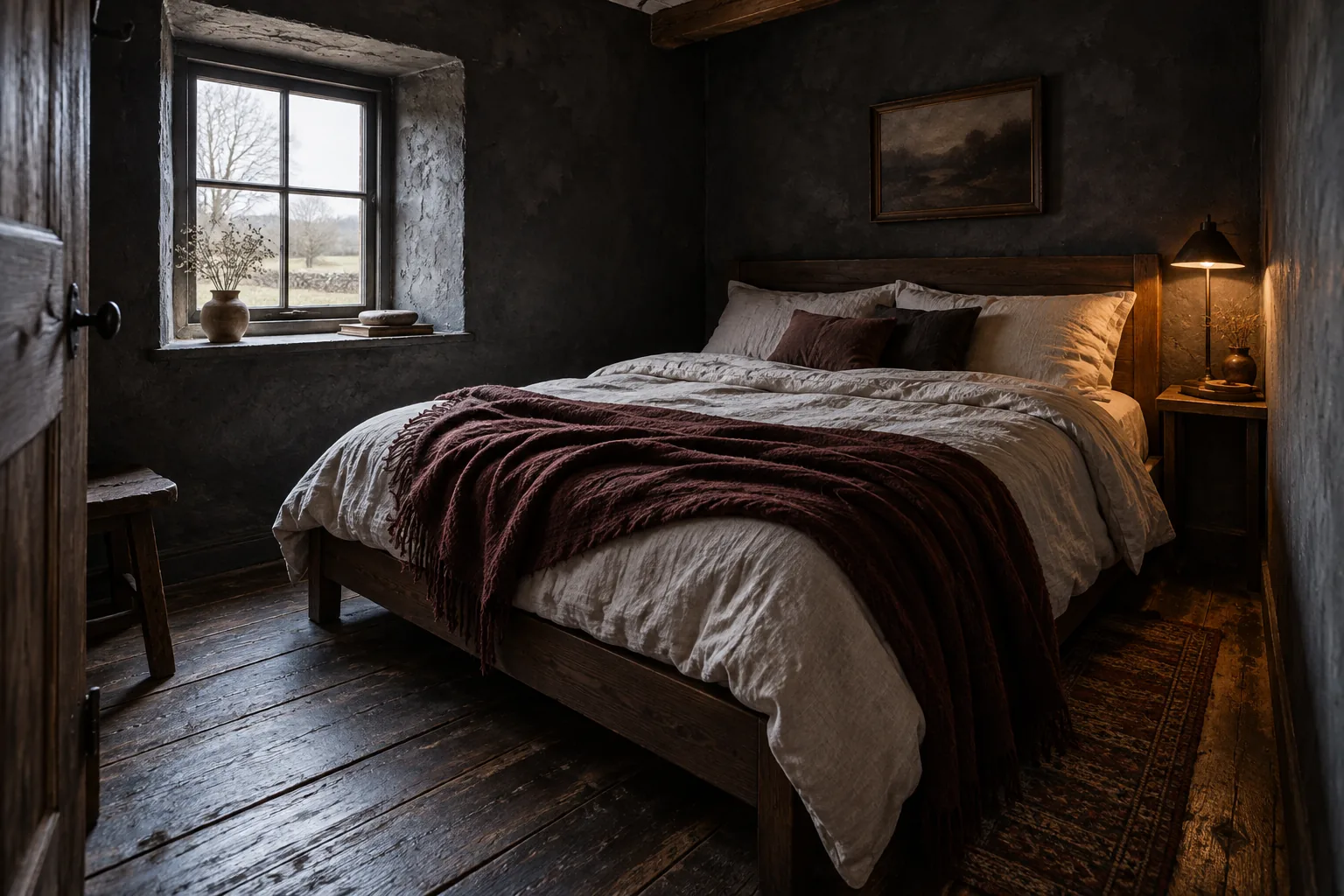 Concept image
Jump to an idea
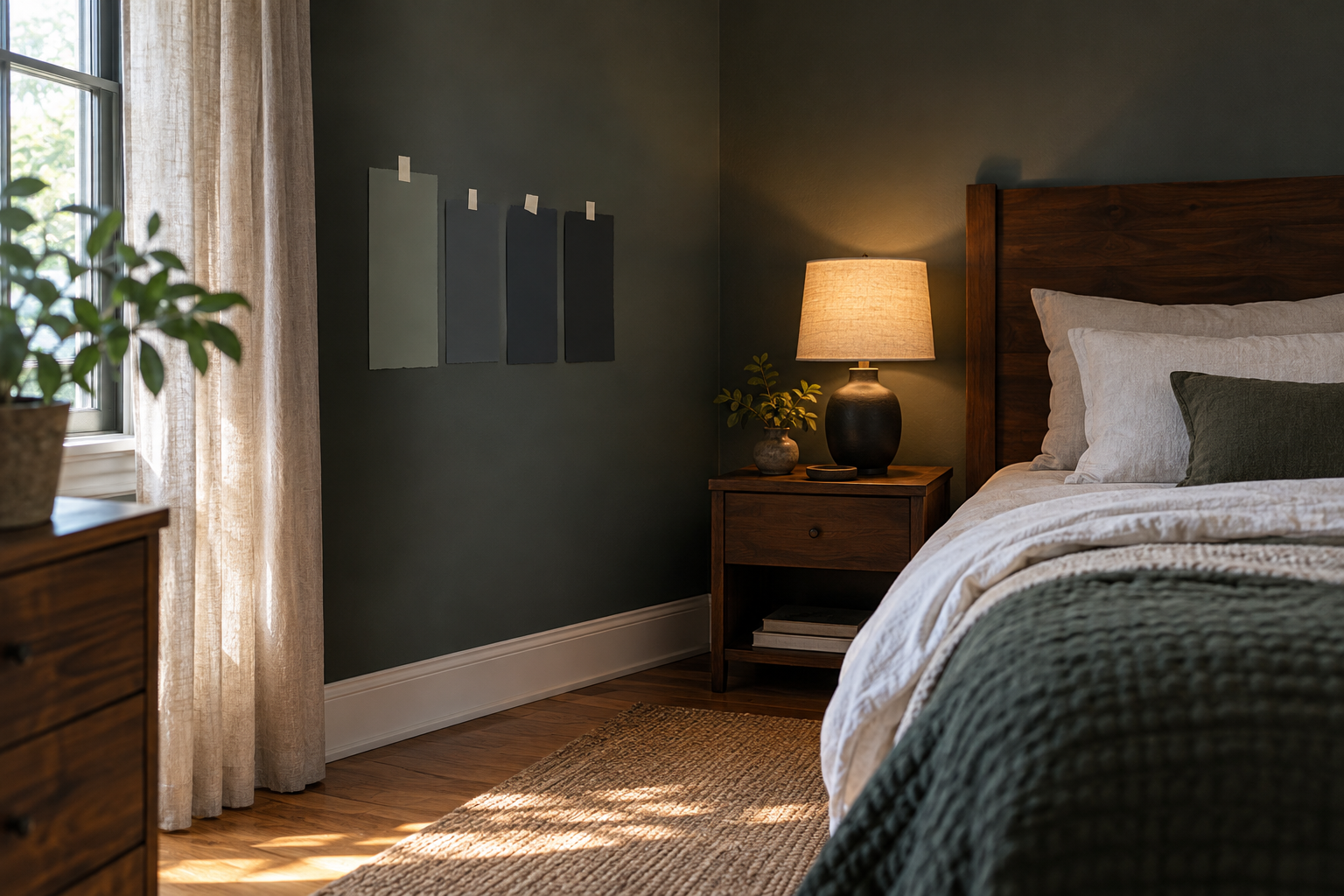
Test the wall beside what will stay
Place a paint sample beside your existing floor, headboard and bedding. Look at it in daylight and with your usual evening lamps. A color that works beside pale linen may look very different beside dark wood; judge that actual combination instead of choosing from a room photograph.
Use the darkest corner as well as the window wall. If you dislike the sample under the lamp you read by, change the color or test another lamp arrangement before committing. In a rental, check permission to paint. The concept image gives a mood, not a paint-color match.
Reference: Benjamin Moore: color samples and lighting.
Give the bed one clear contrast
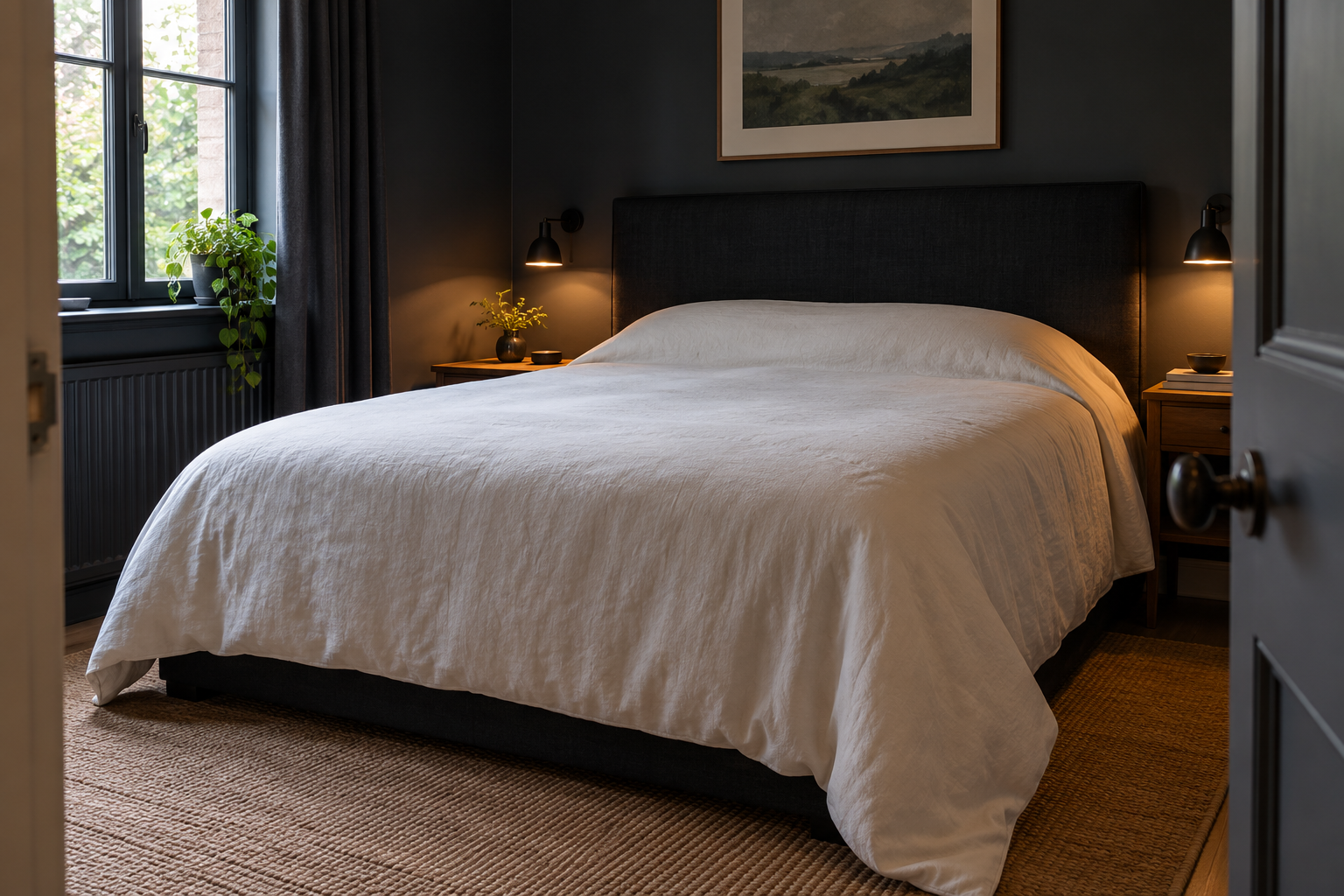
Try a pale duvet or coverlet against the dark headboard and wall. Leave most of that surface visible. If throws and cushions cover it completely, the contrast you added has disappeared; remove layers before ordering another accessory.
Make a trial with bedding you own and view it from the doorway. Decide whether the bed looks distinct enough for your taste in the evening. This is an aesthetic check, not a promise that dark paint makes a room larger or brighter.
Borrow rustic texture without its bulk
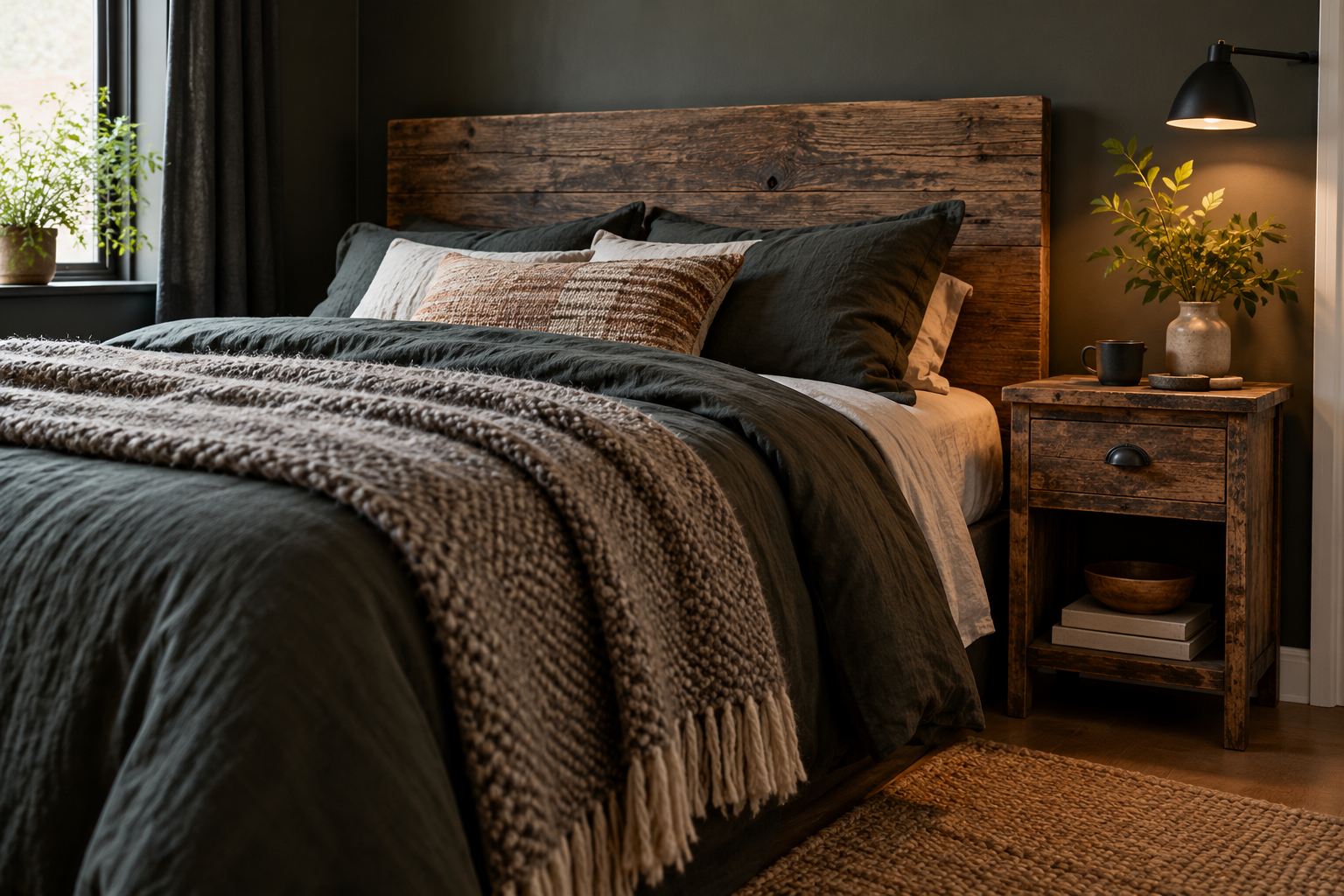
Use one visibly textured element: a wood headboard, a worn bedside table or a substantial wool throw. A deep chest, trunk and heavy bench can all suit the mood, but each takes a different part of the floor. Pick the surface you will touch or use most often.
Before keeping a bedside piece, open its drawer and get out of bed normally. If it fits the gap but blocks either movement, choose a shallower piece or use an existing nearby surface. The rustic look does not need a matching furniture set.
Check the lamp from the pillow
Sit in your normal reading position with a book. Check that the shade keeps the bright source out of your direct view and that your hand or head does not leave the page in shadow. Adjust the lamp position using its intended controls rather than relying on an attractive glow in a photograph.
Keep a practical route to the switch and keep cords away from the walking path. If one small lamp leaves the rest of your evening routine awkward, retain another light source. An atmospheric bedroom still needs to work when you put clothes away or find something.
Choose the right dark
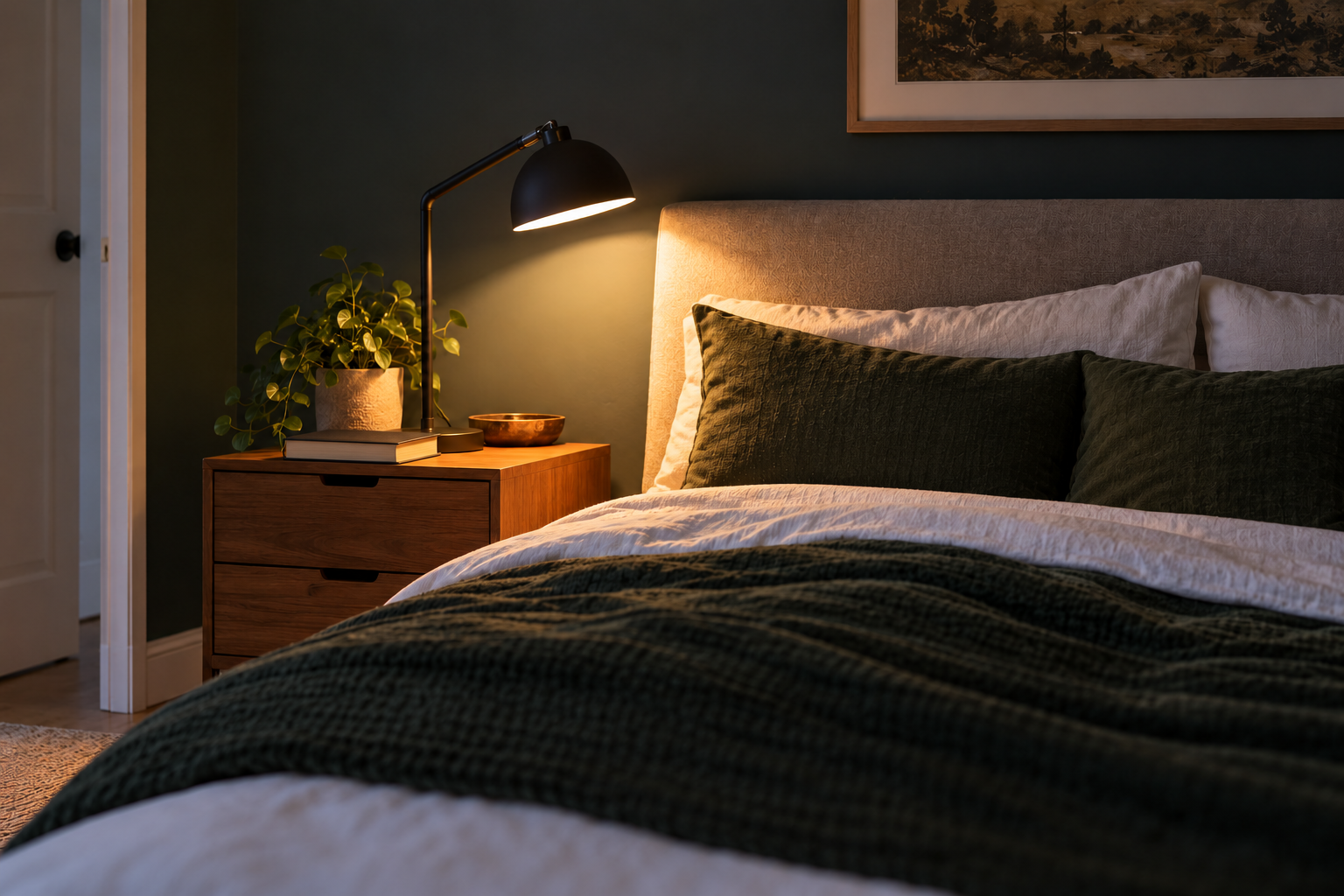
Charcoal, ink blue, deep green and dark brown all create the same cocooning effect, but they behave differently. Warm darks with a brown or red base feel cozy under warm lamps. Cool darks with a blue or green base look crisp in daylight but can feel cold in a room with little sun. Paint a large sample on the wall behind the bed and look at it at night, because that is when the room is mostly used.
Finish and ceiling
A matte finish gives dark colors depth and hides small wall flaws, but marks more easily. An eggshell finish is easier to wipe and still looks soft. You do not have to paint the ceiling dark: a warm off-white ceiling keeps the room from feeling closed in, while painting the ceiling the wall color, or a shade lighter, makes the corners disappear for a more enveloping look.
Light a dark bedroom in layers
Dark walls absorb light, so one ceiling light rarely feels enough. Use at least two lamps: one beside the bed for reading and one lower, softer light elsewhere in the room. Warm bulbs around 2700K suit dark colors in the evening. Our ideas for lighting a small bedroom with one overhead light show how to add lamps without crowding surfaces.
No permission to paint?
You can get much of the effect without paint. Dark bedding with a pale throw, floor-length dark curtains on a wide rod, or a large dark textile behind the bed all add depth. For a gentler alternative, compare the two palettes in one small bedroom, two very different moods.
Before you paint
- Test a large sample beside the bed, the floor and your bedding.
- Look at it after sunset with your own lamps.
- Decide on the ceiling color.
- Plan at least two light sources.
- Keep one pale surface, usually the bedding, so the room still has contrast.
Your quick check
- Wall sample next to existing wood and bedding: keep / change
- Evening combination: keep / change
- Bedside drawer and getting-up trial: works / blocked
- Reading light and cord route: works / adjust
AI concept image. The pictured finishes and furniture are illustrative, not identified products.