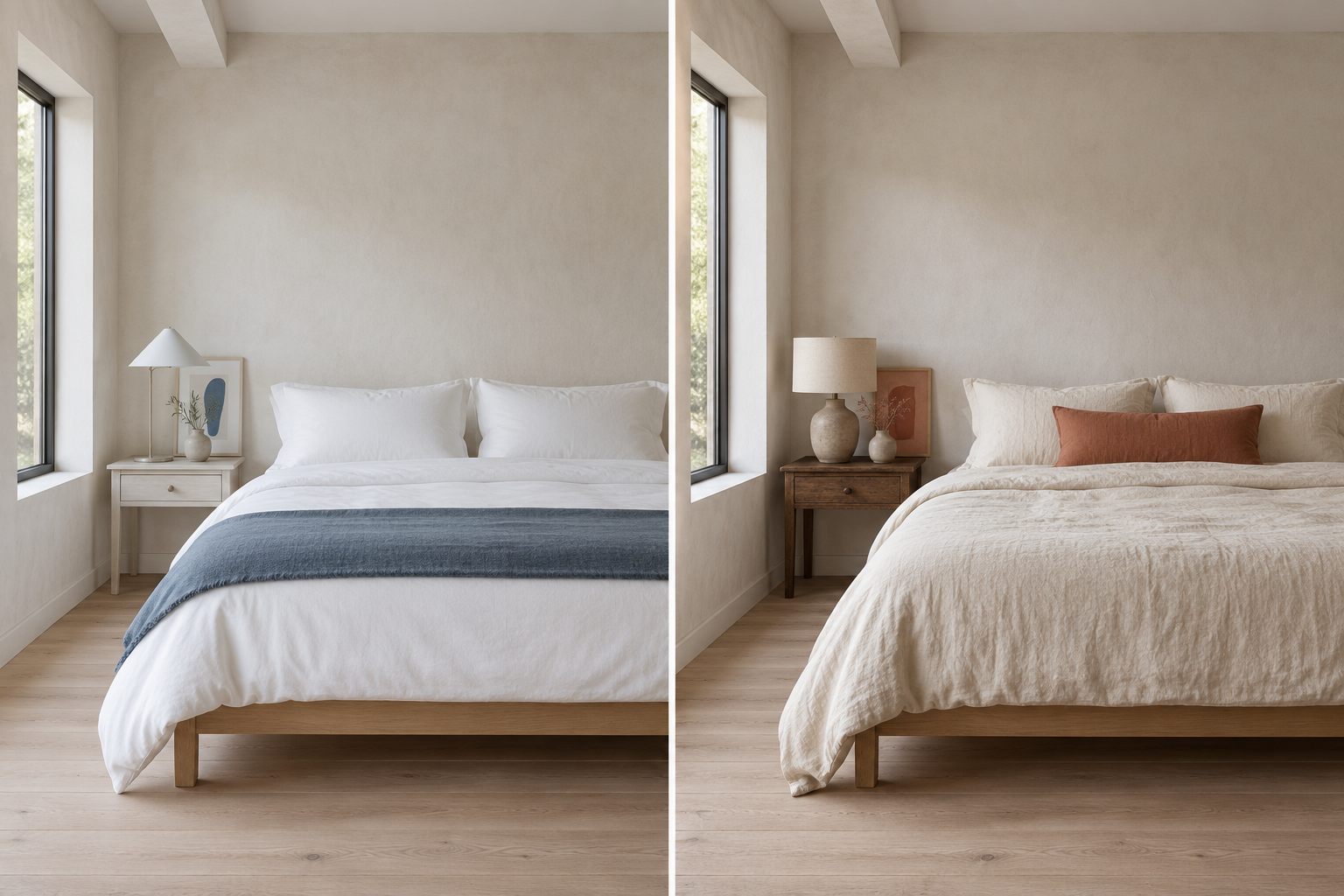
Compare crisp white and slate blue with warm ivory and rust—using the same bed placement and one bedside surface.
 Concept image
For crisp contrast, pair chalk-white cotton percale, pale painted wood and a slim lamp with a white cone shade; add a slate-blue throw and a small blue print. For warmer colors and worn finishes, choose warm-ivory linen, aged dark wood and a rounded ceramic lamp with an oatmeal drum shade; add one muted-rust lumbar pillow and rust-toned artwork.
White and blue: straight lines, one broad accent
Keep the bed against the plain wall and fold the slate-blue throw across its foot. That broad rectangle gives the color a clear place in the composition; the small bedside print repeats it without introducing another textile. Leave out extra patterned pillows so the white bedding remains the main surface.
Pale painted wood and the cone shade suit readers who prefer a spare, graphic arrangement. Style the percale with a relatively smooth finish, letting the throw’s folded edge and the lamp’s tapered outline carry the detail.
Ivory and rust: rounded shapes, a smaller accent
In the warmer recipe, let the linen’s visible creases sit alongside the aged dark wood. The rounded ceramic lamp and oatmeal drum shade repeat softer outlines. Choose this combination if you enjoy warm neutrals and furniture with a worn finish.
Place the muted-rust lumbar pillow against the ivory bedding and echo its color in the bedside artwork. Here, the accent sits near the head of the bed instead of stretching across the foot. Omit the blue throw to give the rust-and-ivory pairing its own identity.
Borrow the recipe around furniture you own
A dark bedside table can anchor the ivory-and-rust version, or remain as deliberate contrast against chalk white. You do not need matching furniture to try either look: borrow the bedding color, accent placement and lamp silhouette. Keep the bedside print small enough to leave the surface useful for your nightly essentials.