Choose by bedside space, mounting permission and where you need the light. Both options have useful trade-offs.
3 min read
Choose a table lamp if you need flexibility and have room for its base. Consider a wall lamp if the bedside surface is tight and you have permission to install it safely.
 Concept image
Jump to an idea
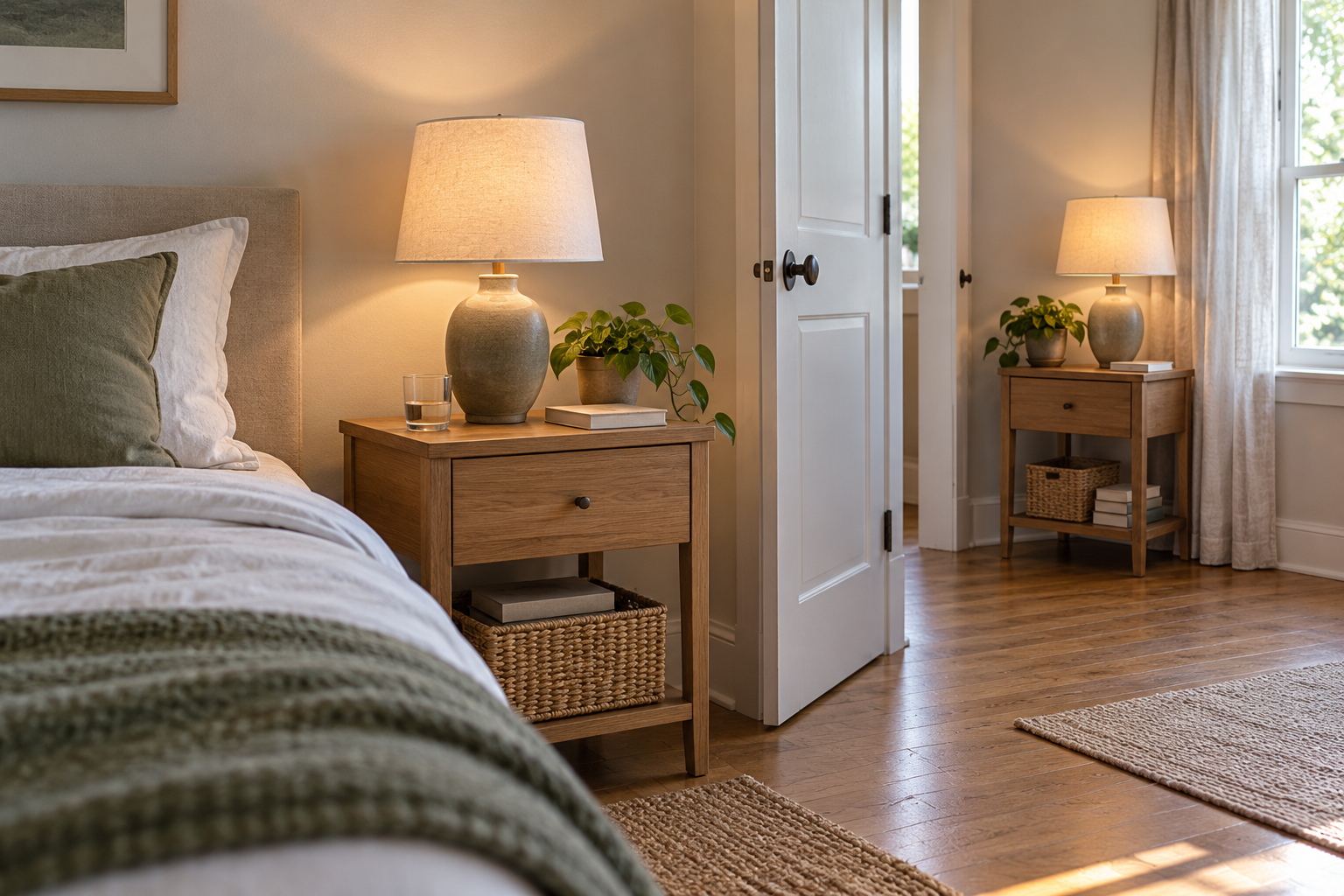
Choose a table lamp when you want to move it
A table lamp is the easier choice in a room whose layout may change. You can reposition it with the bedside table, and there is usually no fixture to attach to the wall.
Measure the base and shade, not just the table width. The shade should not overhang into your path or crowd the bed. Leave enough surface for the things you actually keep beside you.
Choose a wall lamp when the surface is tight
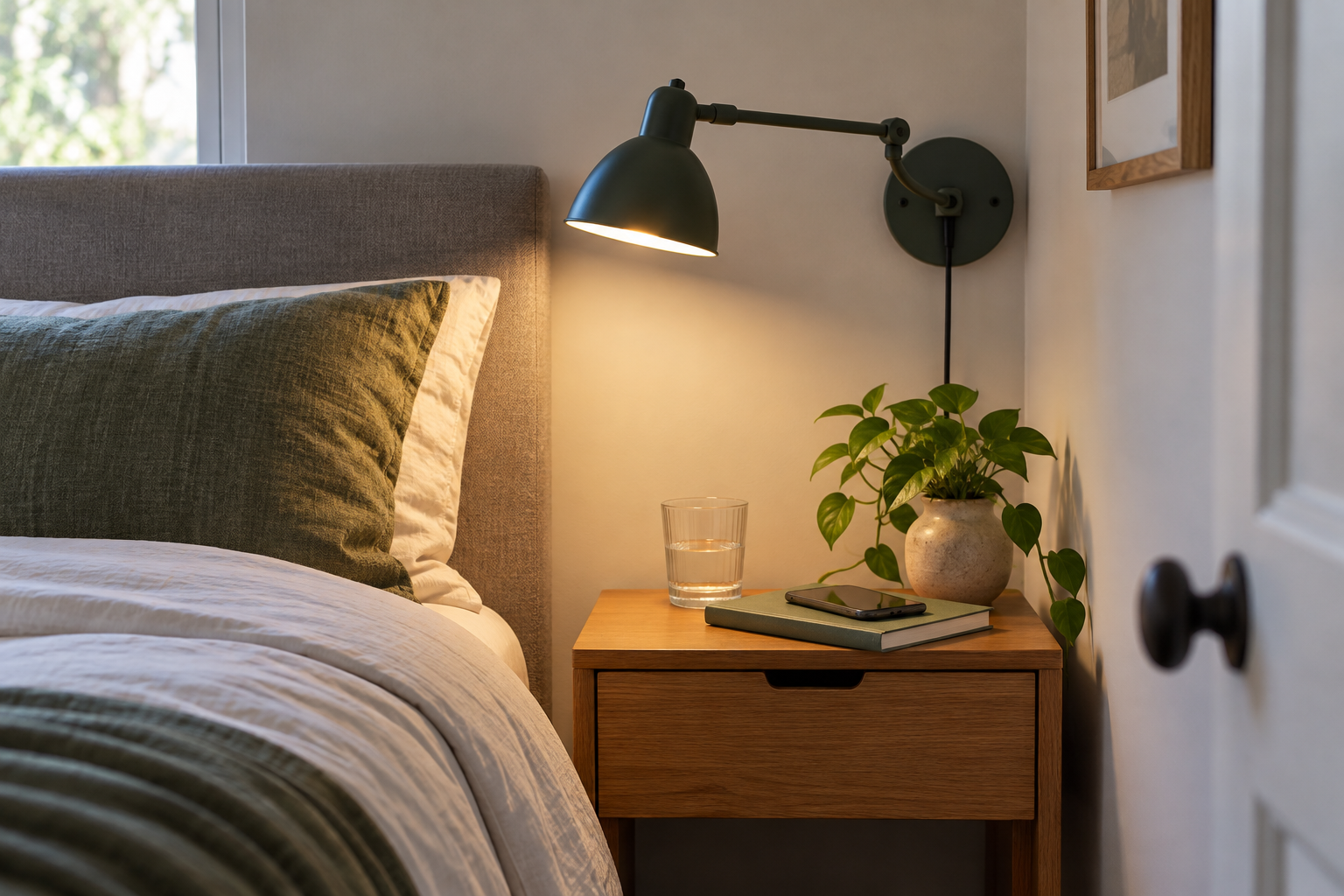
A wall-mounted lamp leaves the bedside surface available for a glass, a book or your phone. An adjustable arm can be useful when you want to direct light toward a page.
Check your lease and mounting permission first. A plug-in wall light still needs secure mounting and a safe cord route. Hardwired fixtures need an appropriate electrical installation; use a licensed professional.
Check the light from your usual position
A lamp that looks good in a room photo may feel uncomfortable when you sit up in bed. Think about whether you want light for reading, a softer evening glow, or both.
Look at the shade direction, switch location and adjustment range. Check bulb compatibility and any dimming requirements in the manufacturer information. Avoid choosing only by the finish.

Plan the outlet and cord route
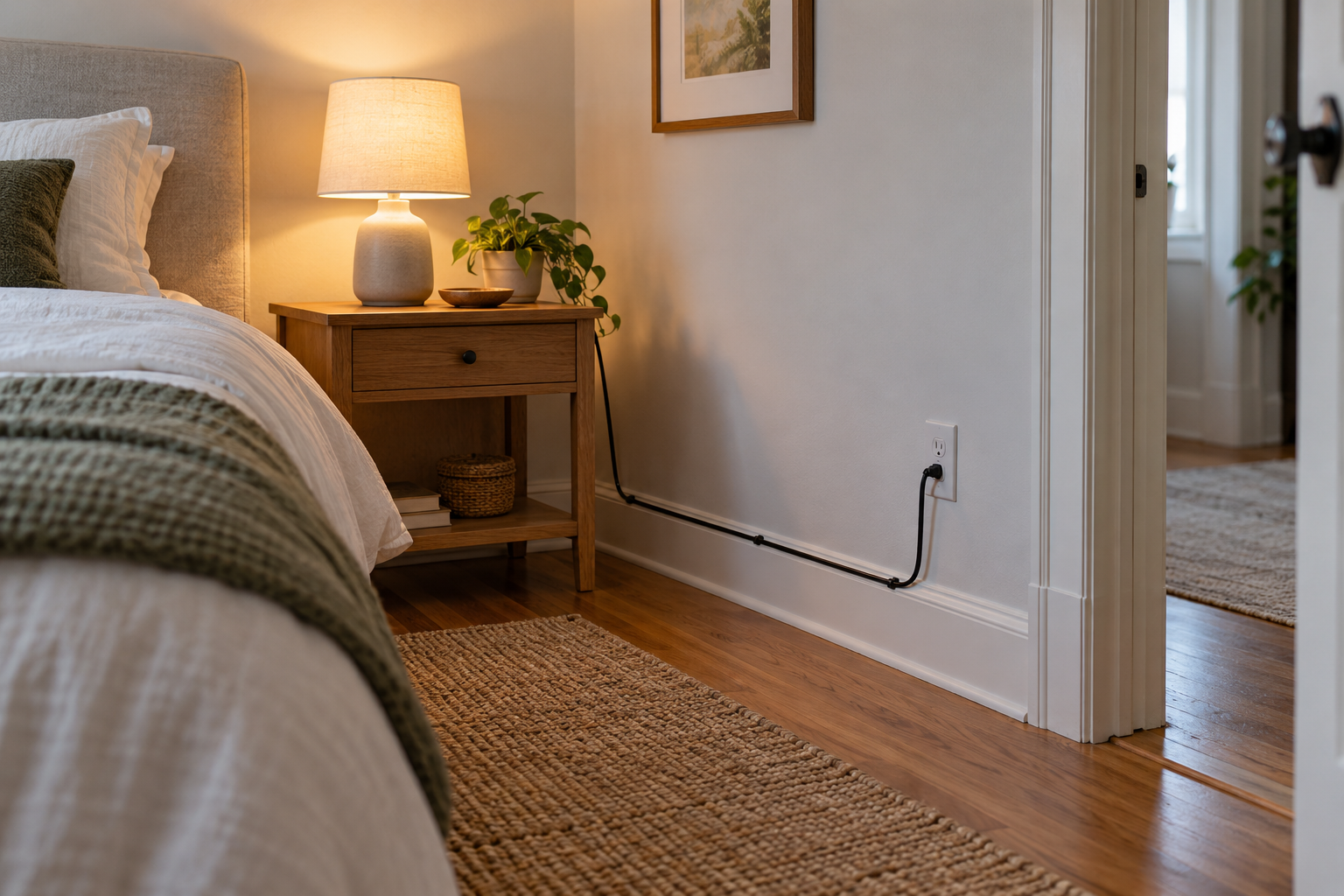
Check where the nearest suitable outlet is before choosing either lamp. A plug-in model needs a route that keeps the cord out of walkways and away from places where furniture can pinch it.
Follow the manufacturer instructions and keep the plug accessible. If reaching the outlet would mean trailing a cord across the doorway, reconsider the location rather than treating the cord as an afterthought.
Make the choice with a quick fit check
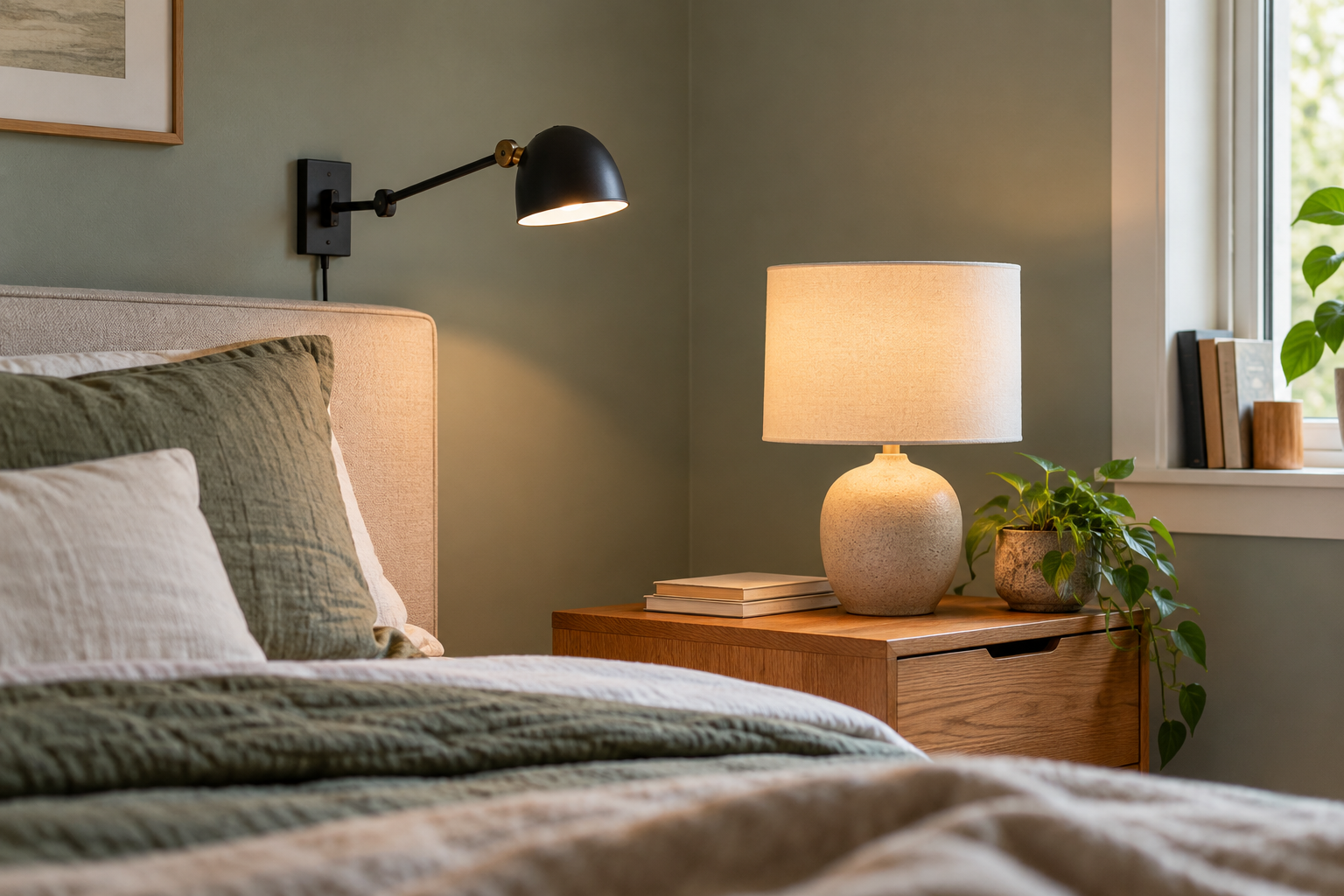
For a table lamp, mark the base footprint on your bedside surface and allow space for the shade. For a wall lamp, check the mounting location and arm reach against your normal sleeping and reading positions.
Choose the option that clears those checks with fewer compromises. If the wall position is uncertain and a table lamp fits comfortably, the movable option may suit you better.
Height rules of thumb
Whichever lamp you choose, its height decides whether reading in bed is comfortable.
- Table lamp: when you sit up in bed, the bottom of the shade should be roughly at eye or chin level. Start with a bedside table close to the height of your mattress top; our nightstand height guide has a chart by mattress height.
- Wall lamp: mount it so the light falls on the page from slightly above and to the side when you sit up, and so you will not knock it when you turn over. Hold the lamp in place, or tape a paper outline to the wall, and sit in bed before you drill.
Side by side
- Bedside surface: a table lamp takes part of it; a wall lamp leaves it free.
- Moving later: a table lamp moves with you; a wall lamp leaves holes to fill.
- Reading light: an adjustable wall lamp can be aimed precisely; a table lamp with a tall shade lights a wider area.
- Installation: a table lamp just plugs in; a plug-in wall lamp needs secure fixings and a tidy cord; a hardwired one needs an electrician.
- Rentals: a table lamp needs no permission; wall lamps usually do.
Bulbs and cords
Bulbs labelled around 2700K give warm evening light; around 800 lumens, the output of a 60-watt-equivalent LED, is a good reading level. A dimmer or a lamp with two brightness settings lets one lamp handle both reading and winding down. For a plug-in wall lamp, a paintable cord cover keeps the cable tidy; our guide to hiding cords by the bed has more options. For a whole-room plan, see lighting ideas for a small bedroom.