When a small bedroom fills up faster than you can put things away, the answer is rarely more furniture. It is storage that respects the floor you have, uses the height you overlook and keeps the room calm.
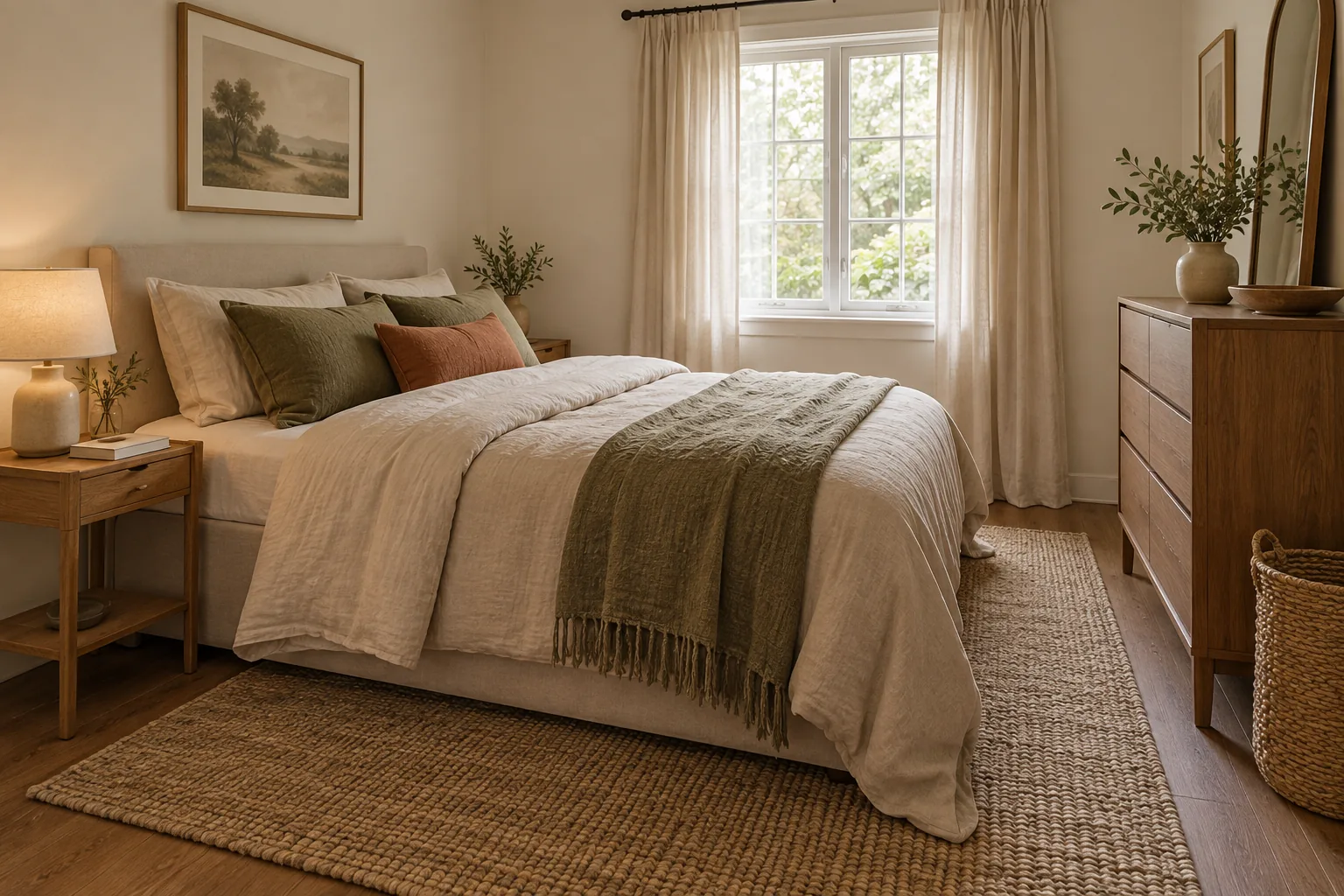 Concept image
Work from low effort to high: use under-bed space and the back of the door, then rethink the closet and dresser, then build up the walls. Measure before buying, keep walkways clear, restrain tall pieces as the manufacturer requires, and check your lease before mounting anything.
The Problem: A Room That Fills Up Faster Than You Can Put Things Away
Picture the same room on a quiet Sunday morning. Pale light crosses a bed made with linen the color of oatmeal. Beside it sits a slim oak shelf holding a lamp and one book. Along the wall, a narrow dresser stands with its drawers closed, and a lidded woven basket waits at its foot. Nothing is on the chair, because nothing needs to be.
By Wednesday, many tiny bedrooms look different. The problem is precise: too many belongings on too little floor, so the overflow lands on the nearest flat surface. Sweaters drape over the chair, bags collect by the door and the dresser top becomes a drop zone. The room feels smaller because every surface is doing a job it was not meant for.
The fix is not one clever piece. It is giving each category of belongings a home that is close, closed where possible and out of the walking path.
Why Tiny Bedrooms Run Out of Storage
The bed is the first culprit. A full or queen mattress claims much of the floor, and what remains is often a narrow ring of walkway. Add a small closet, or none at all, and clothing has nowhere obvious to go.
The second cause is lost height. In many small rooms the wall above the dresser, the door and the head of the bed stays empty while everything crowds the floor below.
The third is storage that fights the room. A dresser placed so its drawers hit the bed, or a shelf that pinches a walkway, creates a new problem while solving an old one. Storage in a small room has to be judged by how the room moves, not only by how much it holds.
- Sketch the room on paper with the bed, door swing and window marked before choosing any piece.
- For one week, note which surfaces collect clutter; those spots show which belongings need a home.
Low Effort: Under the Bed, Behind the Door and Beside the Bed
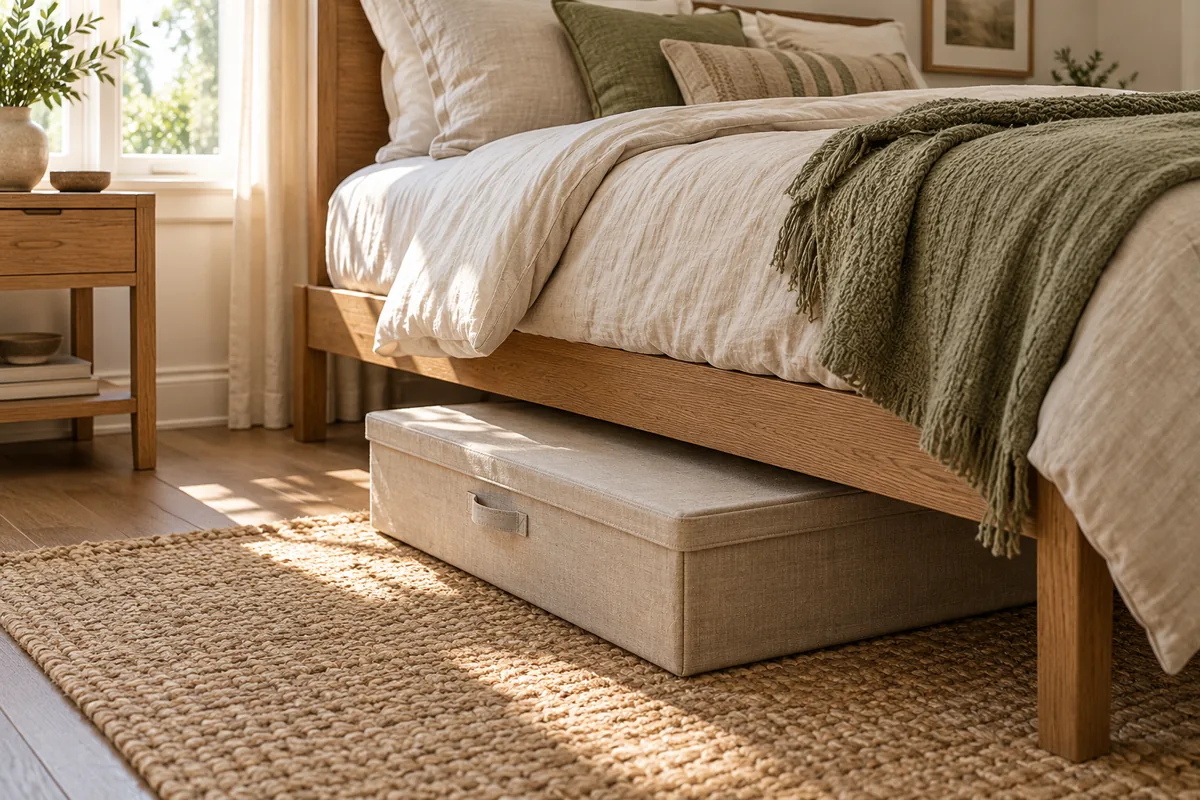
Start beneath the mattress. Clearance varies widely from one frame to the next, so measure from the floor to the lowest part of your own frame before buying anything. Low-profile lidded containers suit off-season bedding, shoes and folded clothing, and lids keep dust out. Wheels or handles make a container something you will actually pull out.
If you want more height, bed risers can help, but the rating must cover the full supported load: the frame, mattress and bedding, plus everyone who sleeps or sits on the bed. Choose risers rated with margin above that total, and follow the manufacturer's instructions for placement and use.
The back of the door is the next quiet gain. Over-the-door hooks or pockets hold robes, scarves, bags or small items without tools. Check that the hooks fit the door's thickness and that the door still closes fully.
Beside the bed, swap a bulky nightstand for a slim shelf, a small stool or a narrow table with a drawer. You need room for a lamp, a few essentials and a surface near the height of the mattress top.
- Buy one container first and test it under the frame before committing to a set.
- Hang a loaded door organizer and swing the door open and shut to check for rubbing on the frame or wall.
- Leave roughly 24 to 30 inches of walkway on at least one side of the bed when the room allows.
Medium Effort: Rethinking the Closet and the Dresser Zone
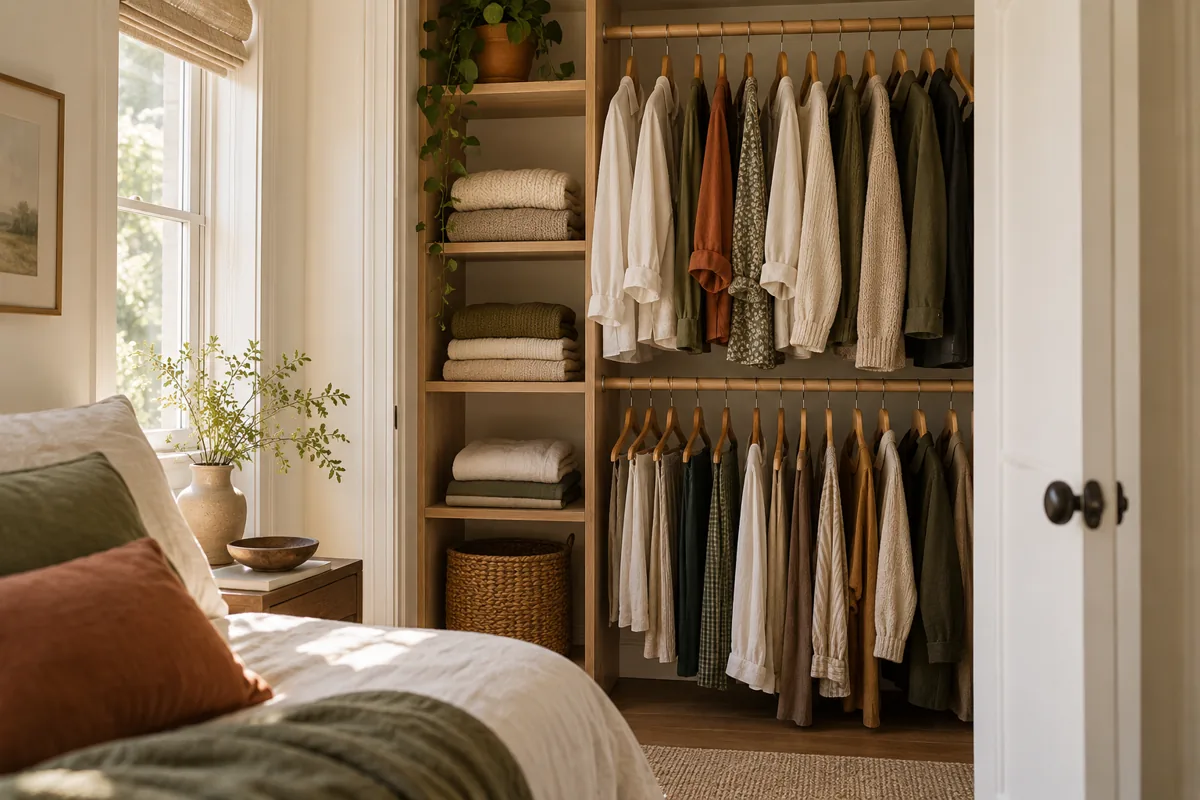
A small closet can waste its height. A second rod or a shelf divider can increase usable space, especially for shorter garments like shirts and folded trousers. Look for adjustable, tool-free or minimal-install organizers that fit your closet width and state a weight rating suited to clothing. Slim hangers save rod length.
With no closet at all, a narrow tall dresser can carry much of the load. Choose depth carefully so the walkway stays clear. Drawers need room to pull out, and that distance depends on the drawer depth, so measure the drawers and the floor space in front of them, including any bed or door in the way.
Any dresser or tall storage piece should come with anti-tip hardware and be restrained as the manufacturer instructs. If that means drilling into a wall, check your lease first.
- Measure closet width and rod height before buying any organizer.
- Pull a drawer fully out, measure how far it travels, and mark that distance on the floor with tape.
- Hang daily wear at arm height and move seasonal clothing to the back of the closet or under the bed.
Higher Effort: Building Up the Walls and Corners
Wall height is often an underused space in a small bedroom, but tall and leaning units need care. Bookcases, ladder shelves and tall narrow cabinets can tip, so follow the manufacturer's instructions for the restraints or anchors they require. Testing stability by loading the bottom shelf is not a substitute. If restraining a piece means drilling, or if a tension-mounted unit presses on walls or the ceiling, check your lease first. If you cannot restrain a tall piece, choose a lower one.
For wall-mounted shelves and ledges, check the lease, then use the hardware the manufacturer specifies for your wall type and the weight you plan to hold. Place them where they serve a task: a shallow ledge at the height of the mattress top beside the bed, or a shelf above the dresser where you already stand. Choose a narrow depth so heads and shoulders stay clear, and keep them out of door swings.
Corners can hold a tall narrow unit, restrained as the manufacturer requires. Keep heavier items low and avoid heavy objects on high shelves above the bed.
Do not block windows, exits, heating or electrical equipment with storage, and keep outlets and panels accessible. Any change to built-in or hardwired lighting or outlets should follow manufacturer instructions and use a licensed professional.
- Check the shelf's stated weight capacity against your heaviest planned load before you buy.
- Mark the planned footprint of a corner unit on the floor with tape and walk the room for a day.
- Hold a tape measure at sitting height on the bed to see where a shelf edge would meet your head.
Making Storage Look Like Part of the Room
Closed storage tends to look calmer than open shelving in a small room, because it hides the visual noise of many small objects. A few edited open items, such as a ceramic lamp, a stack of two books or a small plant, bring back personality.
Keep bins and baskets within one palette so they read as intentional. Woven or fabric baskets with structured sides add natural texture and warmth, and handles make them easy to move. Furniture with visible legs shows floor beneath it, which can make the room feel more open.
Let the storage borrow from the walls. A dresser and shelf finished close to the wall color recede, while a single warm wood piece can become the room's quiet anchor.
Common Mistakes That Make Small Bedrooms Feel Smaller
Oversized furniture is a familiar error: a wide dresser or deep bookcase that steals the walkway. Blocked paths come next, and a main route much narrower than about 36 inches can feel awkward.
Overfilled open shelves add visual clutter, and unrestrained tall pieces are a real tipping risk. Finally, treating the lease as an afterthought can leave you with holes you did not plan for. Check the lease before mounting or anchoring anything.
- Do a walk-through with your arms full of laundry to test whether paths feel usable.
What to look for
The pieces that make this look work, and what to check before you choose.
- Low-profile lidded under-bed bins — Neutral fabric or rigid boxes in one calm tone slip out of sight beneath a bed skirt or frame. Look for: Height fits the clearance you measured under the frame; Sturdy lid to keep out dust; Wheels or handles for easy pulling; Breathable or rigid material suited to bedding or shoes.
- Narrow tall dresser — A slim oak or painted piece with visible legs keeps the floor feeling open. Look for: Depth small enough to keep the walkway clear; Drawer travel that fits your measured floor space; Anti-tip hardware included; Sturdy joinery and smooth glides.
- Narrow shelving and ledges — A soft wood or matte finish suits a calm palette, whether the unit stands, leans or mounts. Look for: Manufacturer restraint or mounting instructions you can follow in your home; Stated weight capacity; Narrow depth; Finish that suits your palette.
- Closet rod and shelf organizer — An adjustable, quiet-toned system paired with slim matching hangers keeps a small closet orderly. Look for: Adjustable and tool-free or minimal-install; Fits your closet width; Rated for clothing weight; Slim hangers to save space.
- Over-the-door hooks or pockets — Simple hooks in a finish close to the door color feel like part of the room. Look for: Fits door thickness; Door still closes fully; Padded or coated hooks to protect the door; Weight rating stated.
- Woven or fabric storage baskets — Natural texture softens hard edges and adds warmth to shelves and dresser tops. Look for: Fits shelf or cube dimensions; Structured sides to hold shape; Natural texture that adds warmth; Handles for easy carrying.
- Slim bedside table or shelf — A narrow piece at mattress height holds a lamp and one or two essentials. Look for: Narrow footprint; Room for a lamp and a few essentials; Drawer or shelf for hidden storage; Height near the mattress top.
Common questions
How much space should I leave around the bed?
Aim for roughly 24 to 30 inches of walkway on at least one side of the bed, and about 36 inches in main paths when the room allows.
What can I store under the bed?
Off-season bedding, shoes and folded clothing suit lidded, low-profile containers. Clearance differs from frame to frame, so measure yours before buying.
Do I need to restrain a tall dresser or bookcase?
Yes. Tall or narrow furniture should be restrained using the hardware and instructions the manufacturer provides. If that means drilling, check your lease first.
Which storage ideas suit a rental?
Under-bed containers, over-the-door hooks and closet organizers with minimal installation are good starting points. Check your lease before mounting anything to a wall, including restraints for tall furniture.