No bedroom closet? Give hanging clothes an open rail, folded pieces a shelf basket, and everyday outfits a place you can reach. Then choose whether to display or conceal the arrangement.
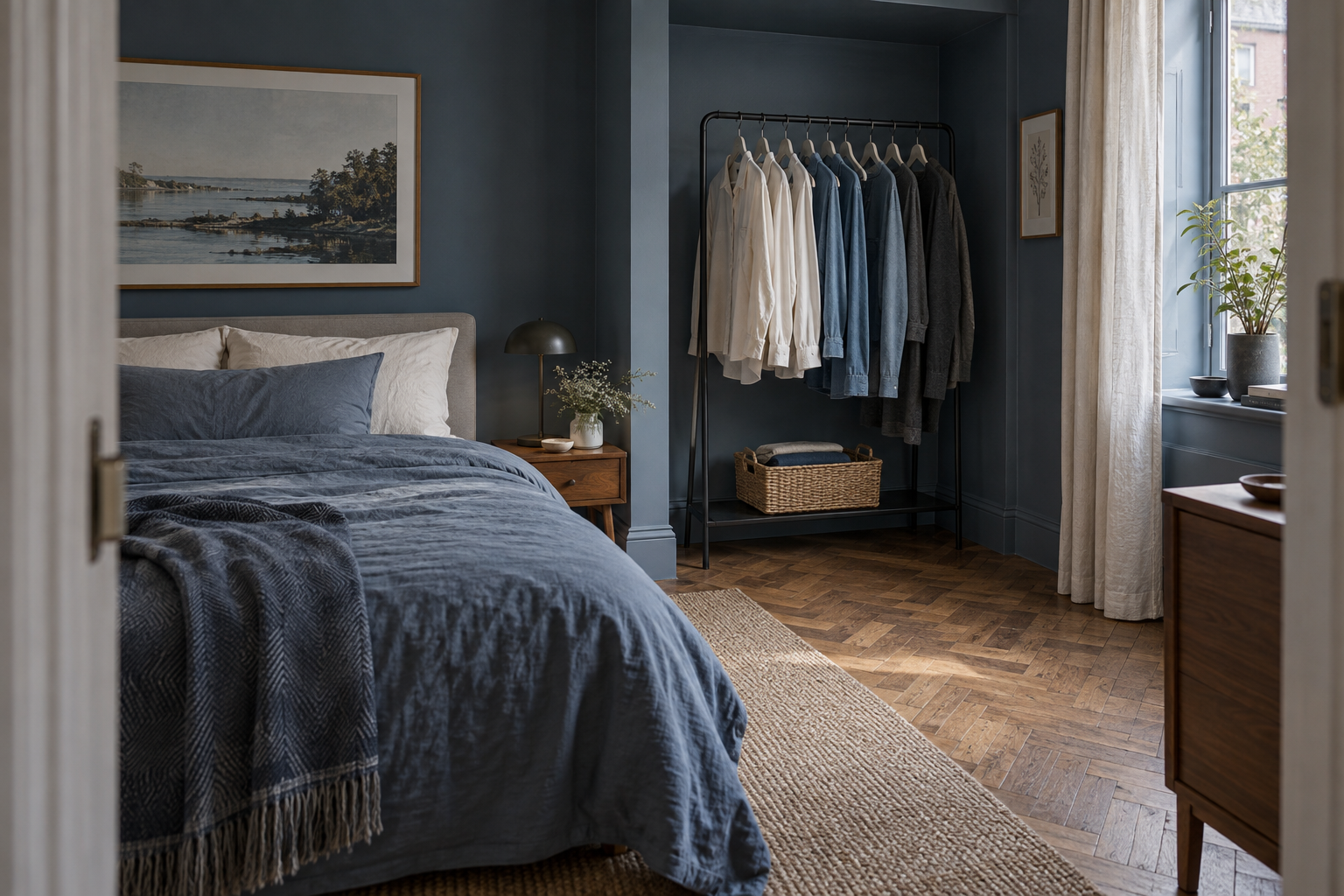 Concept image
When the bedroom has no closet, plan the rail as the main home for hanging clothes. First check whether your hanging wardrobe fits, then assign folded clothes, underwear and shoes their own space; one shelf basket may hold only part of that collection. Measure before arranging colors or choosing a curtain. The illustrated slate-blue room suggests ivory shirts, denim and charcoal layers, but the layout needs to work with the clothes you actually own.
Repeat the hanger curves; let the clothes supply the color
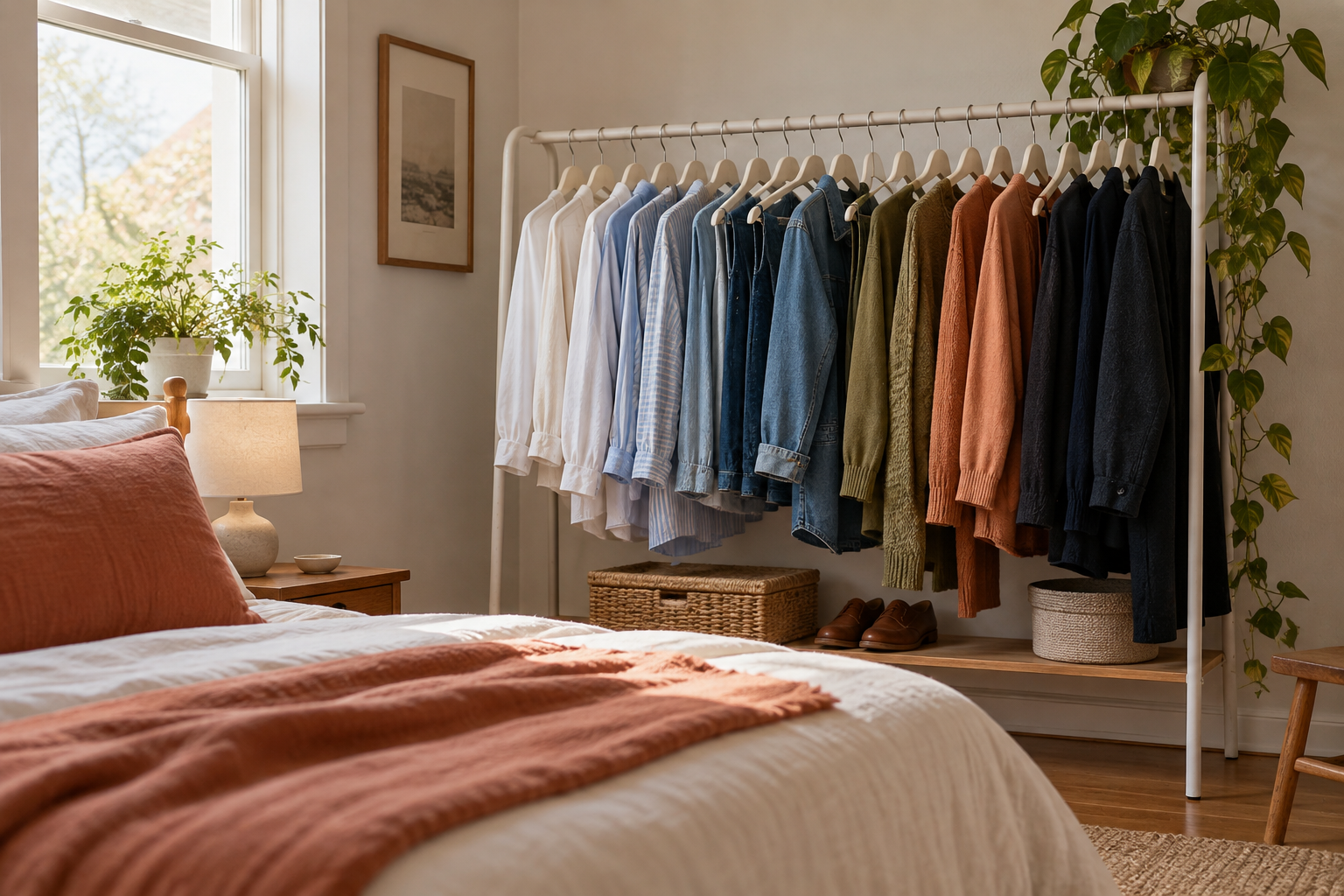
Matching slim ivory hangers give shirts, denim and darker layers one repeating outline. Group those garments into neighboring sections, then repeat a color you already wear in the bedding or a nearby cushion. The clothes become part of the palette instead of competing with it.
Use this as a way to arrange your real wardrobe, not a reason to replace it with beige clothes. A colorful collection can still look deliberate when similar colors or garment types sit together. Keep the pieces you use most in the easiest section to reach.
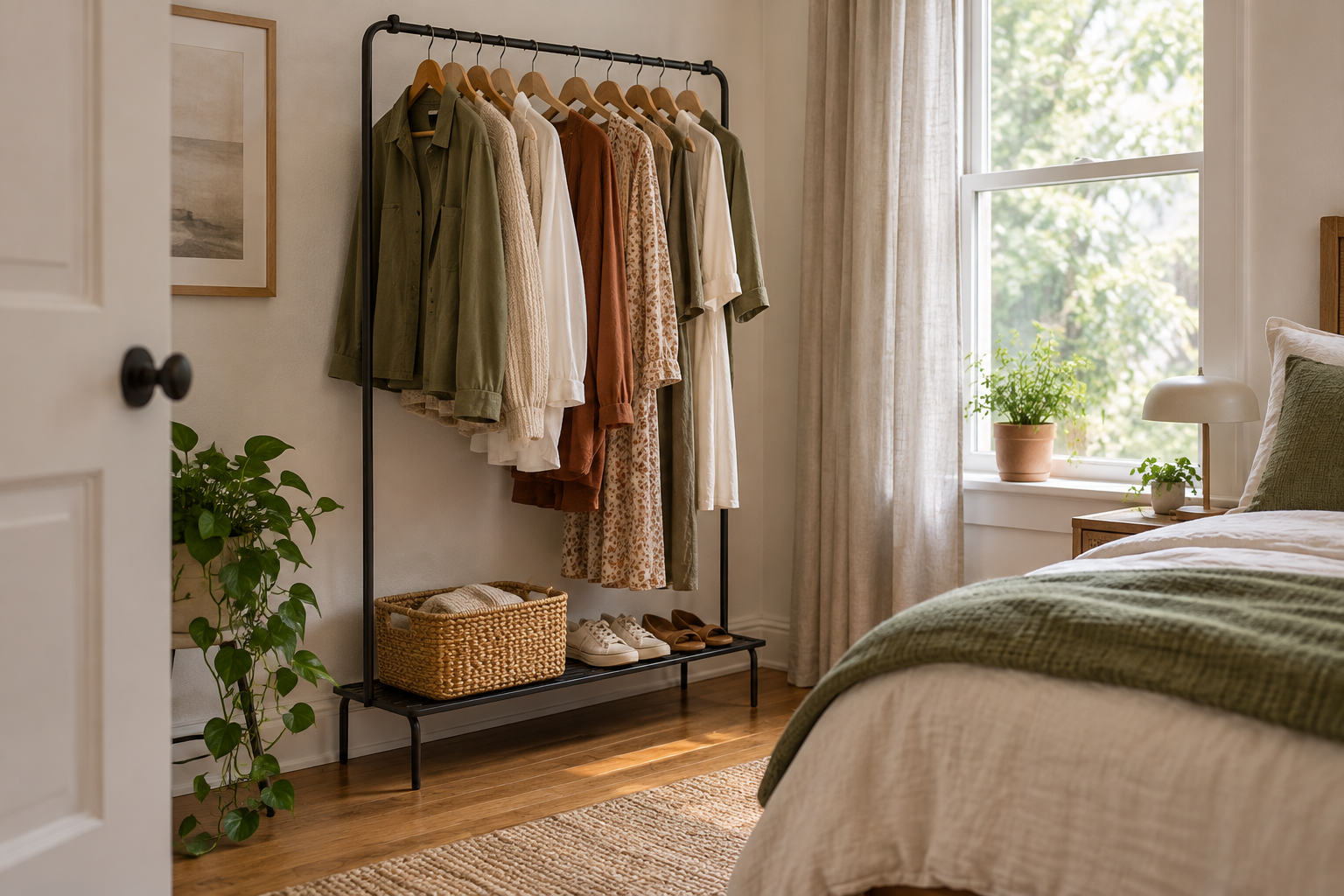
Choose a frame that recedes behind the clothes
The illustrated black metal frame has a narrow outline that leaves the hanging clothes as the main detail. Its lower shelf holds a woven basket and footwear beneath the garments, keeping those items off the floor. This is a concept illustration, not a photograph of a specific product.
Before choosing it, compare the listed footprint with your room and the usable hanging space with your longest garments. A basket belongs on the shelf only if it leaves room for the clothes above and can be pulled out comfortably. Follow the rack’s assembly and stability instructions.
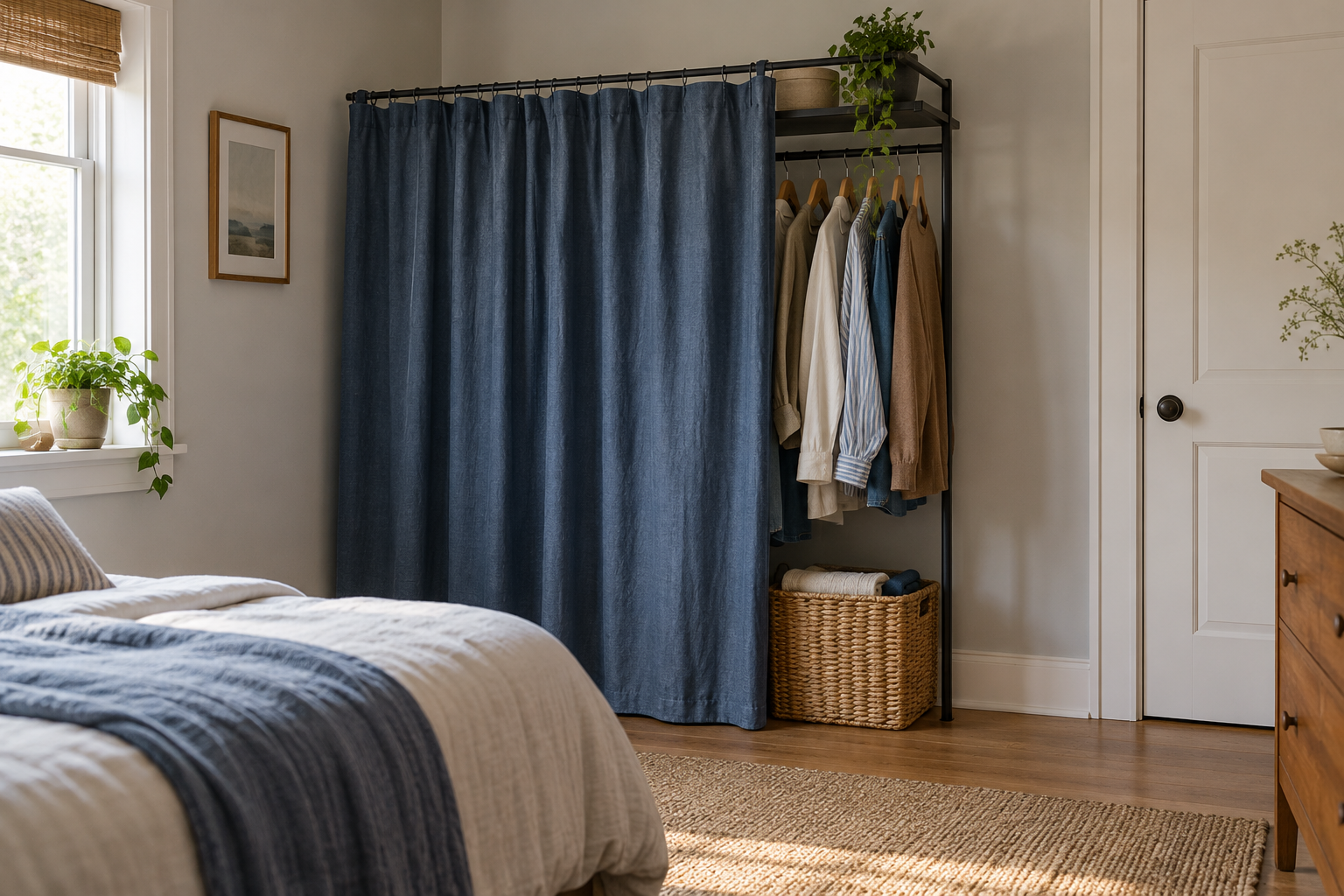
Give the small pieces one woven home—or conceal the rail
One woven basket beneath the rail can hold folded pieces and smaller items while introducing a warm material beside the cool wall and black frame. Choose its size around the shelf, rather than buying several matching baskets first.
If you prefer the clothes out of sight, try a plain slate-blue curtain or freestanding screen in front of the arrangement. You can keep the same hanger grouping and basket behind it. Leave clothing access and the walkway clear, and position the open or concealed setup away from strong sun.
Measure before you choose a rail
An open rail only looks calm if it fits what you own. Three measurements decide most of it:
- Height: measure your longest garment on its hanger, from the top of the hook to the hem, and add a few inches so it does not touch the floor or the shelf below. Shirts and folded trousers need far less drop than long dresses and coats.
- Depth: most adult hangers are around 17 inches wide, so clothes stick out roughly 9 inches either side of the bar. Allow about 20 to 24 inches of depth for the whole arrangement.
- Length: compare the rack’s usable bar length with the space your clothes occupy while hanging on a safely supported rail. Include bulky jackets and leave room to slide hangers and remove garments. A tightly compressed row is not a usable capacity estimate. Check the rack’s stated load limit as well: enough bar length does not guarantee it can support the collection.
Find the right spot in the room
Place the rail where you can reach it without walking around the bed, and keep about 30 inches of clear floor in front of it so you can stand and choose. A wall away from the window protects colors from fading in strong sun. Avoid putting it right next to a radiator or heater, and keep clothes away from damp outside walls.
Keep an open rail tidy
- Hang only the current season. Fold the rest into an under-bed box; our guide to under-bed storage shows how to check the clearance.
- One color of hanger. Matching slim hangers save space and make the row look intentional.
- Long to short. Arrange garments from longest to shortest, which leaves space below the shorter end for the basket or shoes.
- A dust cover or curtain for pieces you wear rarely, so they stay clean on an open rail.
If you need more storage than one rail
Before committing to one rail, account for everything that will not hang: folded knits, underwear, shoes, bags and off-season clothes. Assign each category an actual drawer, shelf or container; do not count the same basket as space for several full categories. Our small-bedroom storage without a new wardrobe guide focuses on distributing belongings around existing storage, with basket, drawer and under-bed ideas you can adapt here. The back of the door can stage the next outfit, but it does not replace capacity for the rest of your clothes.
Choose your starting point: Check the rack footprint and your longest hanging garments, arrange the clothes you actually own, and size the basket for the shelf. Keep the clothing access and walkway clear whether the rail is open or concealed.