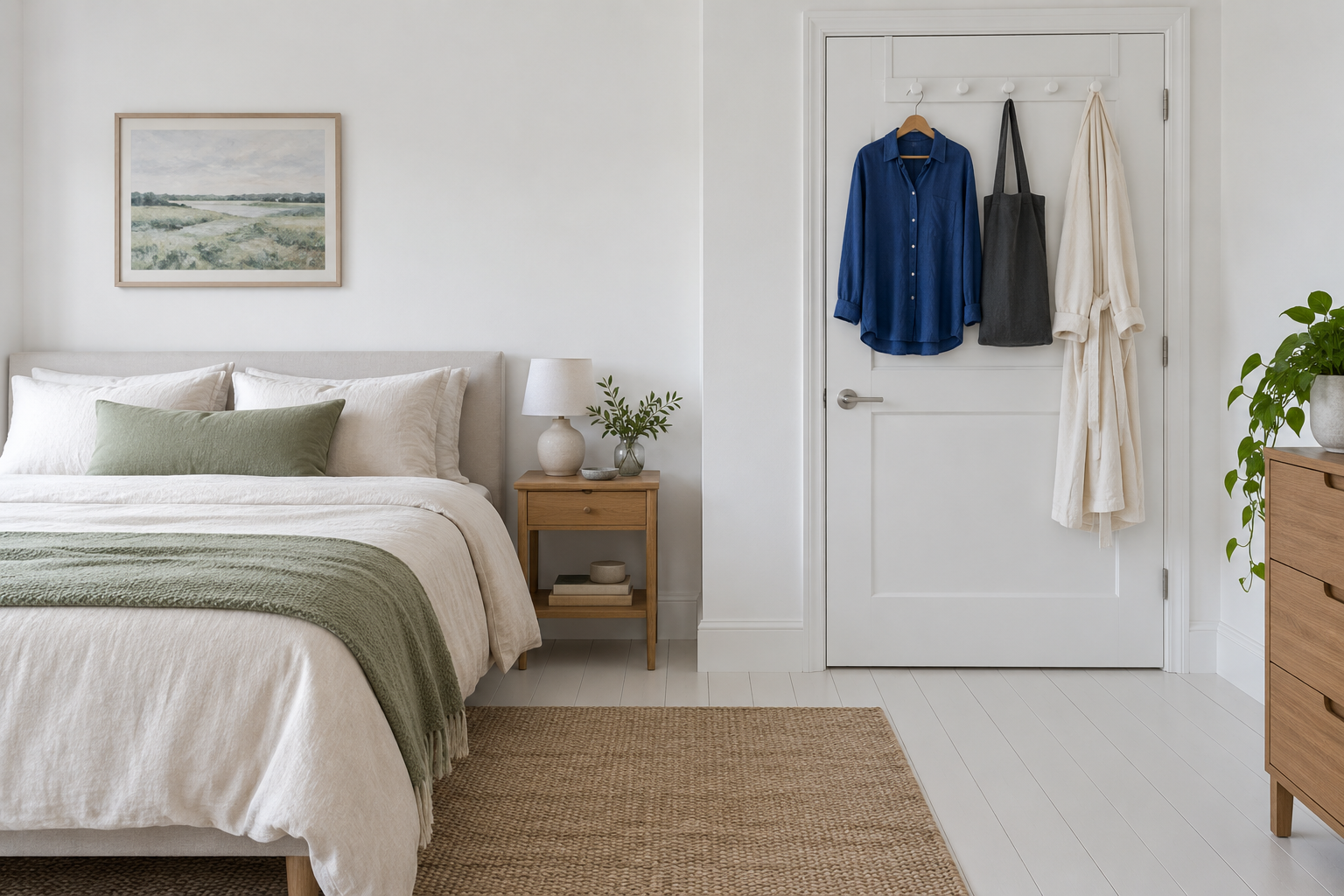
Give tomorrow's clothes a deliberate place: one outfit hanger, a slim bag and a robe, each with a readable outline against a white bedroom door.
 Concept image
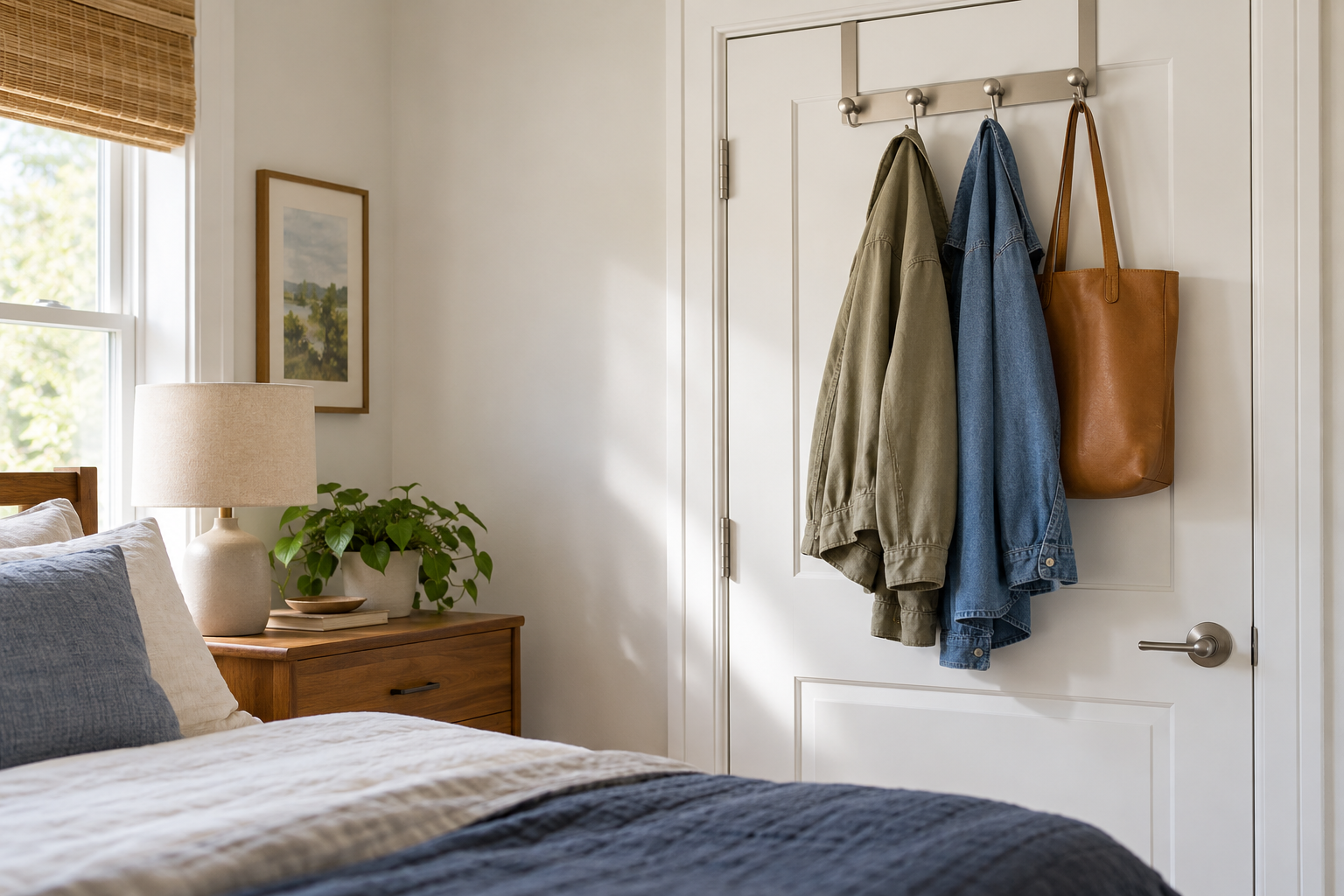
Use the back of the bedroom door as a place to prepare tomorrow's outfit. Keep the outfit's broad shoulders separate from a narrow bag and a long robe; the grouping should show what you plan to wear, with enough white door visible to distinguish each shape.
Give each silhouette its own space
Start with the outfit on one hanger toward one side, a flat bag in the middle and the robe toward the other side. The contrast between broad shoulders, a narrow rectangle and a long vertical shape gives each piece a distinct outline. Three occupied positions are a starting point; use fewer if sleeves or straps obscure neighboring pieces.
Let the bag hang by its handle rather than draping its strap across the outfit. If the robe spreads into the clothes, move it to an outer position or leave it off while preparing tomorrow's outfit. Choose spacing around the garments you actually use, rather than filling every available hook.
Let the outfit lead—or echo the bed
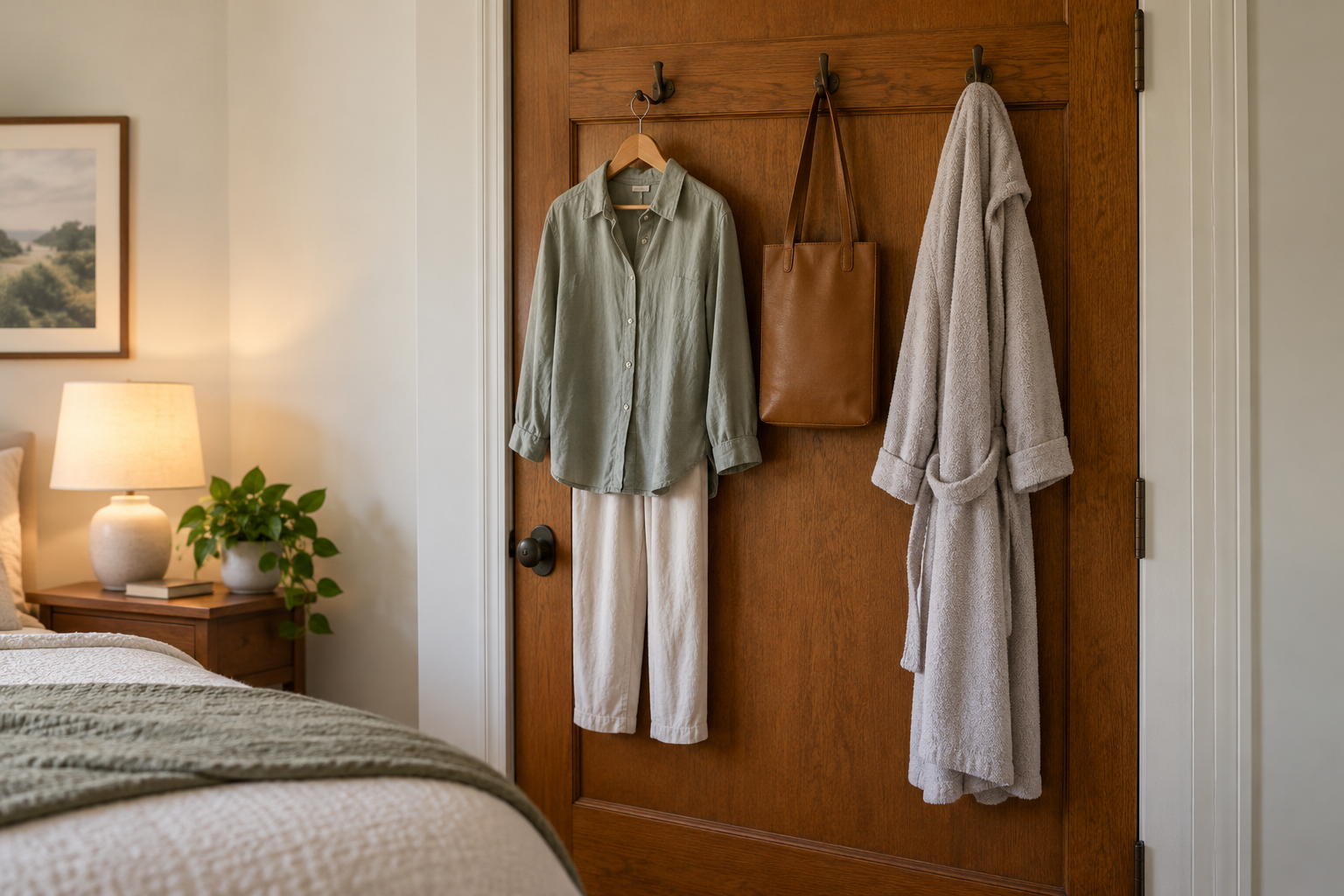
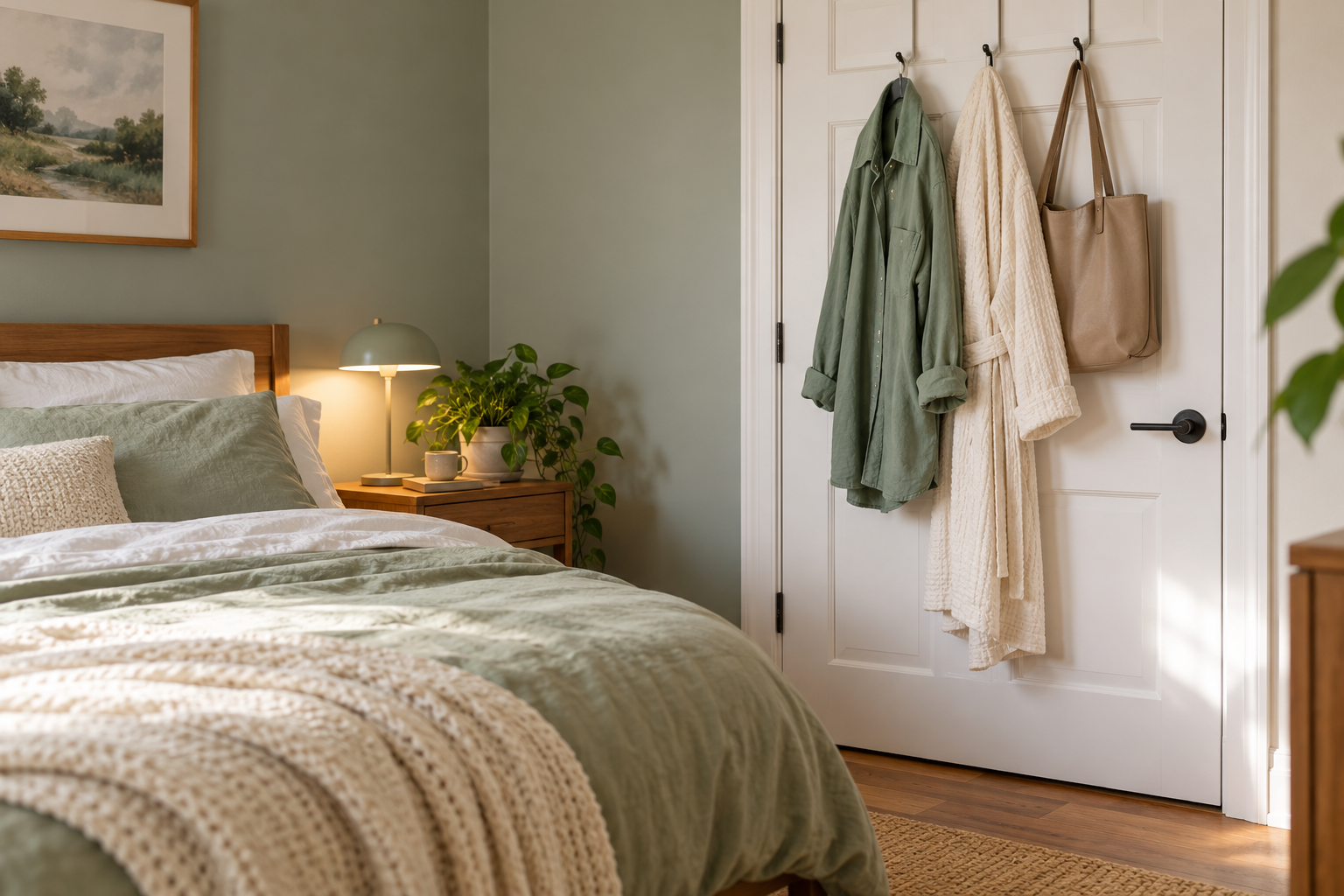
For a colorful outfit, pair a cobalt shirt with a charcoal bag and a cream robe. Against the white door, the quieter companions let the shirt be the main color. If you prefer a coordinated bedroom, borrow colors from the bedding instead: a pale sage outfit beside a cream robe and a sand-colored bag repeats a softer palette.
Change the grouping with the day
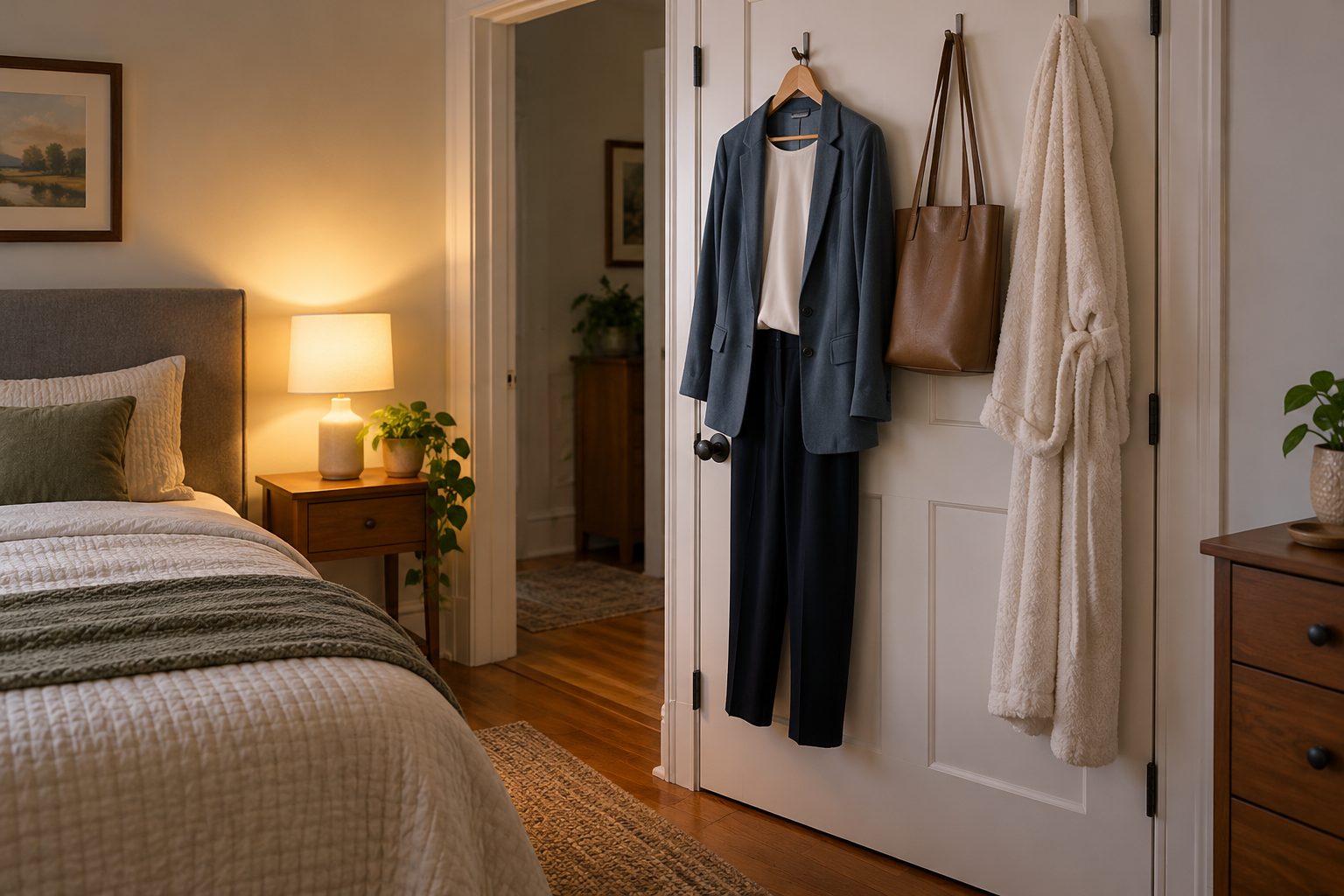
At night, hang the outfit you intend to wear and place its bag beside it, keeping the robe separate. After dressing, return the empty hanger and any replaced pieces to storage; leave the robe accessible for daytime use. It gives you an evening routine without keeping a row of clothes permanently on view.
Choose whether the rail disappears or repeats the hardware
A white over-door hook rail is a quiet choice against a white door, leaving the garments as the main shapes. A finish that echoes the door's metal hardware gives the grouping a more defined edge. Choose white for visual continuity, or the matching metal finish if you enjoy repeated details.
Before using an over-door rail, check door thickness, clearance above the door and full closure against the exact item's instructions, along with its load limits. If those requirements cannot be met, choose another location for the outfit. The illustrated arrangement is a generic styling concept, not evidence that a particular rail fits.
Check the door before you hang anything
- The gap at the top. Over-door hooks sit between the door and the frame. Open and close the door slowly with the rail in place and listen for rubbing.
- Door thickness. Measure it and compare with the rail’s listed fit; a rail made for thinner doors will wobble or scrape.
- Weight. A coat, a bag and an outfit add up. Stay within the listed load and keep heavy bags on the hinge side, where the door moves least.
- The swing. Clothes on the door take a few inches of depth. Make sure the door still opens fully against a wall or furniture.
Small details that help
Slim, non-slip hangers keep a shirt or dress from sliding off when the door moves. A hanger with a clip bar holds trousers or a skirt with the top. If you prepare outfits for two people, give each person one hook rather than sharing, so the next morning is quick.
If the door will not take a rail
Some doors are too thick, too close to the frame, or swing against furniture. Alternatives that do the same job:
- a single wall hook beside the door, at shoulder height;
- a freestanding valet stand in a corner;
- a short section of an open clothes rail if you already have one.
Pieces to consider
Over-the-door 5-hook rail, white
KitchLife over-the-door 5-hook rail, glossy white.
See it on Amazon ↗Product details
- Listed fit: Doors up to 1¾ in, 7 in arms
- Listed hooks: 5
Affiliate links. As an Amazon Associate I earn from qualifying purchases. Not hands-on tested; the illustrations do not show these exact products.