Check the space left with a drawer fully open, then rehearse getting dressed. A dresser can fit opposite your bed and still be awkward to use.
3 min read
Choose a dresser only when its verified depth, wall stand-off and full drawer extension leave space that passes your clothing-retrieval rehearsal—and its required anchoring can be completed.
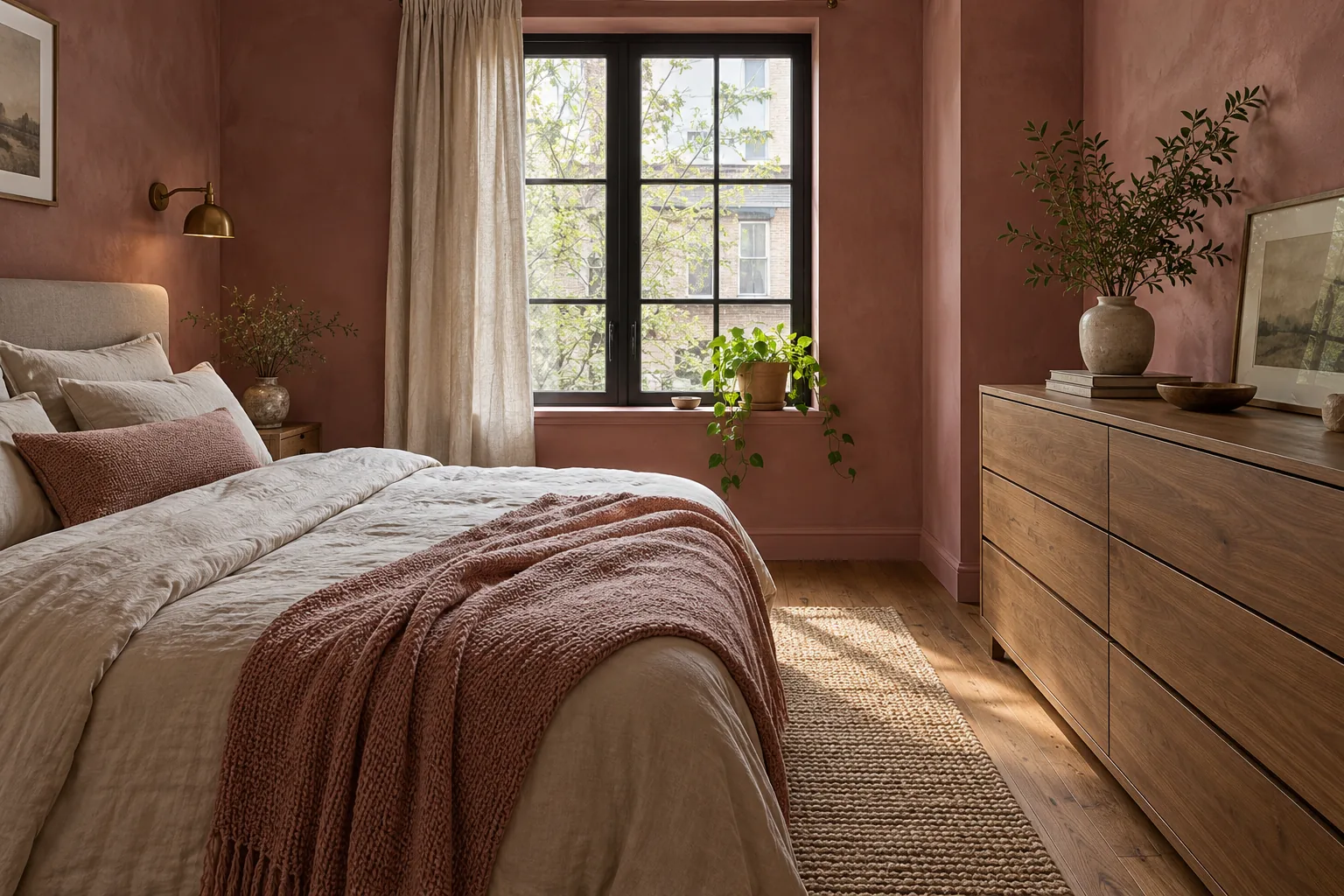 Concept image
Jump to an idea
Choose for the space left with a drawer open
Choose by the dresser’s fully open footprint. Subtract its assembled depth, wall stand-off and additional drawer extension from the wall-to-bed distance. Then try standing and retrieving clothes in the remaining gap. A drawer that clears the bed can still leave you unable to get behind it.
Confirm anchoring before committing to the location. The Consumer Product Safety Commission advises anchoring furniture with drawers to the wall to prevent tip-over injuries. Follow the manufacturer’s installation instructions and check your lease for wall mounting. Use a qualified installer if needed to resolve the wall construction or anchoring method. Low height or a drawer interlock does not replace anchoring.
Separate body depth from drawer extension
Ask for three separate measurements: assembled depth for the closed footprint, additional projection when a drawer is fully open, and usable internal drawer dimensions for clothing. Manufacturer measurement listings distinguish these dimensions. Inside drawer depth does not tell you how far the drawer travels, and a closed footprint does not establish its operating space.
Your measurement checklist: measure from the wall behind the proposed dresser to the nearest projecting part of the bed, including its frame. Confirm whether assembled depth includes handles. Measure the stand-off needed for baseboards and installation. Ask for full-open projection beyond that same closed boundary, so handles are neither omitted nor counted twice. Record the available wall width, too.
Calculate the gap, then rehearse the routine
Here is an explicitly hypothetical example: a 60-inch wall-to-bed distance, a 19-inch dresser depth and a 1-inch wall stand-off leave 60 − 19 − 1 = 40 inches with drawers closed. A drawer projecting another 12 inches leaves 40 − 12 = 28 inches open. That result is not a comfort target or evidence of compliance with safety or accessibility requirements; assess your movement needs separately.
Tape the closed footprint and one fully extended drawer footprint on the floor. Use a lightweight mock-up to represent the drawer front at its expected height. Rehearse pulling it open, standing behind it, lifting a clothing stack and closing it, with your laundry basket in its usual spot. The failure to catch: you can step aside to open the drawer but cannot return to the gap to retrieve clothes.
Compare shallower options before choosing a taller chest
Reducing assembled depth or full-open projection increases the remaining gap. Compare internal dimensions separately: a shallower drawer may require a different fold or smaller clothing stacks. Measure a stack you actually store, then compare its width, depth and height with the usable drawer interior. Decide whether that storage trade-off is acceptable before choosing the smaller footprint.
A narrower, taller chest can solve a wall-width constraint, but height alone does not reduce body depth or drawer extension. Run the same clearance calculation and mock up the upper drawer height to check reach. Skip the purchase if full-open projection cannot be verified, your rehearsal prevents normal clothing retrieval, or required anchoring cannot be completed at the intended location.
Sources and measurement notes
Worked dimensions are hypothetical planning examples. Product instructions apply to the exact item.