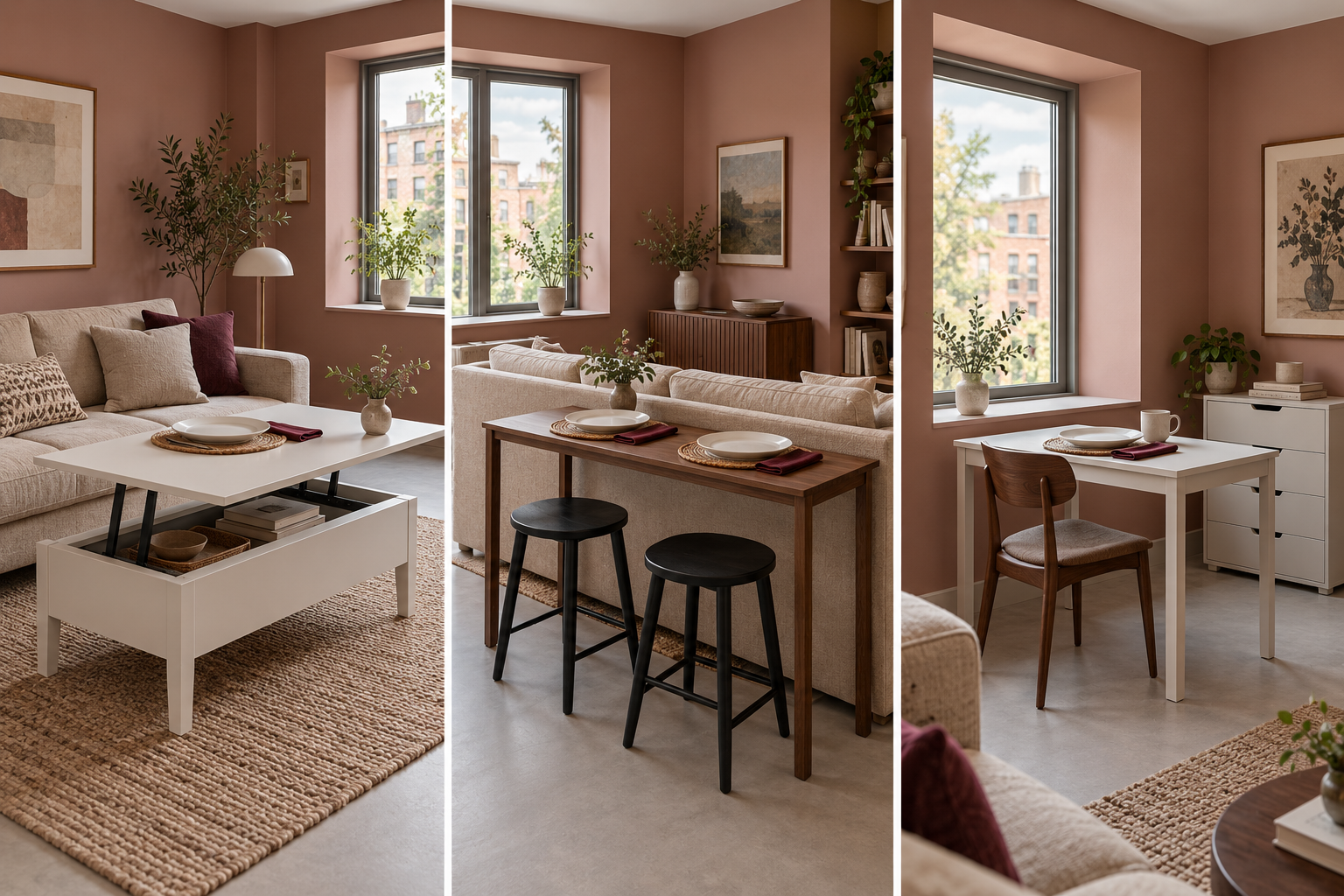
Against dusty rose walls, chalk white, walnut tones and burgundy tie together three dinner recipes: one at the sofa, one behind it and one by the window.
 Concept image
For dinner for two, pair a walnut-toned table behind the sofa with two black stools and matching burgundy napkins. For solo meals, use a chalk-white lift-top coffee table or a compact window surface with a regular chair. Choose the arrangement around where you want to eat and how you’ll reset it afterward.
Solo supper: a white top and one placemat
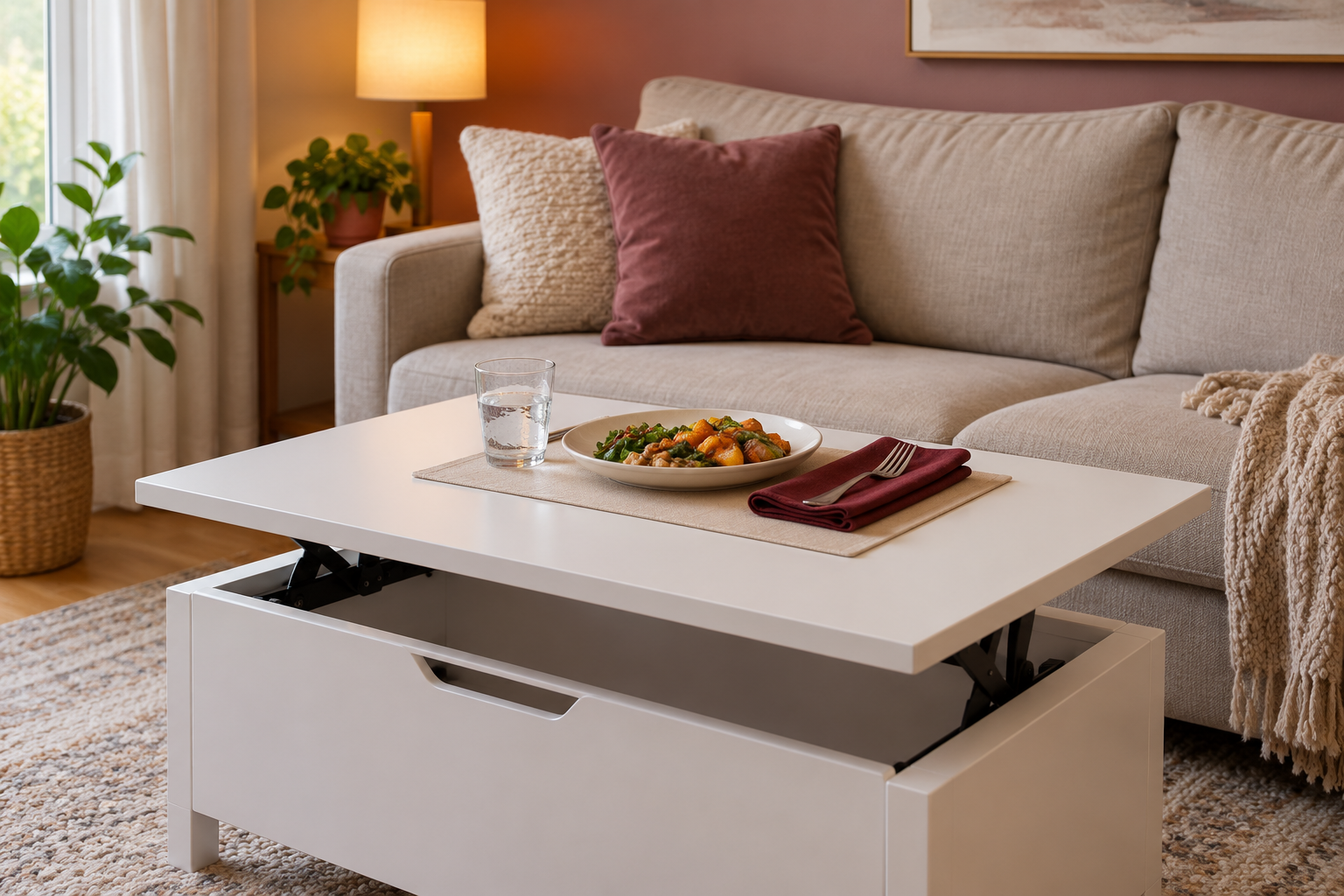
Pair an oatmeal sofa with a chalk-white rectangular lift-top coffee table, a neutral placemat, a round plate and a burgundy napkin. The plate’s curved edge gives the white rectangle a distinct focal point; the napkin repeats the dusty rose wall color in a deeper shade. One placemat marks the switch from laptop time to dinner.
For someone who wants to eat at the sofa using its existing coffee-table spot, this setup is a good fit. Put the laptop away first. Clear everything off the top before operating the lift, then set out dinner after positioning it. After eating, remove the dishes and placemat before moving the top again. Choose a smooth placemat over woven fibers if simpler crumb cleanup matters.
Dinner for two: walnut behind the sofa
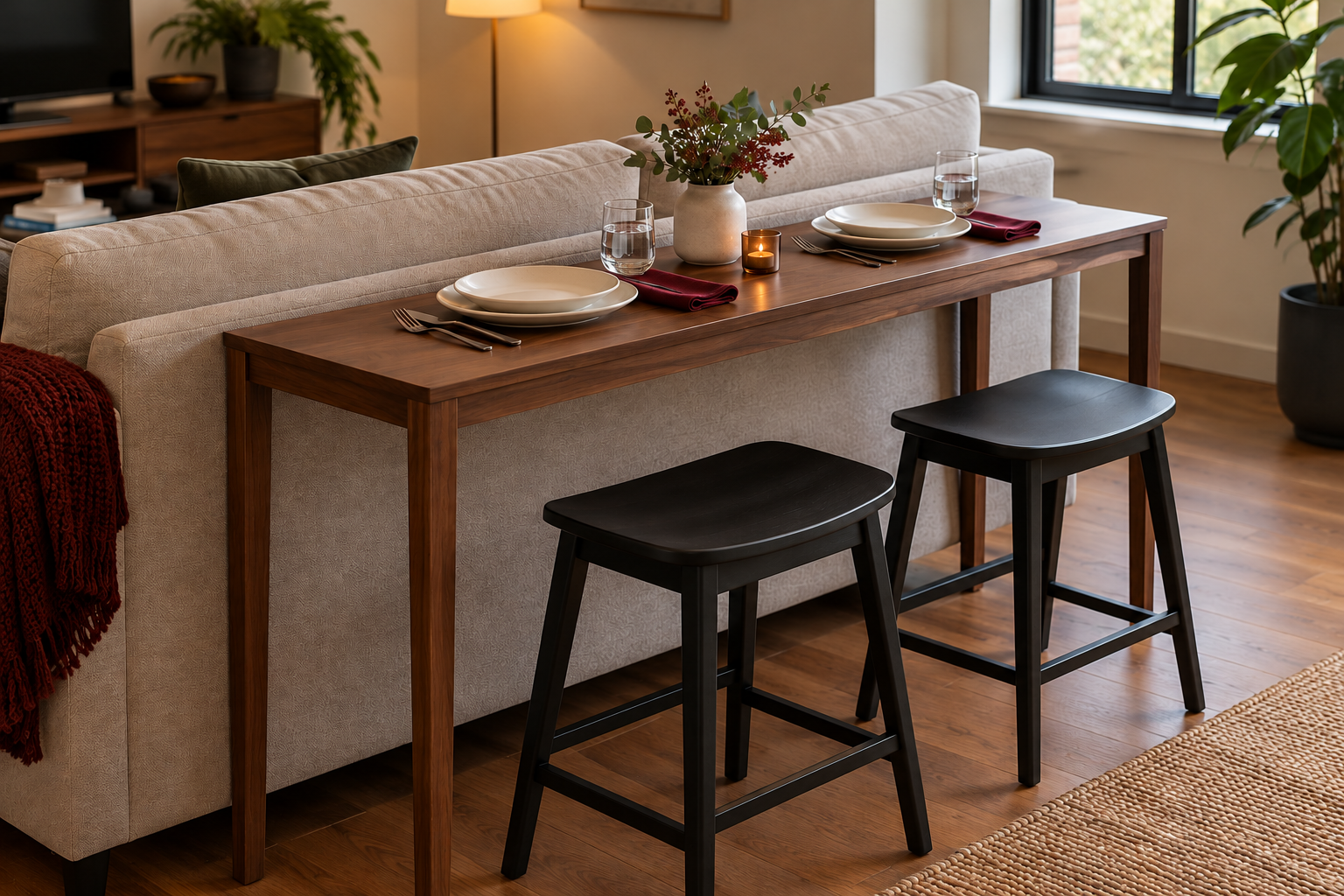
Set a slim walnut-toned table behind the sofa with two black stools, chalk-white plates and burgundy napkins. Repeat burgundy at both settings to make a deliberate pair. The sofa back frames the arrangement, while the black stools give the warm wood a crisp outline. It works well for two people who like eating side by side.
Choose this setup only when the surface accommodates two complete meals and the base leaves seated knee space. After dinner, clear the plates so the table can resume its daytime role. Give each stool a parking place beside a wall that leaves the walking route open; don’t assume either will tuck underneath. Separate chairs suit diners who prefer facing each other.
Dinner away from the sofa: a window surface
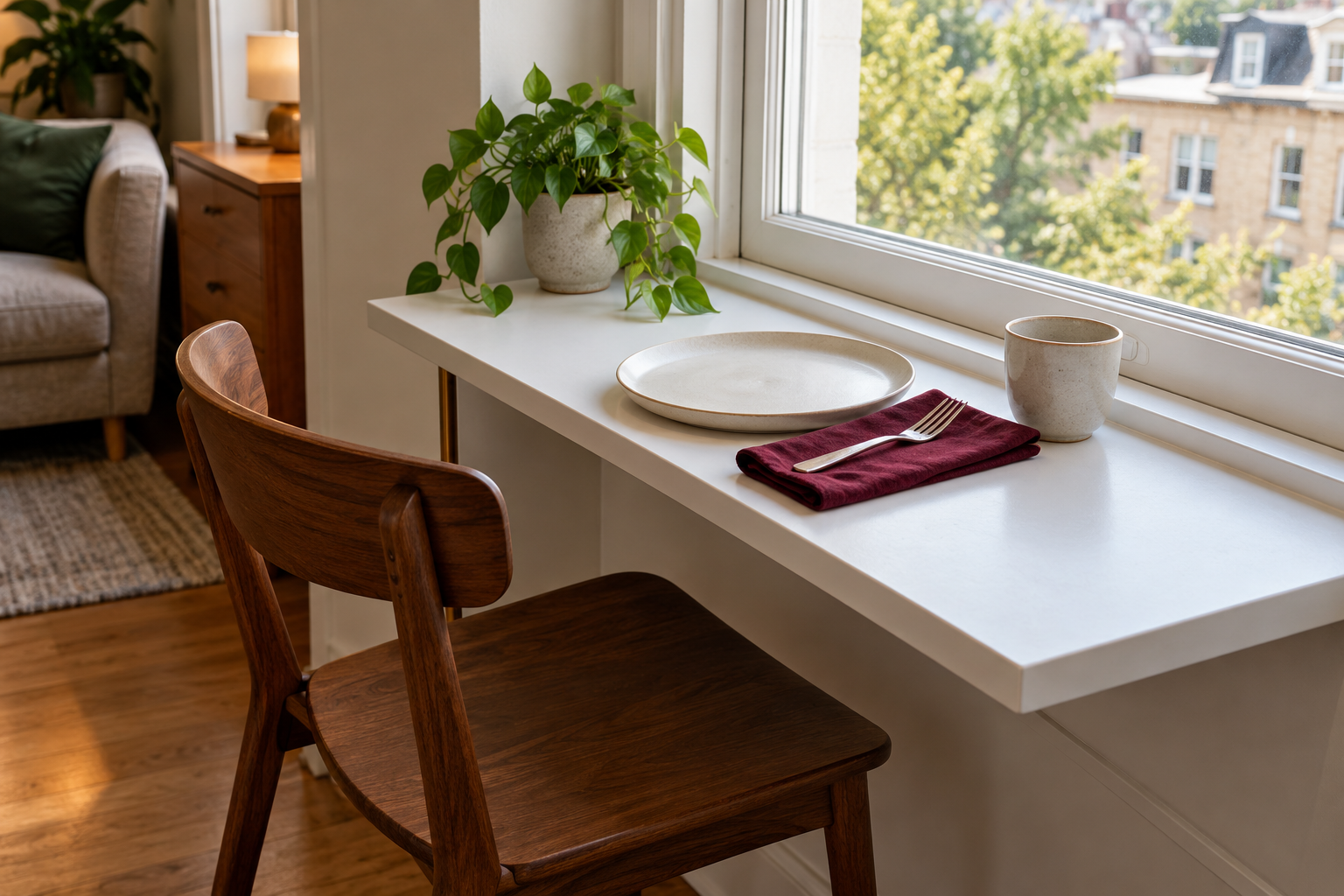
Use a compact chalk-white rectangular surface by the window, a regular walnut-toned chair, one round plate, a burgundy napkin and a pale ceramic cup. Keeping the cup pale lets the napkin carry the strongest color. This arrangement works well for a solo diner who wants a separate place to sit for dinner without dedicating the surface entirely to meals.
Before setting the plate, move daytime work into a nearby drawer rather than piling it at the far end. Position the surface and chair so you can still reach and operate the window. After dinner, clear the setting and return the chair to its daytime position. Choose a walnut-toned top instead if you prefer the pale cup and plate against wood.
Check the surface before the first dinner
A few measurements tell you whether a surface will work for a real meal:
- Room per person: about 24 inches of width and 12 to 15 inches of depth holds a plate, a glass and cutlery.
- Table height: standard dining height is about 28 to 30 inches. A sofa-back table is often around that height; a coffee table is much lower unless it has a lift-top.
- Stools: for a counter around 36 inches high, stools of roughly 24 to 26 inches fit; for a bar around 42 inches, roughly 28 to 30 inches. Leave about 10 to 12 inches between the seat and the underside of the top for your knees.
- Lift-top tables: check the listed raised height and how much weight the top carries before you count on it for dinner.
When guests come
For more than two people, a folding or drop-leaf table that lives against a wall is usually easier than squeezing everyone onto the sofa. Plan where it opens and how much space the leaves need; our guide to planning a drop-leaf table’s open position shows how to check. Stackable or folding chairs can live in a closet between dinners.
Make the switch quick
The setups only work if changing from day to dinner takes a minute. Keep placemats, napkins and a tray in one basket or drawer near the eating spot, and give the laptop, mail and remotes their own home so they are not just pushed aside. A tray you can lift in one go turns clearing up into a single trip to the kitchen.
Keep the room working
Whichever spot you choose, keep a clear route from the kitchen to where you eat, and leave about 30 inches behind a chair or stool so someone can walk past. For the bigger picture, see our small living room layout ideas and the coffee table size guide.
Pieces to consider
Lift-top coffee table, white
The raised top brings a plate or laptop closer while you sit on the sofa.
Product details
Yaheetech lift-top coffee table with storage, white
- Listed length: 38.6 in
- Listed color: White
VEVOR · Walnut Color · 3PCS 47.2″
For paired dinners behind the sofa, this walnut-colored particleboard set complements dusty rose walls, provided meal space and seated clearance suit you.
Product details
VEVOR · Walnut Color · 3PCS 47.2″
- Color: Walnut Color
- Size: 3PCS 47.2″
Affiliate links. As an Amazon Associate I earn from qualifying purchases. Not hands-on tested; the illustrations do not show these exact products.