Build a walnut, chalk-white and charcoal palette against dusty rose, then choose an arrangement that makes sense for reading, meals, games or feet-up evenings.
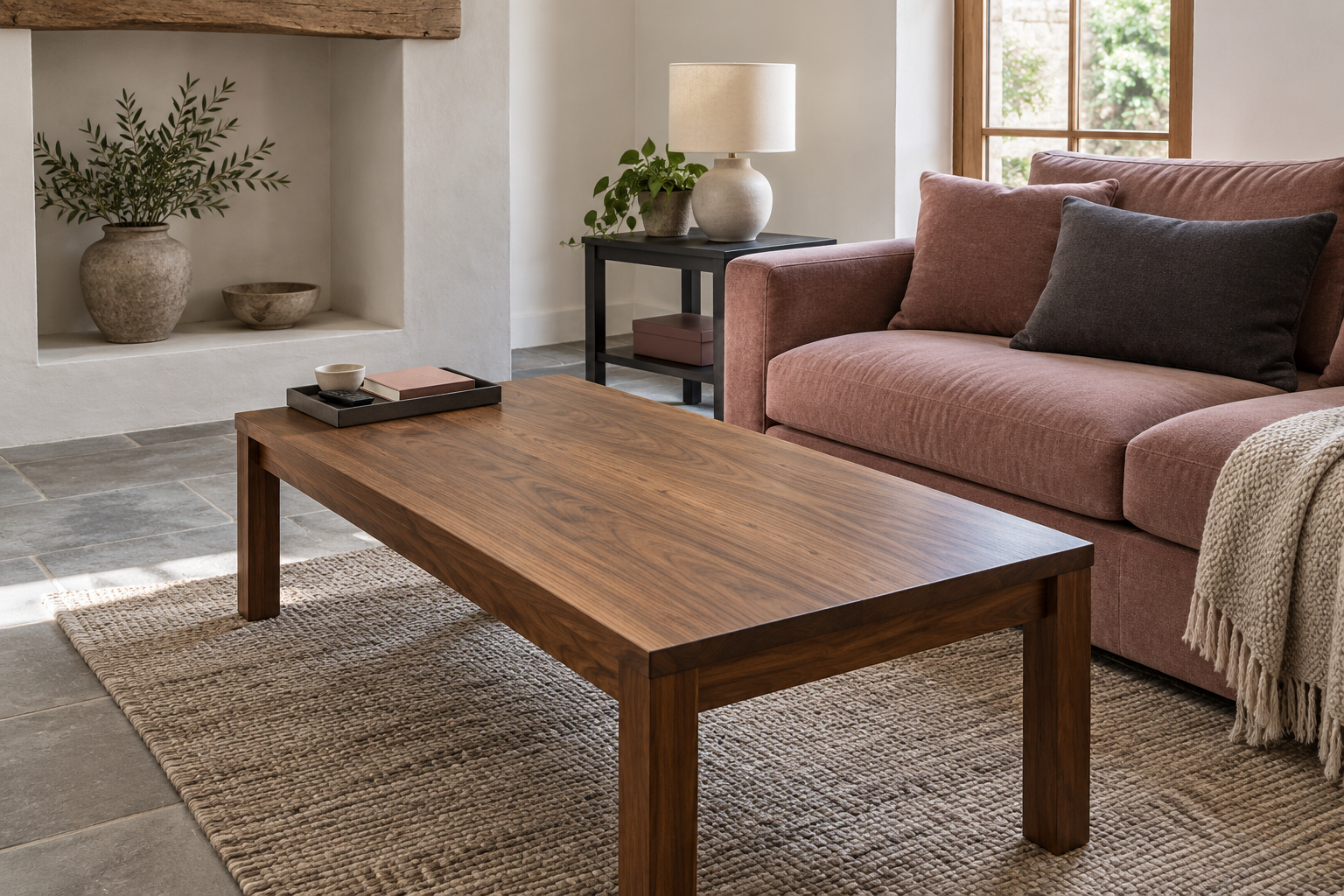 Concept image
Start with walnut, a movable charcoal tray, one chalk-white accent and dusty rose upholstery. The tray lets a small display move together when the table has another job. These eight alternatives show what to keep, where to put it and when a different arrangement makes more sense.
Explore the ideas
- 1. Gather the display in one movable charcoal tray
- 2. Use one low chalk-white vase as the whole display
- 3. Stack the books you are actually reading
- 4. Put a compact grouping at the far short end
- 5. Dress an ottoman for feet-up evenings
- 6. Reserve the center for meals or games
- 7. Give two separate small tables different jobs
- 8. Change one oxblood ceramic accent
1. Gather the display in one movable charcoal tray
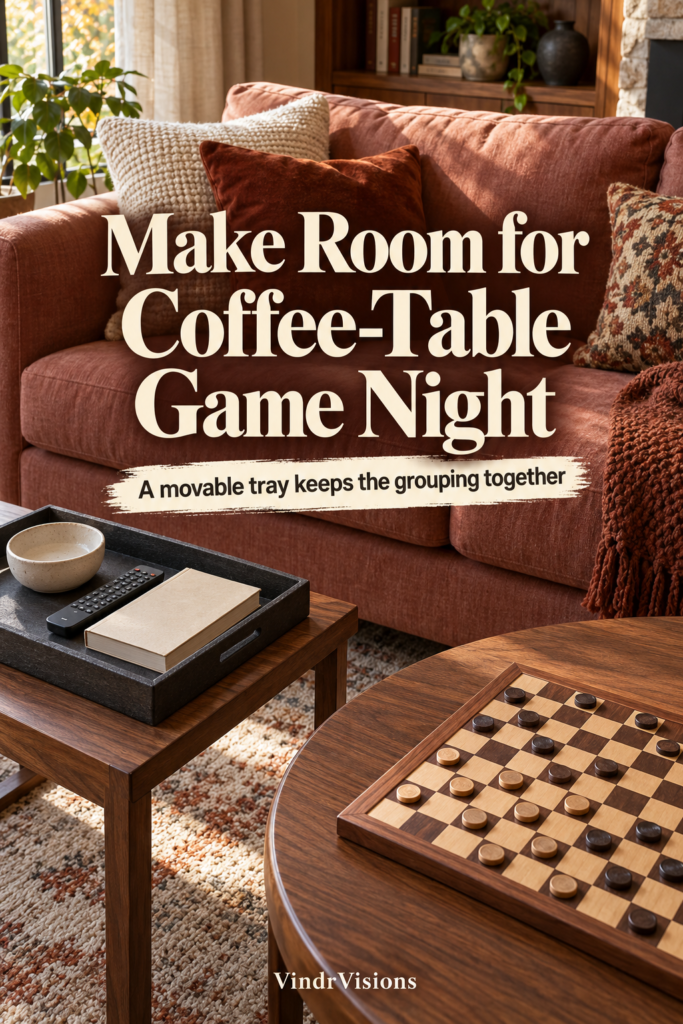
On a walnut table, use a charcoal tray to gather a chalk-white catchall, the remote and a paperback. Try the dark rectangle as a shared outline for these everyday objects, with the pale catchall providing contrast. Choose this arrangement if your table regularly switches from display to dinner or games.
Keep contents light enough to move comfortably and give the tray a clear, stable landing surface; leave tall or spillable pieces elsewhere. For a softer palette, reverse the charcoal and chalk-white finishes. The listed round acacia tray offers a warm-wood alternative to the illustrated charcoal rectangle: pair its circular outline with a charcoal catchall, retaining the same light grouping and landing place.
Round acacia display tray
A round acacia alternative to the charcoal rectangle, this tray groups light everyday objects for moving to a clear, stable surface.
Product details
PINXIURY round acacia tray, 13.8 in
- Listed dimensions: 13.8 L × 13.8 W × 0.8 H in
- Listed material: Acacia wood
2. Use one low chalk-white vase as the whole display
A rounded chalk-white vase with one short stem offers a spare alternative to the tray grouping. Against walnut and dusty rose, try its pale curved shape as the main detail. A single vase works well if you enjoy a little greenery but dislike arranging several objects whenever you tidy; keep the stem close to the vessel for a compact silhouette.
Set the vase toward a far corner, outside your usual drink area. The listed white ceramic vase is 7.1 inches high, a taller alternative to the low rounded concept. From your usual seat, try setting down a mug and reaching for a book; reposition the vase if it interrupts either action. Use it empty as a sculptural accent, or check its water-use instructions before adding a stem.
Matte-white ceramic bud vase
This 7.1-inch-high white ceramic vase is a taller coffee-table alternative to the low concept; place it outside drink and reaching areas.
Product details
Carrot's Den white ceramic vase, 7.1 in high
- Listed dimensions: 1.8 L × 4.6 W × 7.1 H in
- Listed material: Ceramic
- Listed color: White
3. Stack the books you are actually reading

Make the reading pile part of the styling: place the current title on top, with the other books squared beneath it. A charcoal or cream cover can sit comfortably within the room palette, but there is no need to disguise a colorful book. This arrangement is a good fit if you want your table to reflect what they use.
Put the stack near your usual seat and leave its top free of ornaments, so retrieving a book takes one movement. If only one title is in rotation, lay it beside a chalk-white catchall instead of building a decorative tower. Return finished books to the shelf before the pile becomes permanent storage.
4. Put a compact grouping at the far short end
For a rectangular table used mainly from one seat, place a squat chalk-white vessel beside a flat charcoal dish at the far short end. Keep both within a compact patch rather than spreading them along the back edge. Try the paired shapes as a composition at that end, leaving the seat-side surface available.
Choose this layout when you like a display to stay in place while you read, write a note or set down a snack. It works best when that far end is genuinely outside your usual working area. If another person regularly uses that end, the movable tray arrangement is the more adaptable choice.
5. Dress an ottoman for feet-up evenings
Fold a dusty rose woven throw into a broad rectangle and drape it off-center over a charcoal upholstered ottoman. Leave much of the upholstery exposed, with a soft edge hanging down one side. Choose this when the center of the room mainly serves as a footrest. A chalk-white throw offers a quieter alternative if dusty rose already dominates the sofa.
The listed compact round cream bouclé ottoman differs from the wide charcoal illustration. Use a smaller dusty rose fold over one edge, leaving most of the cream upholstery exposed—a pale alternative to the dark footrest. Keep drinks on a separate stable table in either arrangement. Use an ottoman as a table only as its instructions allow; adding a tray does not establish suitability.
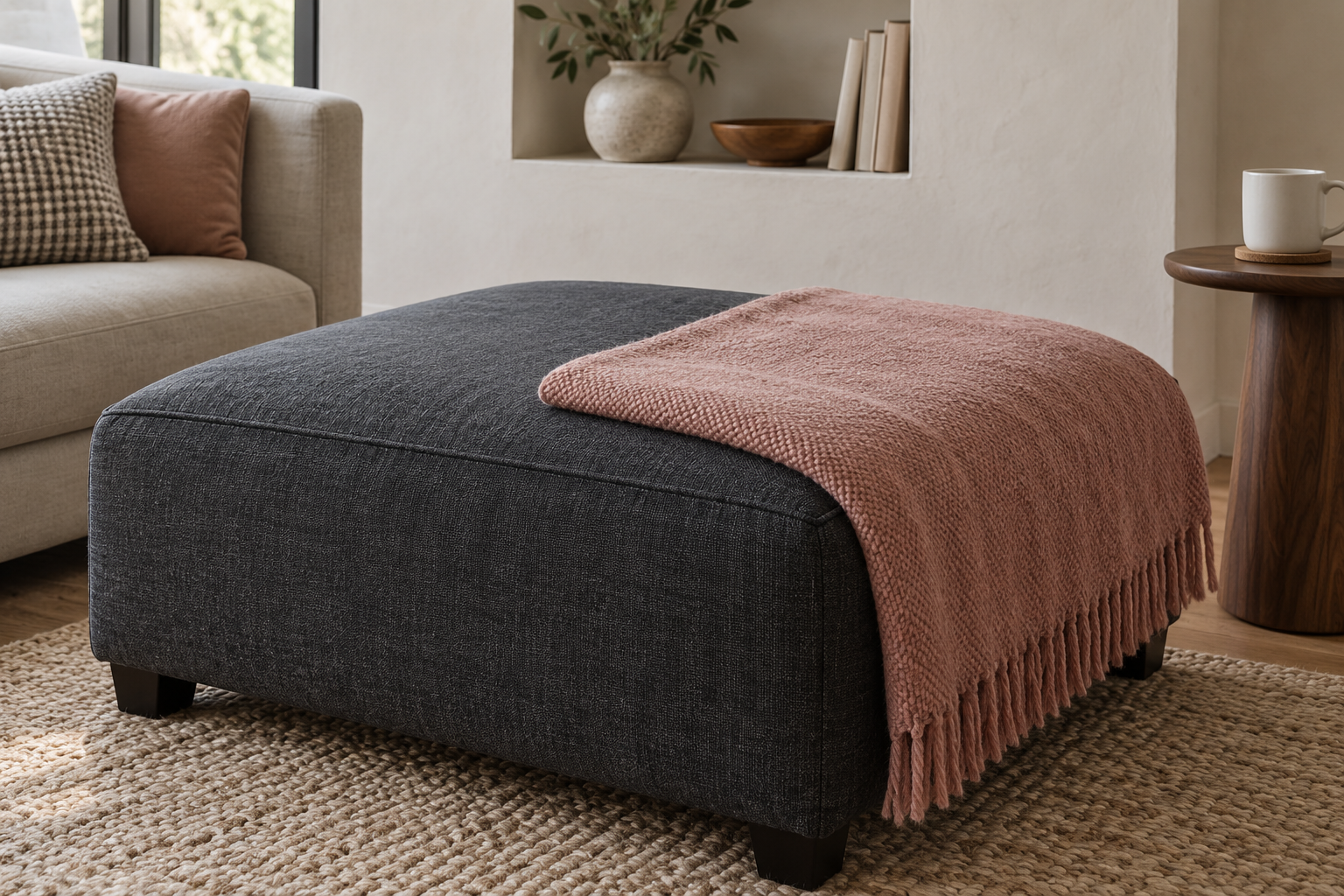
Round cream bouclé ottoman
A compact round cream bouclé alternative to the wide charcoal concept; use a smaller dusty rose fold and a separate drink table.
Product details
HomePop cream bouclé ottoman, 17.5 in diameter × 18 in high
- Listed dimensions: 17.5 D × 17.5 W × 18 H in
- Listed color: Cream Boucle
- Listed storage: None; no lid
6. Reserve the center for meals or games
Treat the middle of the table as shared space: place a game board or meal there, with one low decorative object at an end outside the activity area. This suits households using the table together, where access from several seats matters more than a display facing one person. Move that last object too when the activity needs the full surface.
If you already own a table with a glass-covered display compartment, consider placing a small oxblood ceramic object below the glass instead. That keeps the color in the composition while leaving the tabletop available. Display only pieces the compartment can accommodate, and keep the current reading book elsewhere because it would be less convenient to retrieve.
7. Give two separate small tables different jobs
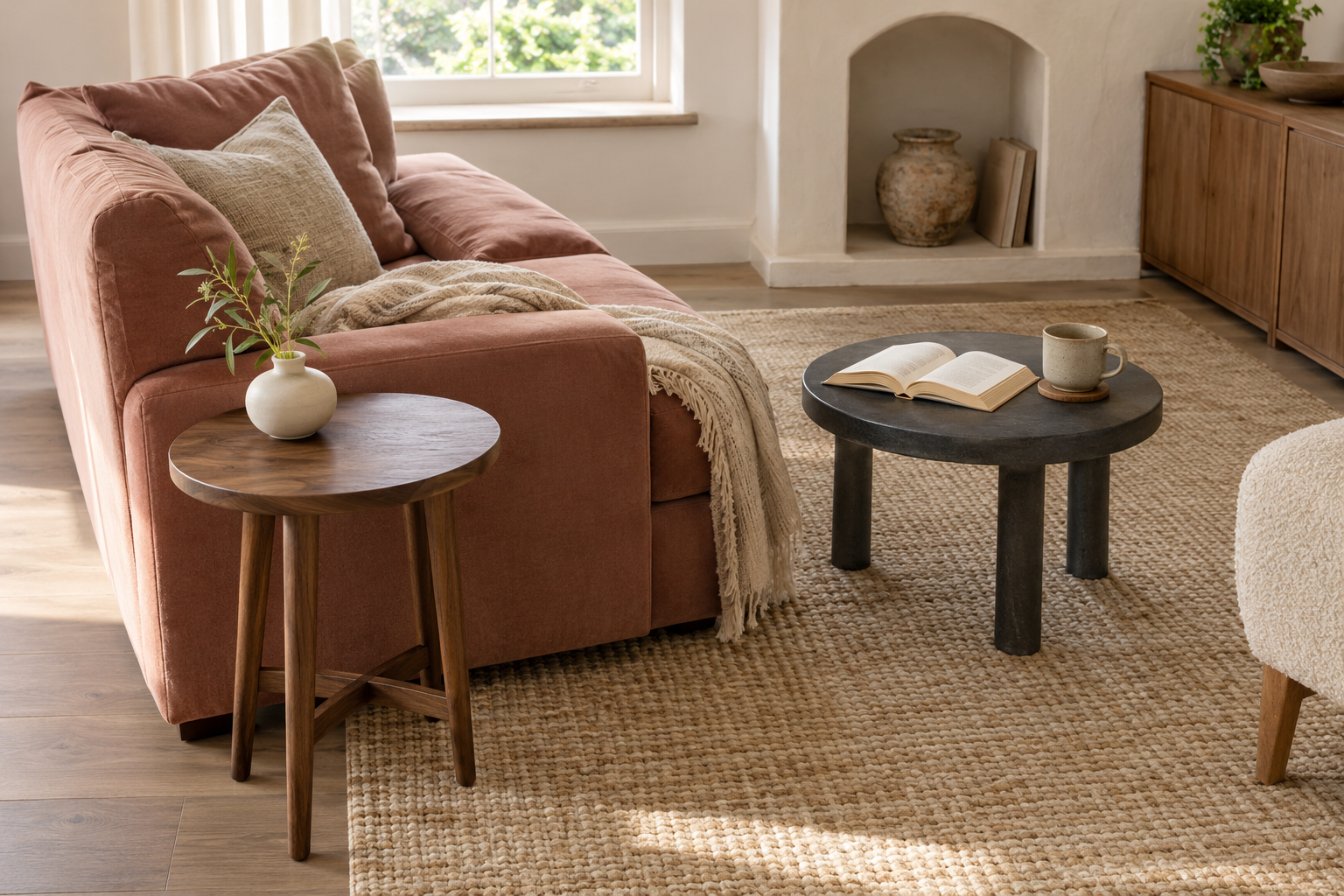
Place a round walnut table beside the sofa arm for a low chalk-white vase, and a simple charcoal table in front of your usual seat for a mug or book. Try contrasting shapes and finishes to distinguish their roles. This arrangement works well if you want a display that stays put while another surface handles daily use.
Use independent tables in those positions, with neither tucked beneath the other. Try walking your usual route and sitting down before committing to the pair. If the second table crowds that route or interferes with getting into the seat, keep one table and use the movable tray to separate display time from activity time.
8. Change one oxblood ceramic accent
For occasional variety, exchange one chalk-white accent for a rounded oxblood ceramic bowl while keeping walnut, charcoal and dusty rose consistent. Try the deeper red for a different emphasis without introducing a new collection of objects. If you enjoy seasonal changes but want the table arrangement itself to remain familiar, try changing this single accent.
Make it a replacement, not an addition: move the previous accent to a shelf or storage before setting out the next one. Keep the new piece within the same display area so the everyday surface stays available. Choose a low bowl where you regularly reach across the table; reserve a taller sculptural shape for the separate display table.
Affiliate links. As an Amazon Associate I earn from qualifying purchases. Not hands-on tested; the illustrations do not show these exact products.