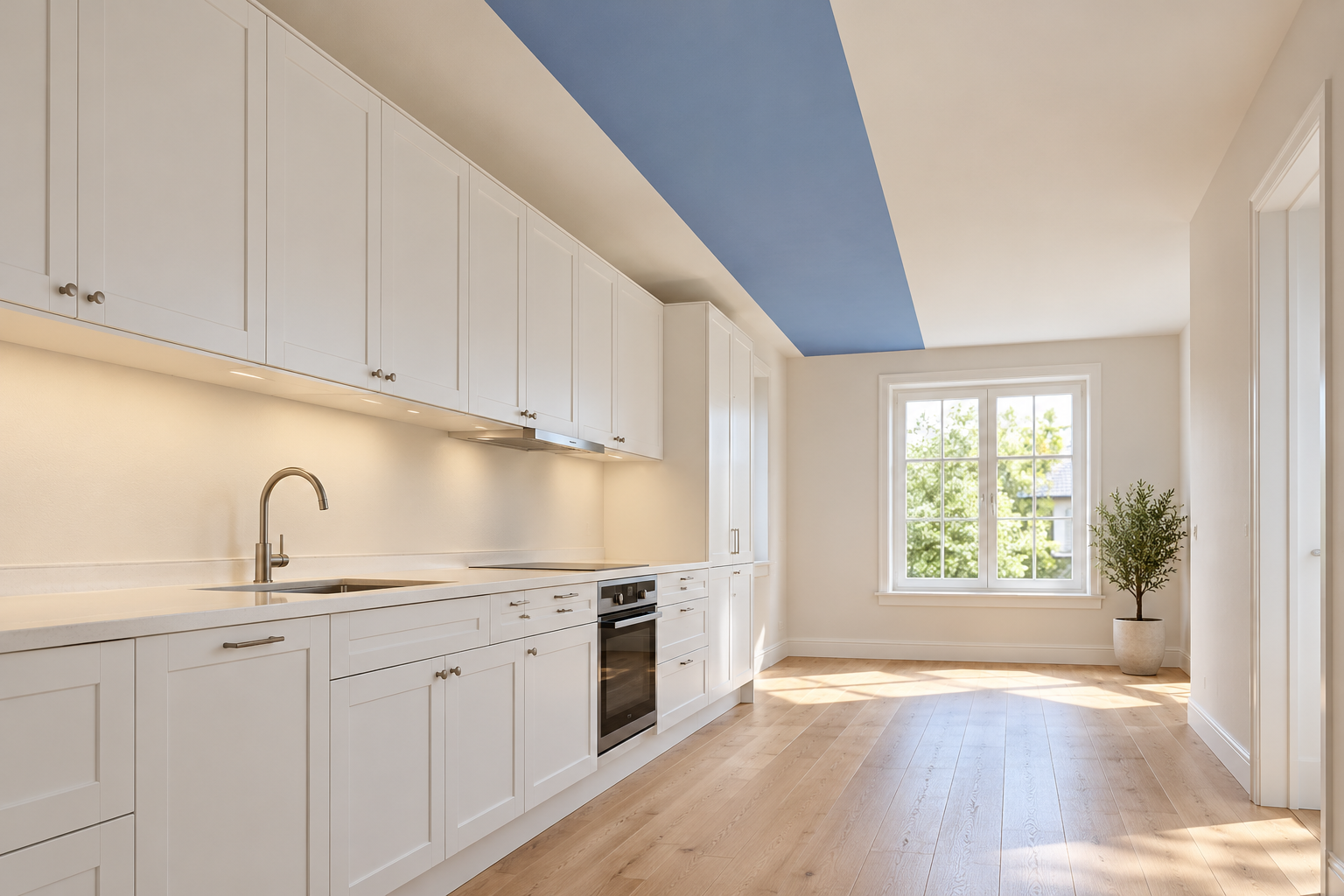
Choose quiet tonal whites, pale blue with one matching textile, earthy clay or a single painted stripe—four ways to make the ceiling part of your kitchen’s palette.
 Concept image
Coordinate warm white with cream and oak for a quiet look, contrast white cabinets with pale blue, pair clay with dark wood, or use one blue stripe for pattern. Let the ceiling carry the decorative detail while counters stay spare.
Explore the ideas
1. Warm white with cream walls and oak
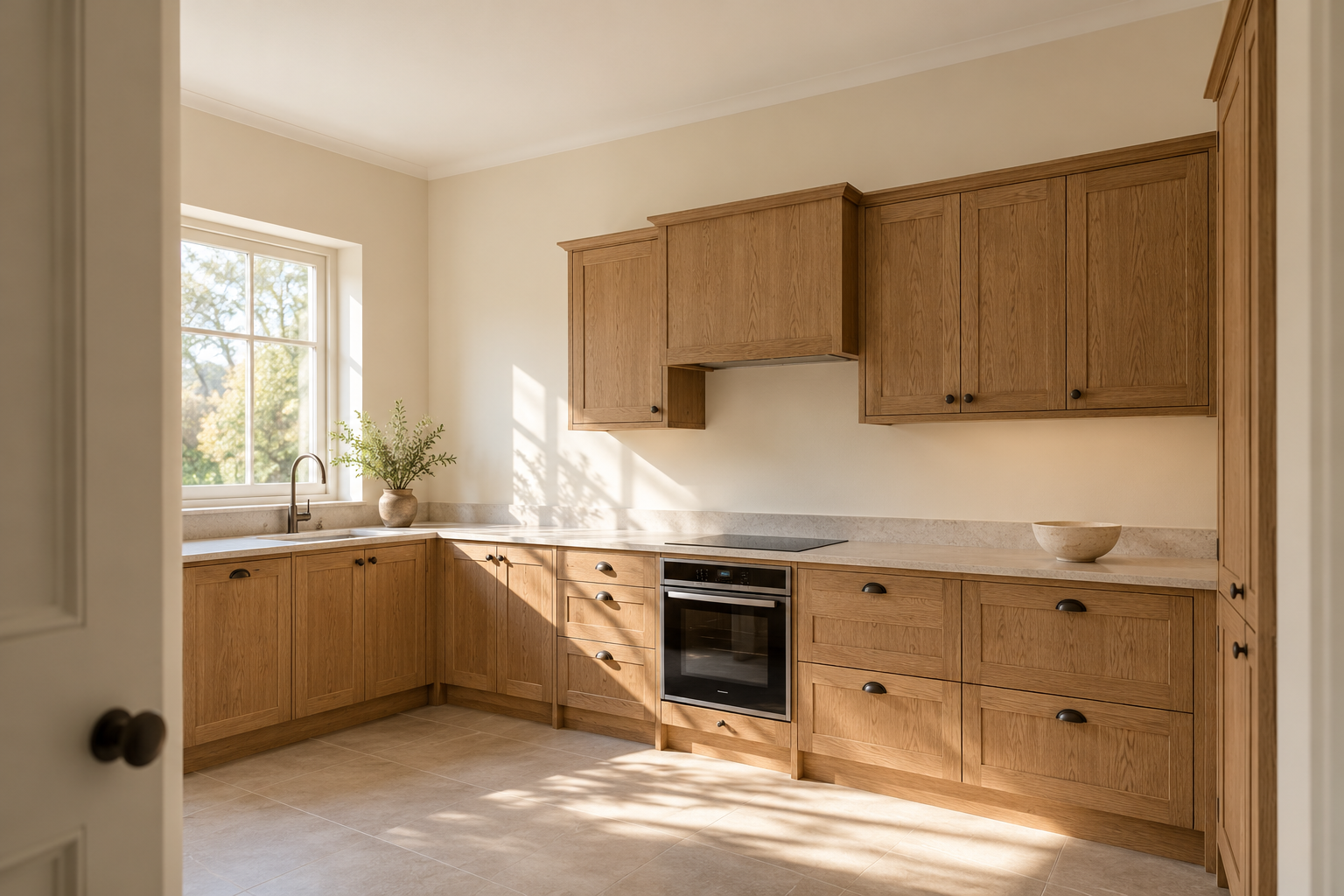
For the quietest palette, pair a warm-white ceiling with cream walls and oak cabinets. Keep the ceiling slightly lighter than the walls so the neutrals remain distinct, with the oak supplying the strongest material contrast. Choose this look if you enjoy warm wood and want interest without introducing another color or pattern.
Compare warm-white and richer cream samples beside the wall color and oak. Daylight and artificial light can change the apparent cast of paint undertones, so revisit the samples during the day and under your usual evening lights. Favor the white that keeps the distinction you prefer. Before painting, obtain owner or landlord permission where required.
2. Pale blue above white cabinets
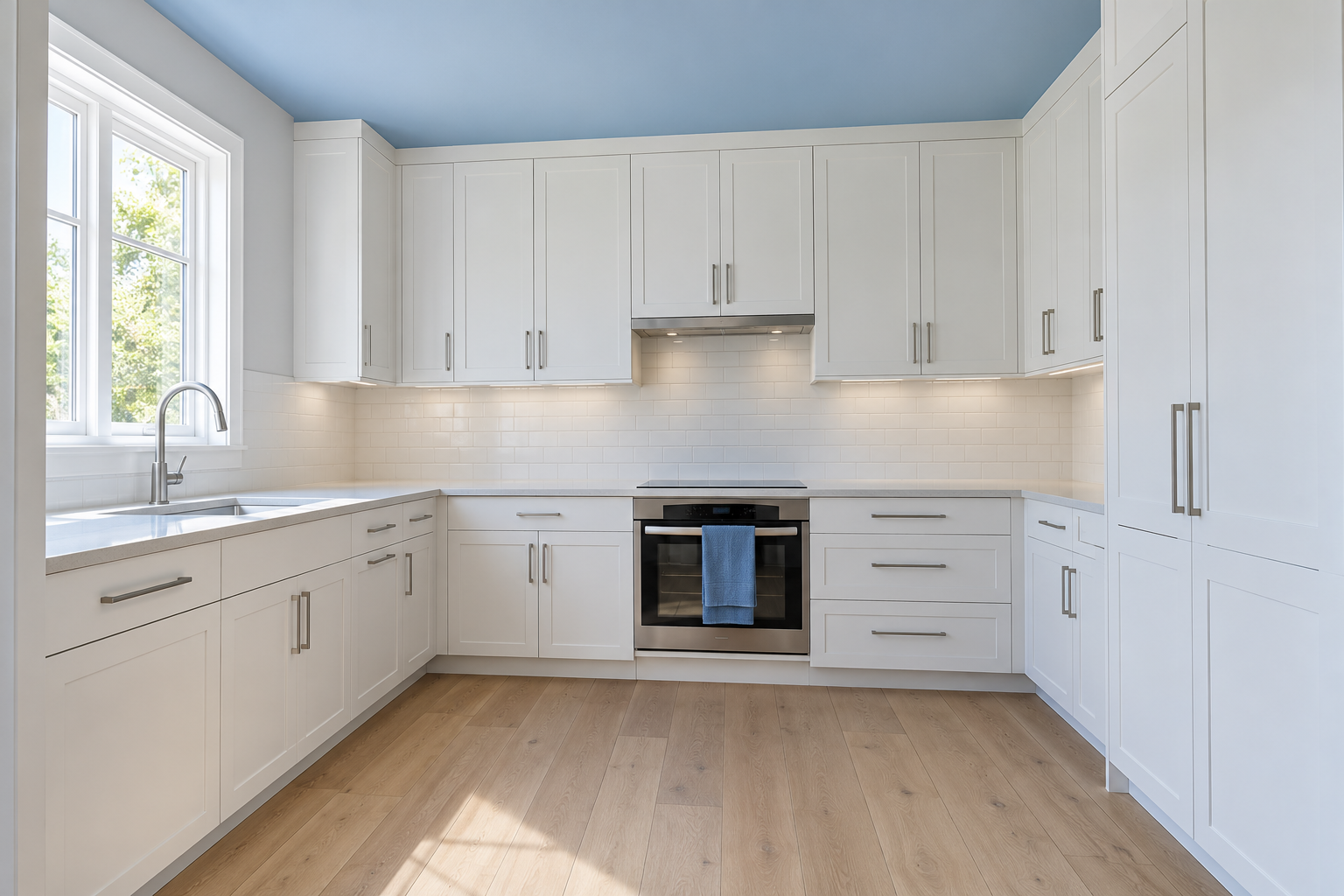
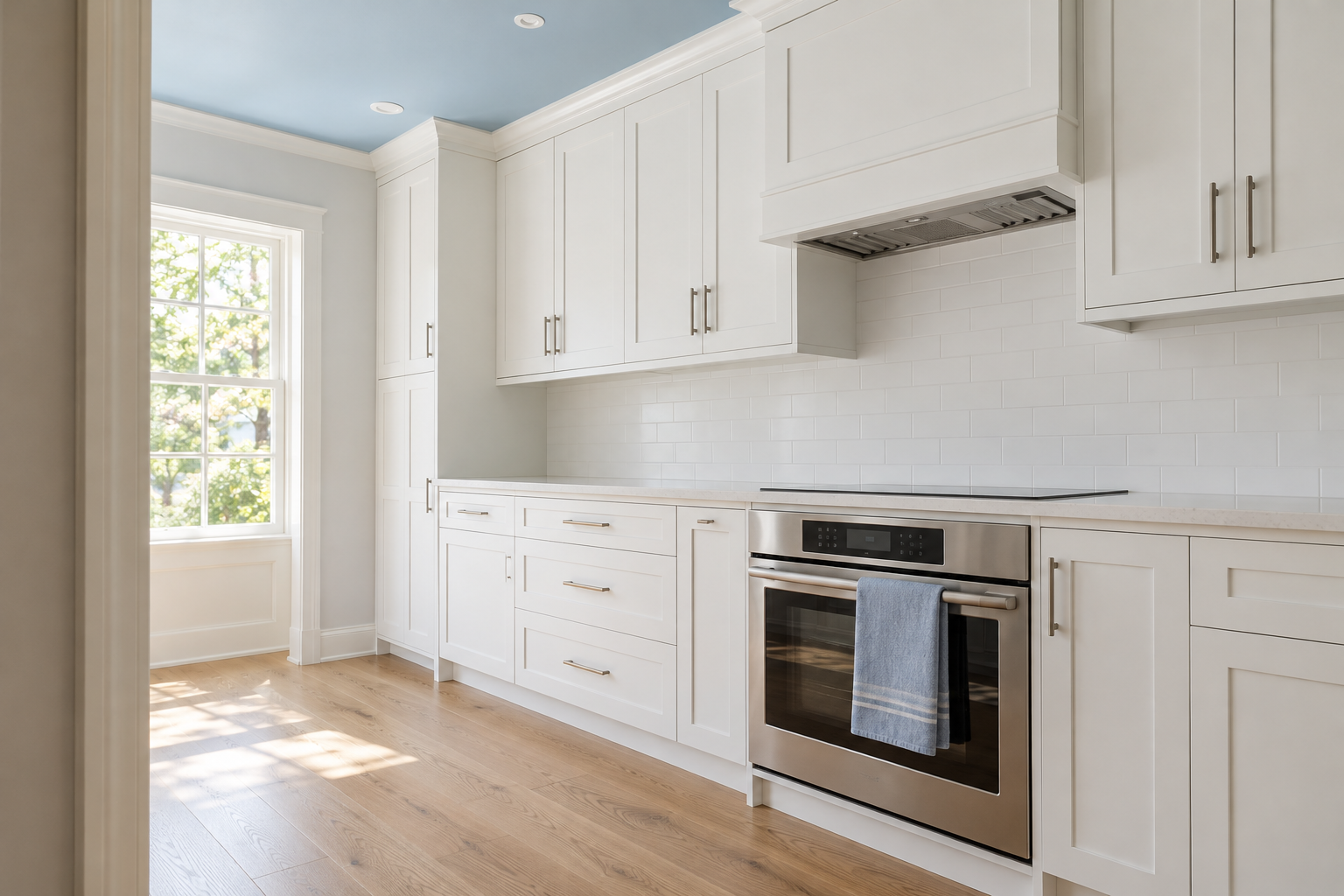
Pair a pale-blue ceiling with white cabinets, then repeat the blue in one towel below. The towel connects the overhead color to an everyday object without adding anything to the worktop. Choose this look when you want a noticeable color accent but prefer clear counters; the towel can echo the color family without matching it exactly.
Compare a softly grayed blue with a clearer pale blue beside your cabinet white, then bring the towel into the comparison. Revisit both samples in daylight and evening light. Choose the grayer option for a more restrained combination, or the clearer blue if you prefer a crisper contrast with the white cabinetry.
3. Muted clay with dark wood
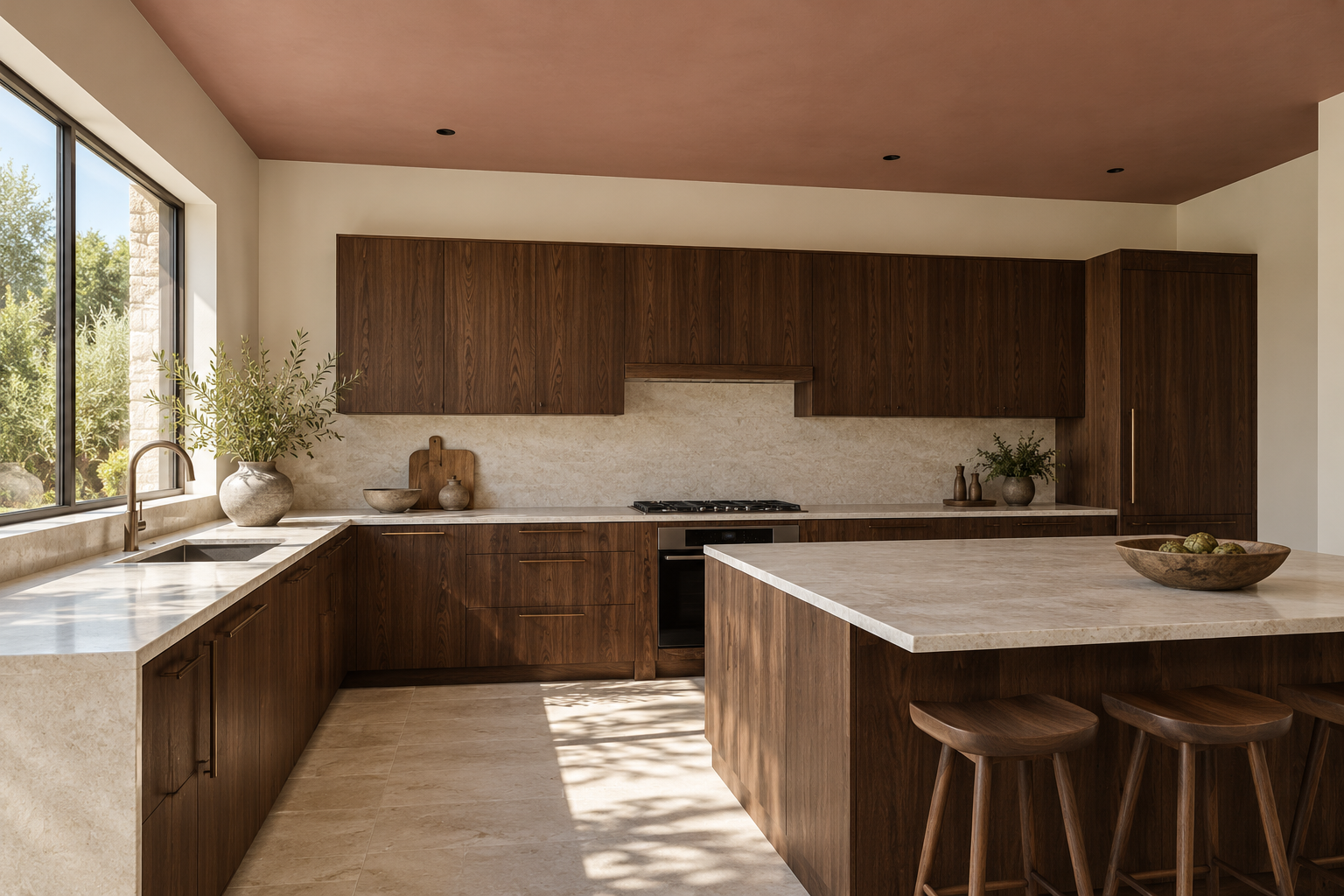
A muted-clay ceiling, warm-white walls and dark wood offer an earthier alternative to the blue kitchen. Keep the walls plain so the ceiling color and wood grain lead the composition. Compared with the warm-white ceiling in look 1, this is a stronger contrast: choose it when you want the overhead surface to be a distinct part of the palette.
Compare a pinker clay sample with a browner one beside both the warm-white wall and dark wood, checking them in daylight and evening light. Favor the pinker clay if you want a rosy accent, or the browner version for a more closely related earth palette. If both feel too assertive, return to the tonal whites of look 1.
4. One broad blue stripe along the cabinet run
Keep the ceiling warm white and add one broad muted-blue stripe aligned lengthwise with the main cabinet run. This gives the pattern a clear relationship to the kitchen’s layout. Choose it if you like a graphic detail but prefer only part of the ceiling painted blue; keep the backsplash, walls and textiles unpatterned.
Compare the blue and warm-white samples together, then sketch the band on a room photo to judge its position before painting. Let the cabinet run supply the direction rather than centering the stripe over a small accessory. If competing cabinet runs make that alignment feel arbitrary, the full pale-blue ceiling offers a simpler alternative.