Keep the neutral walls and sofa. Explore eight ways to introduce color through olive velvet, rust weaving, pale yellow, ceramics, pattern, art, a lampshade, or a useful tray.
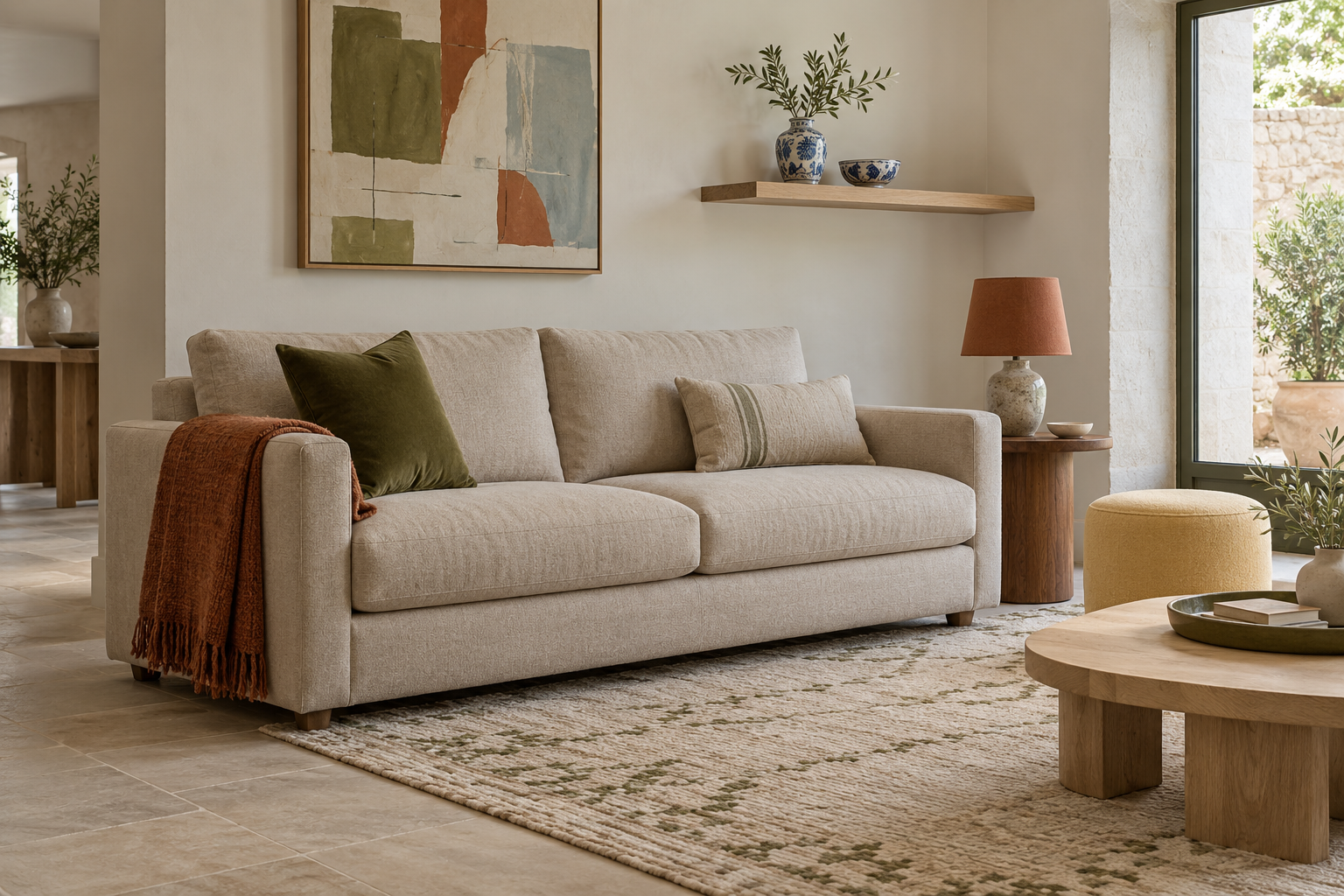 Concept image
Start with an olive velvet cushion against a flax sofa and a rust woven throw folded over one arm. The cushion makes a compact green focal point; the throw adds a broader earthy stripe. Use both for a concentrated pairing, or choose one for a quieter look.
Explore the ideas
- 1. Give a Flax Sofa an Olive Velvet Focal Point
- 2. Fold a Rust Throw Into a Broad Color Stripe
- 3. Put Butter Yellow Beside Walnut
- 4. Group Blue-and-White Ceramics Above the Seating
- 5. Let a Restrained Rug Carry the Pattern
- 6. Choose Colored Art Instead of More Fabric
- 7. Make the Lampshade the Accent
- 8. Echo One Accent With a Useful Tray
1. Give a Flax Sofa an Olive Velvet Focal Point
Set an olive velvet cushion near one end of a flax sofa, with a rust woven throw over the adjacent arm. Try this earthy pairing for its contrasting surfaces: softly gleaming velvet beside matte weaving. Flax supplies the background, olive a compact shape, and rust a longer stripe. Keep other cushions neutral; substitute a cream throw if you prefer just one accent color.
For the same palette without a blanket, pair an olive velvet cushion with a rust ramie-and-cotton cushion at one sofa end. The listed rust covers offer this alternative: two compact color shapes rather than the illustrated throw's broad stripe, with no blanket function. This is a good fit if you already use cushions and want to change your color. Use one in each color, and leave the other sofa end clear if extra cushions would crowd your usual seat.
Olive velvet pillow covers
Velvet covers that add one muted green accent to cushions you already own.
Product details
MIULEE velvet covers, Olive Green, 18 × 18 in, pack of 2
- Selected size: 18 × 18 in, pack of 2
- Selected color: Olive Green
Rust ramie-and-cotton pillow covers
Pair these rust ramie-and-cotton covers with olive velvet for two compact cushion accents; they provide no throw stripe or blanket function.
Product details
Foindtower Late Autumn rust covers, 18 × 18 in, pack of 2
- Listed size: 18 × 18 in, pack of 2
- Listed material: 70% ramie, 30% cotton
- Selected color: Late Autumn (rust)
2. Fold a Rust Throw Into a Broad Color Stripe
For color you can move during everyday lounging, fold a rust woven throw lengthwise over one sofa arm, letting its end fall toward the seat. Against beige or oatmeal upholstery, that broad band offers a different arrangement from scattered cushions. Choose it when you want one substantial accent that also serves an ordinary use.
Choose the fabric for how you actually use a blanket: a weave you enjoy handling matters more than a decorative fringe. Keep one regularly used throw within reach if storage is limited. Spread it across your lap when needed, then return it to the arm; its folded shape gives the color a deliberate place.
3. Put Butter Yellow Beside Walnut
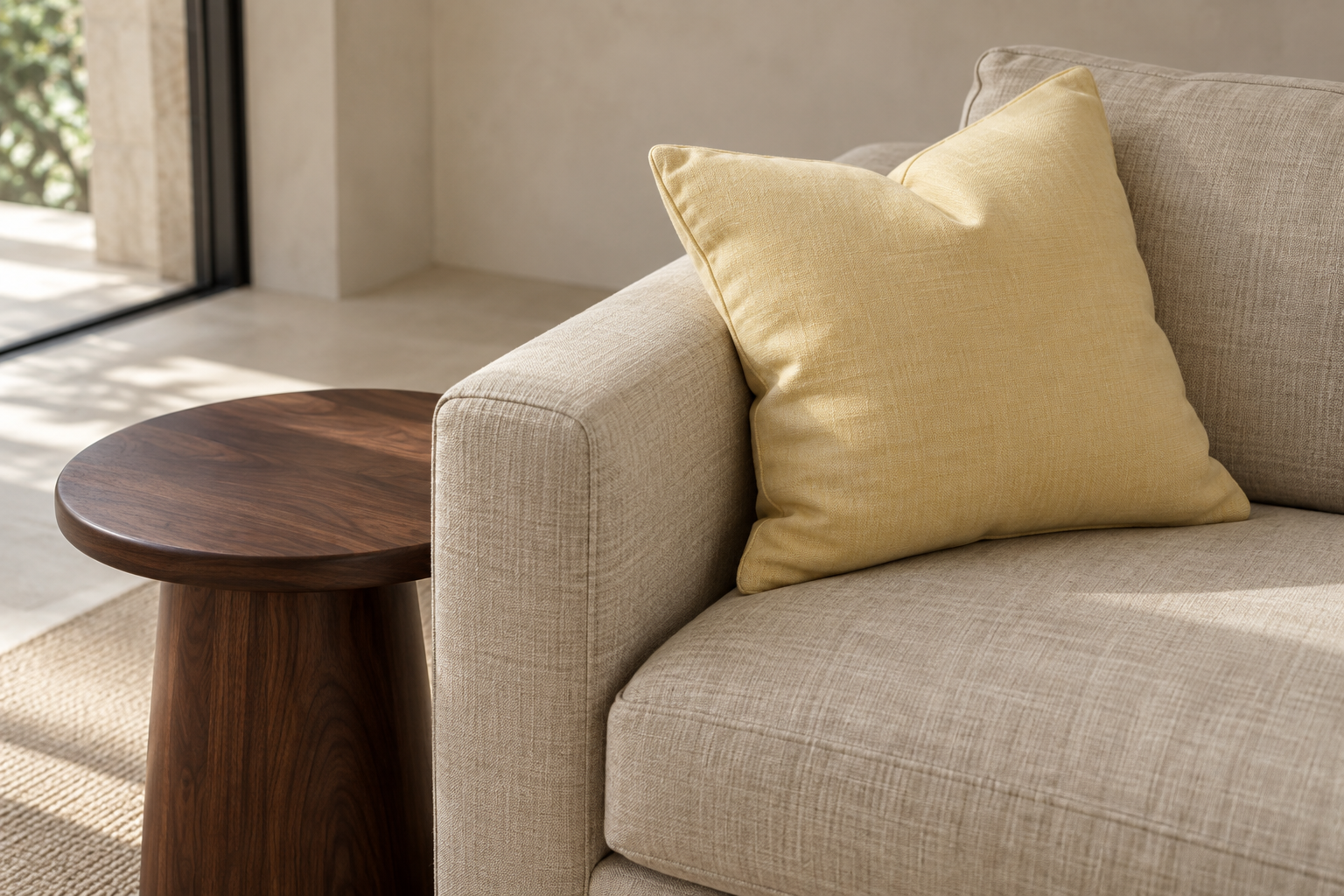
Try a butter-yellow cushion at the sofa end nearest a walnut side table. The pale fabric and dark wood make a clear light-and-dark pairing without requiring a vivid accent. This pairing works well if you’re drawn to gentle color and simple shapes. Keep the yellow solid in color if the wood grain is the detail you want to notice; substitute cream for a quieter version.
The illustration shows a plain fabric surface; the listed butter-yellow cover uses faux suede with pintucks. Both support the pale-yellow-and-walnut palette, but the pintucks give the cushion more surface detail. Choose a plain surface if you prefer the wood grain to lead, or the pintucked alternative if you want detail on the cushion without adding a multicolor pattern.
Butter-yellow pintuck pillow cover
A textured butter-yellow cushion cover for a small dose of the color.
Product details
The HomeCentric faux-suede pillow cover, butter yellow, 16 × 16 in
- Listed size: 16 × 16 in
- Listed fabric: Faux suede with pintucks
4. Group Blue-and-White Ceramics Above the Seating
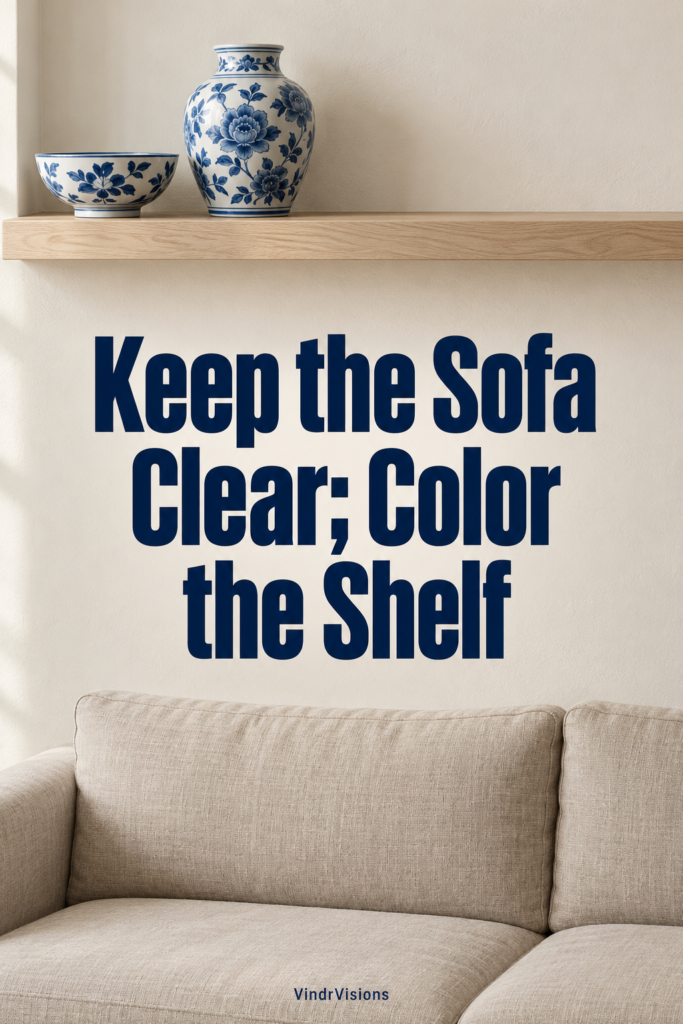
On an existing shelf, gather a blue-and-white bowl and a taller vase into one small group, leaving open shelf space beside them. Their curved silhouettes and glazed surfaces offer a crisp alternative to another textile. Choose this route if you want color above the sofa while keeping the seat clear. Use mostly white pieces for a lighter touch, or more blue for emphasis.
Choose a blue-and-white floral vase when you want the pattern itself to carry the color. Its rounded outline gives the group a different shape from a rectangular frame; check that the listed 8-inch footprint works on your existing shelf.
Blue-and-white floral terracotta vase
A blue-and-white floral vase adds one patterned accent to a plain shelf or warm-wood table.
Product details
Creative Co-Op DF2720, Blue/White, 8 in vase
- Listed dimensions: 8 L × 8 W × 8 H in
- Listed material: Terra cotta
- Selected color: Blue/White
5. Let a Restrained Rug Carry the Pattern
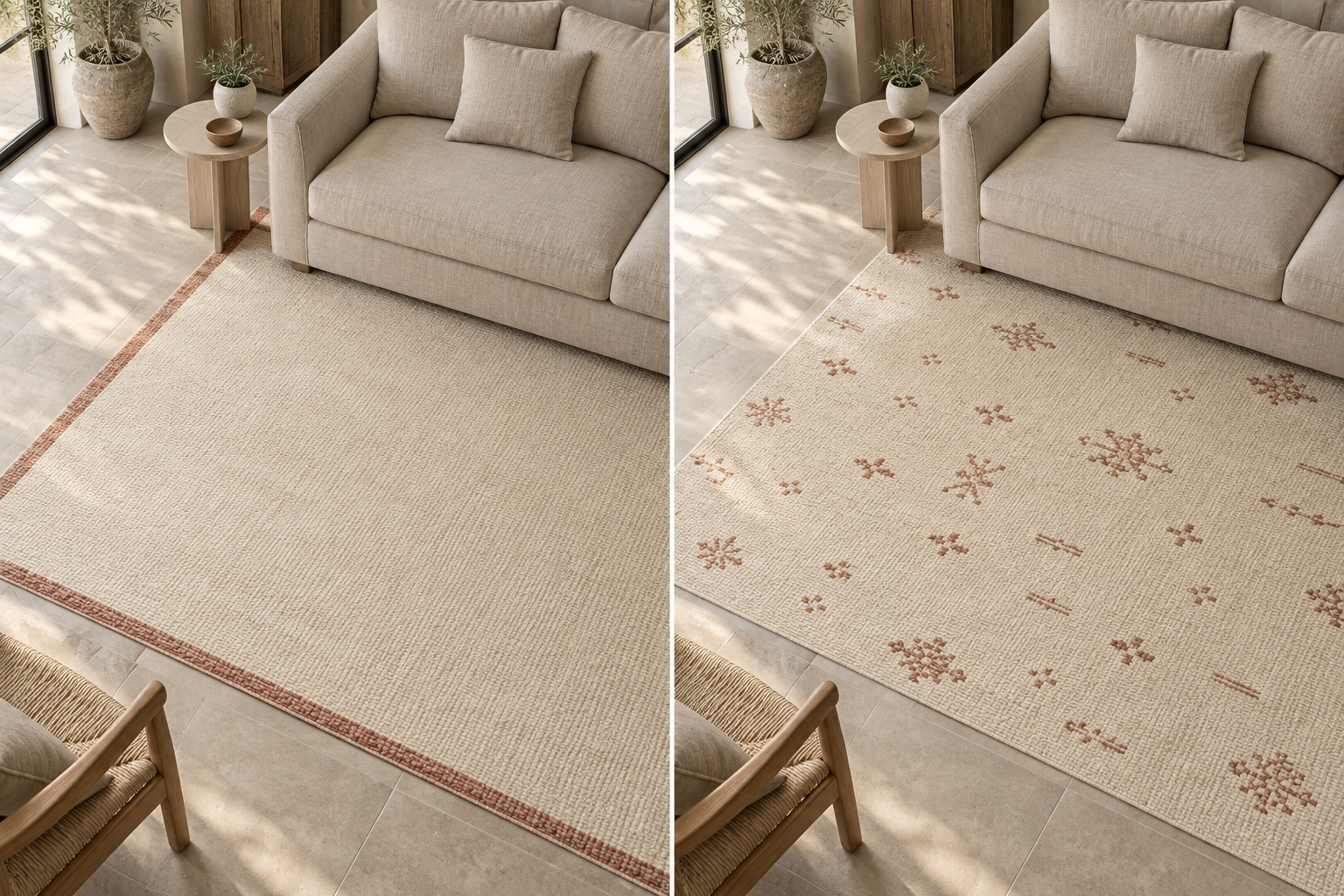
Choose a cream-ground rug with a sparse olive line or muted rust motif, and keep the sofa upholstery and nearby cushions plain. This puts the pattern on one broad surface instead of distributing it across several small accessories. Pick this one if you enjoy a graphic room but prefer uncomplicated seating; repeat one rug color elsewhere only if you want a connection.
A narrow border offers color around the furniture; a scattered motif brings it into the center of the seating area. Choose the border if you prefer an open-looking middle, or the motif if the floor should be more expressive. Position the rug so its useful pattern remains visible, and keep curled edges out of the walking route.
6. Choose Colored Art Instead of More Fabric
Place a print with broad terracotta and muted blue shapes in a plain pale-wood frame above the sofa, using an existing suitable hanging point. The frame gives expressive imagery a simple boundary. This suits someone whose cushions already work for lounging: the color lives in a picture instead. Choose a figurative image if subject matter interests you more than abstract shapes.
Choose the frame size around your actual print. The natural-wood option below is listed at 11 × 14 inches and suits a smaller composition; compare the display opening with the print before ordering. Choose a larger format if you want one picture to span more of the sofa.
Natural-wood frame, listed 11 × 14 in
A natural solid-wood frame for the pale-wood border idea; compare its display opening with your actual print before choosing the size.
Product details
upsimples · Natural
- Color: Natural
- Product Dimensions: 11"L x 14"W
- Mounting Type: Wall Mount
7. Make the Lampshade the Accent
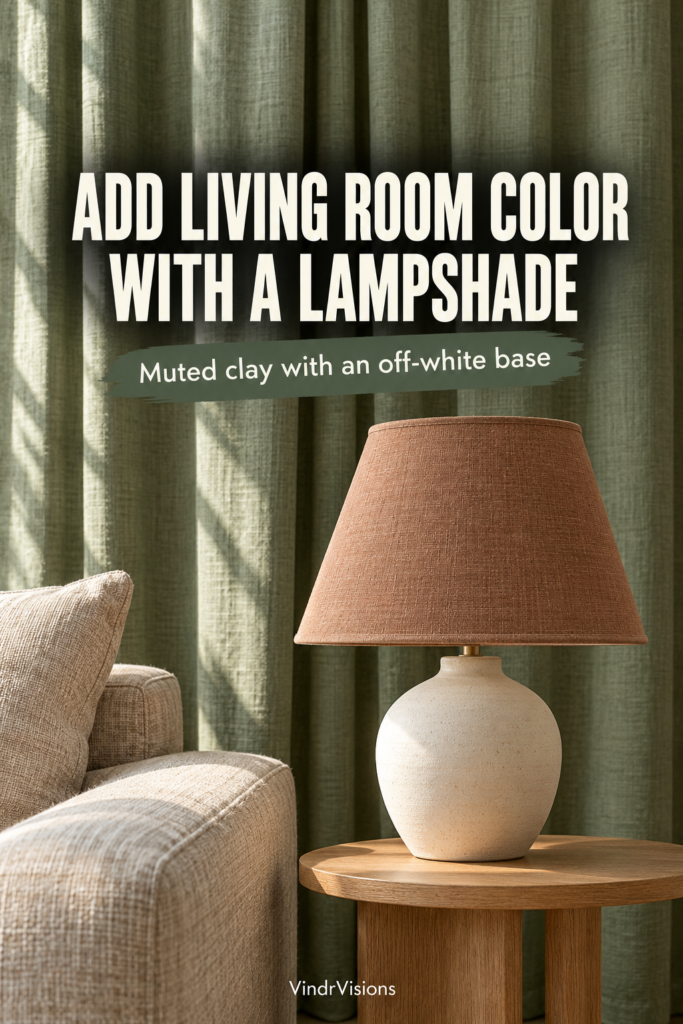
Pair a muted clay fabric shade with a simple off-white lamp base beside the sofa. The colored shade puts a defined shape beside the seating, useful if you prefer one accent object to patterned furnishings. Before swapping shades, check the existing fitter and the lamp's guidance for compatibility. Compare its appearance lit and unlit before committing to the color.
8. Echo One Accent With a Useful Tray
If the olive cushion is your main accent, place an olive tray on an existing pale-wood coffee table or a shelf in the reading area. Give it a job holding remotes or corralling coasters. This distributes the same color through a second useful object, which is a good fit if you want a connection between areas without adding more cushions.
Choose a rectangular tray to make a tidy boundary on a long surface, or a round one beside angular furniture for a different shape. Keep enough surface free for the table's everyday use. For concentrated color, leave the second zone neutral; for distributed color, repeat the chosen accent there and let the other accessories stay quiet.
Prefer to keep green concentrated on the sofa? Use a natural-wood tray to repeat the table’s material instead. The round acacia option below gives remotes and coasters a boundary without adding another green object.
Round acacia display tray
A round acacia tray gathers a few small items into one deliberate coffee-table composition.
Product details
PINXIURY round acacia tray, 13.8 in
- Listed dimensions: 13.8 L × 13.8 W × 0.8 H in
- Listed material: Acacia wood
Affiliate links. As an Amazon Associate I earn from qualifying purchases. Not hands-on tested; the illustrations do not show these exact products.