Choose the rhythm, color and placement of paneling around the room you already use, from broad sofa-wall frames to one warm-wood bay.
 Concept image
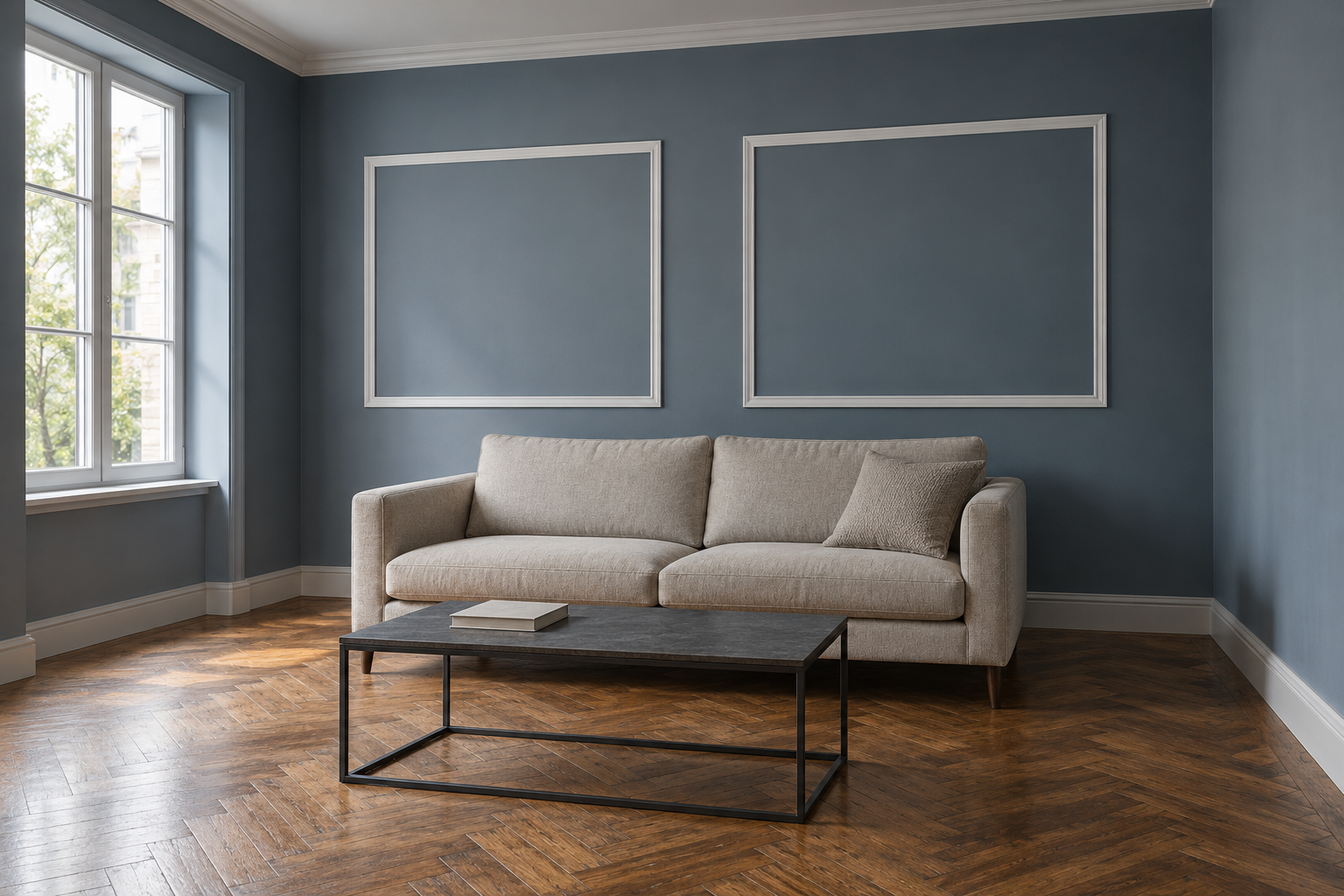
Paneling can supply character without making every wall a pattern. For a quieter-looking scheme, choose fewer wide frames; choose a dense grid when repeated geometry is the feature you want. Build around slate blue, an oatmeal sofa, worn parquet and slender dark metal.
Explore the ideas
- 1. Choose wide frames or a deliberate grid
- 2. Keep beadboard to one lower-wall area
- 3. Let slate blue run across wall and molding
- 4. Make the teal-and-pale color break intentional
- 5. Center the composition on the sofa
- 6. Leave a plain pause around art or a shelf
- 7. Try one warm-wood panel bay
- 8. Preview the boundaries with paper
1. Choose wide frames or a deliberate grid
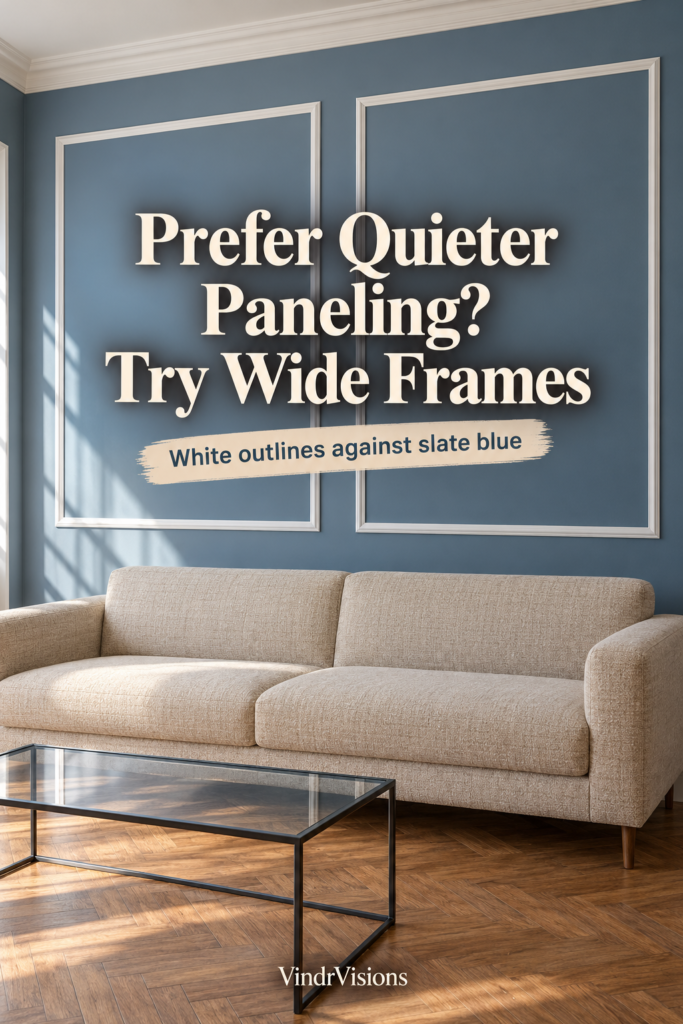
Start with two broad picture-frame outlines on the sofa wall if you prefer generous areas of plain paint between details. A dense grid gives you more intersections and repeated shapes to look at, so choose it when crisp geometry is the attraction. Compare both in the same colors rather than letting a different palette decide for you.
A useful room recipe combines white frame molding, muted slate-blue walls, an oatmeal sofa, worn parquet and a slender dark-metal table. The pale upholstery separates the seating from the wall; wood supplies a warmer counterpoint to blue. Keep the table simple so its shape does not compete with the panel pattern.
Easy Paws · Black · 39.4 x 18.9 x 17.7 inches
A clear glass top and simple black metal frame provide a coffee-table surface while keeping attention on the slate-blue panel pattern.
Product details
Easy Paws · Black · 39.4 x 18.9 x 17.7 inches
- Color: Black
- Size: 39.4 x 18.9 x 17.7 inches
- Product Dimensions: 17.7"D x 39.4"W x 18.9"H
- Item Dimensions D x W x H: 17.7"D x 39.4"W x 18.9"H
2. Keep beadboard to one lower-wall area
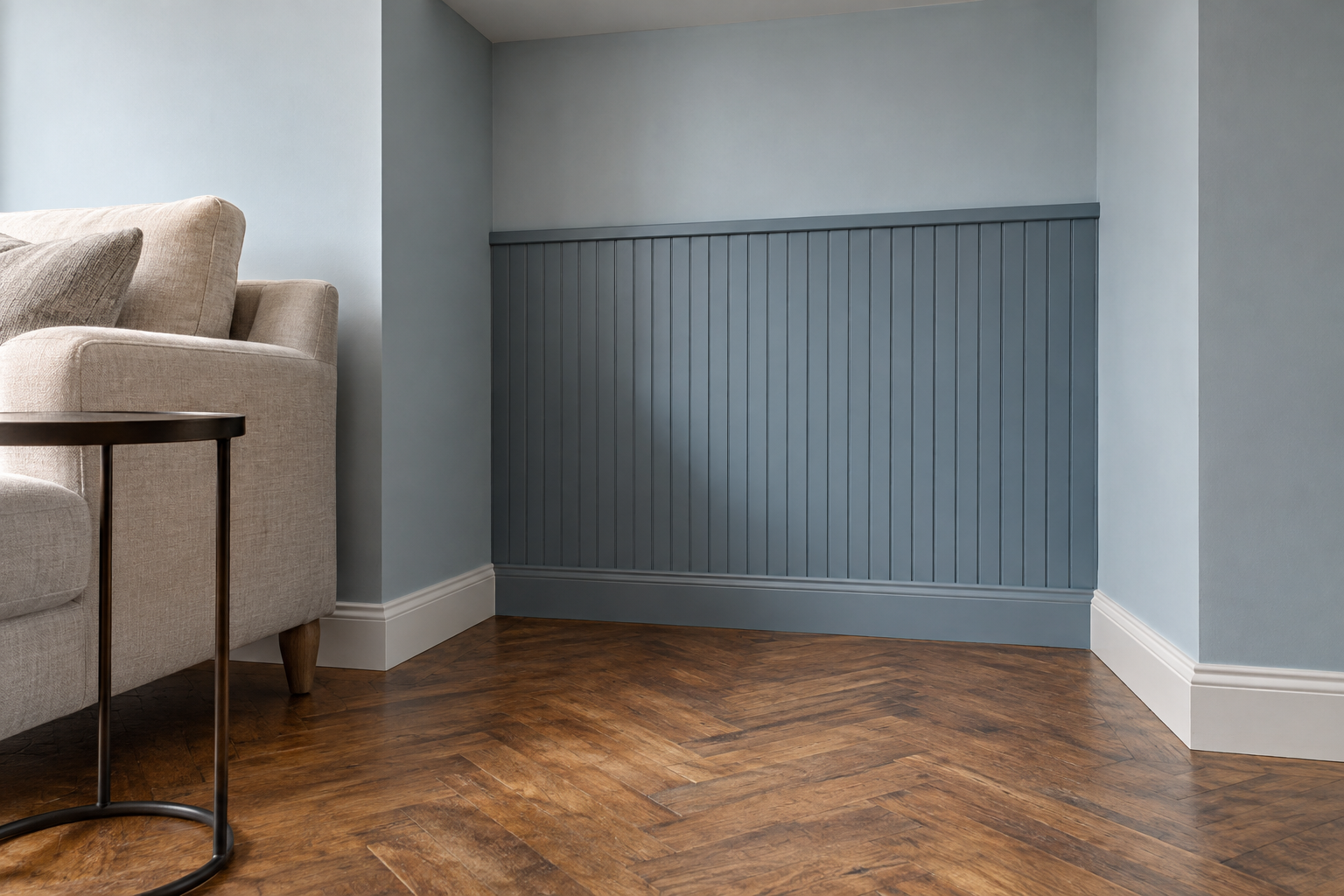
If you like beadboard's narrow vertical rhythm but hesitate over a whole room of stripes, use it on one lower-wall bay bounded by existing corners. Leave the upper wall and neighboring walls plain. This suits a reader who wants close-up detail beside a sofa or reading chair while reserving broad painted surfaces elsewhere; finish the selected area with a deliberate top edge.
3. Let slate blue run across wall and molding
For readers who enjoy panel relief more than contrasting outlines, carry the same muted slate blue across the molding and upper wall. Let light and shadow describe the rectangles instead of a second paint color. Substitute this continuous treatment for the white outlines in the opening recipe; confirm that the chosen molding accepts the intended paint before committing.
4. Make the teal-and-pale color break intentional
Choose a darker teal lower wall with a pale blue-gray upper wall if you want the paneling to read as a distinct band. Let the color change follow its top edge rather than introducing another nearby stripe. This suits someone who likes a pronounced backdrop behind pale seating; compare the boundary with the sofa back before choosing its position.
5. Center the composition on the sofa
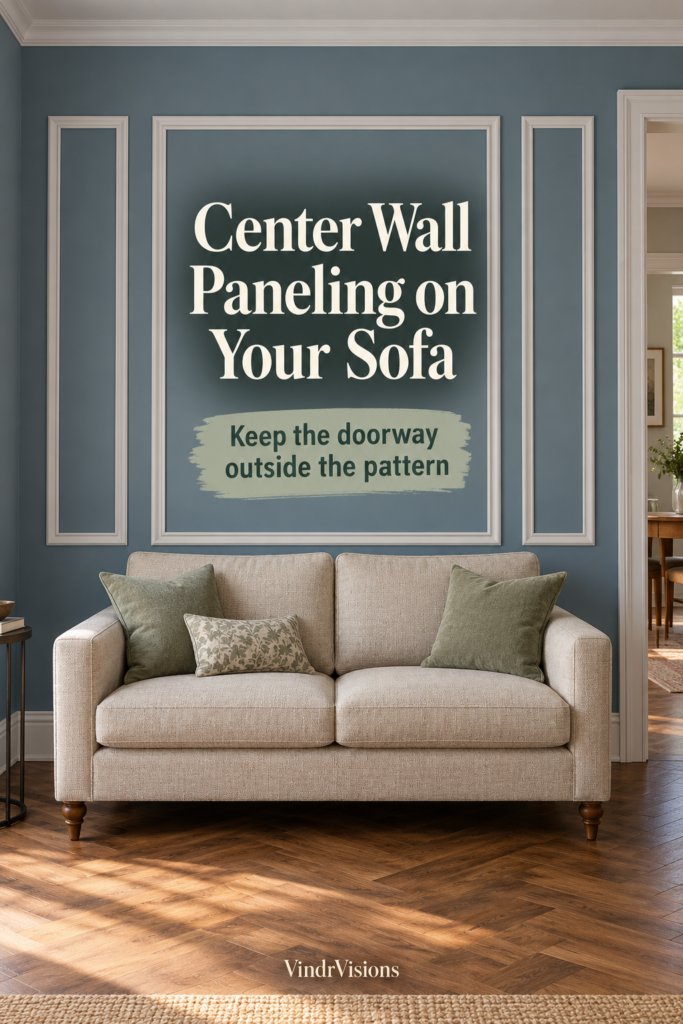
When the sofa is the room's visual anchor, center the panel composition on the sofa rather than automatically filling the entire wall. One broad central frame with narrower companions can suit that arrangement. Let an off-center doorway remain outside the composition; if you regularly move the sofa, a simpler wall-wide rhythm may suit you better.
Peel and Stick Wall Molding Kit Set of 6 Frames
For clean, dry, smooth walls, paintable PS foam trim supports broad sofa-centered frames and a continuous slate-blue wall-and-molding scheme.
Product details
JSIWOTH · White · 24in-14 pcs/54in-6 pcs/48in-4 pcs
- Color: White
- Size: 24in-14 pcs/54in-6 pcs/48in-4 pcs
- Product Dimensions: 851.97 x 1.02 x 0.55 inches
6. Leave a plain pause around art or a shelf
An existing picture or shelf already brings its own edges to the wall. Leave a plain painted area around it instead of running panel boundaries close to every corner. If you are keeping a favorite display, place frames on the adjacent open wall and let the display stand alone. If the artwork is the main attraction, lower-wall paneling is another useful alternative.
7. Try one warm-wood panel bay
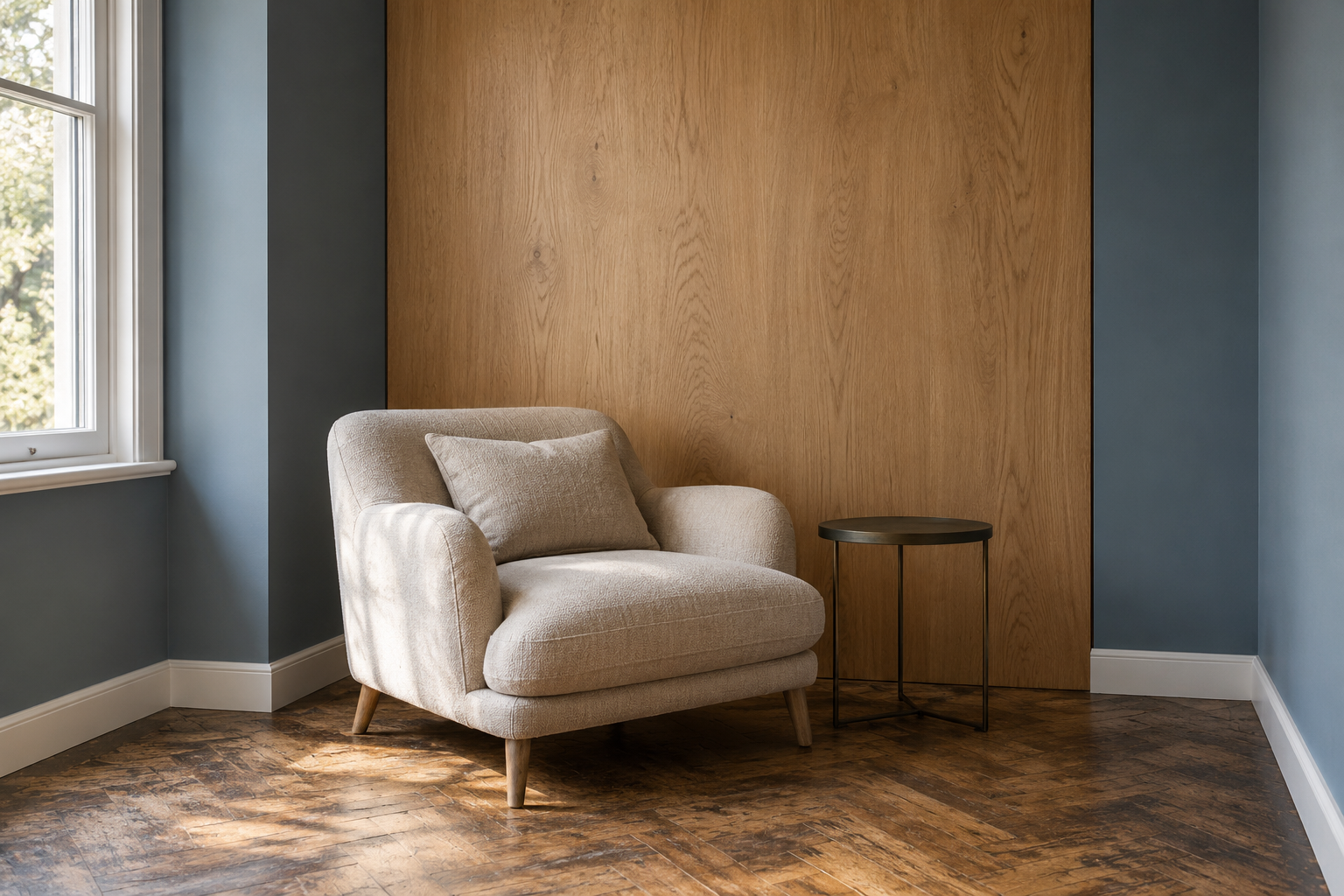
For a reader who prefers grain to painted outlines, consider one flat, warm-wood panel bay in an alcove beside plain slate-blue walls. Keep its surface simple and let the worn parquet repeat the wood note below. Compare an oak-toned sample beside the existing floor rather than assuming they will match; a single bay lets you enjoy the pairing without wrapping the room.
8. Preview the boundaries with paper
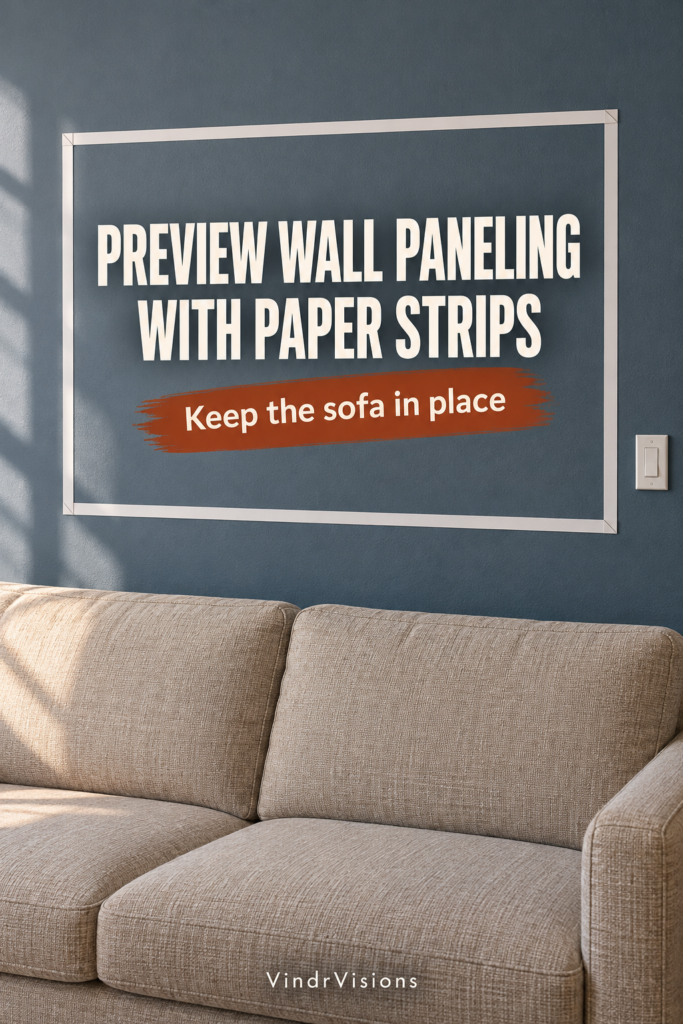
Use paper strips to preview proposed panel boundaries while the sofa stays in place. Hold them against the wall for photos of a wide-frame arrangement and a denser alternative, including existing switches, artwork and shelves. If an outline crowds a switch or disappears awkwardly behind furniture, revise the layout. This previews composition; it does not establish attachment, paint compatibility or removal.
Affiliate links. As an Amazon Associate I earn from qualifying purchases. Not hands-on tested; the illustrations do not show these exact products.