Decide where dinner will be served, then choose your decoration: a patterned cloth, pumpkins at the ends, a removable board or a sideboard display.
 Concept image
1. Burgundy-and-Cream Cloth, Without a Centerpiece
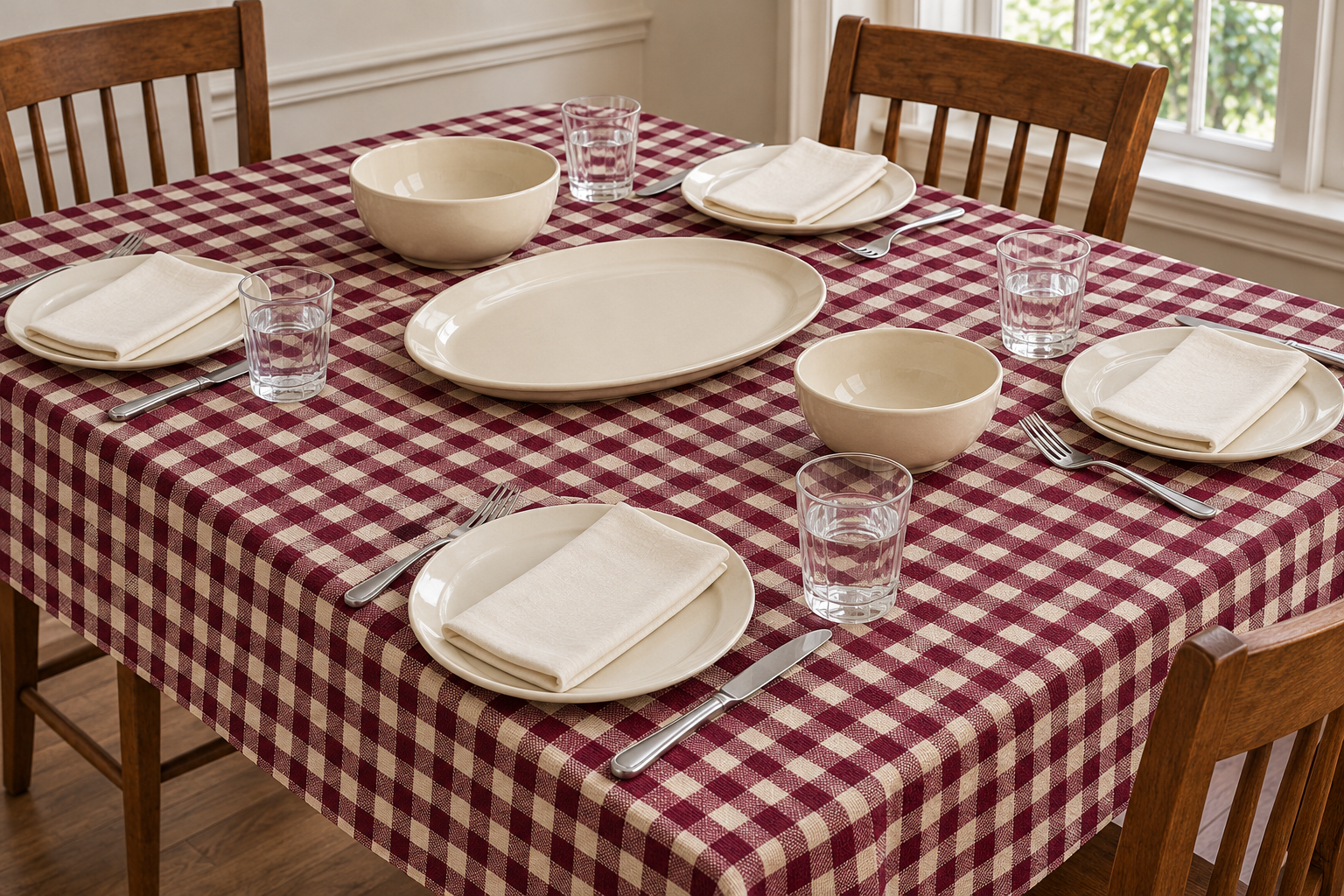
Decide first whether shared dishes will stay on the Thanksgiving table or arrive from a nearby surface. If you want the platters among the place settings, try a burgundy-and-cream patterned cloth with plain cream napkins and no centerpiece. Let the pattern provide the decoration beneath dinner. This is an appealing starting point when you want a dressed table without another arrangement to remove as the food arrives.
Start with a serving dish you already plan to use. Set it on the cloth and consider the combination: a plain cream platter offers a quieter shape against burgundy checks, while a decorated platter introduces another pattern. Neither needs to be ruled out, but decide which you want to notice first. For a cloth-led look, repeat its cream background in the plates and napkins rather than adding patterned napkin rings or a contrasting runner.
Arrange the actual empty serving pieces among the place settings before settling the layout. Include the bowls and smaller dishes you intend to keep at the table, rather than judging the space from the largest platter alone. Fold the napkins on the plates while setting up, then remove them for use at dinner. The cloth stays throughout; there is no decorative object occupying the central serving area or awaiting a new home.
The compromise is visual busyness. Burgundy pattern, food and several different serving pieces may produce a fuller-looking table than you want, even without a centerpiece. If your favorite part of Thanksgiving is displaying an ornate platter, the bare wood in the next look offers a simpler background. Keep this cloth option when the textile itself is the festive feature you want to enjoy as dishes are passed and the arrangement changes.
2. Low Orange Pumpkins at the Table Ends
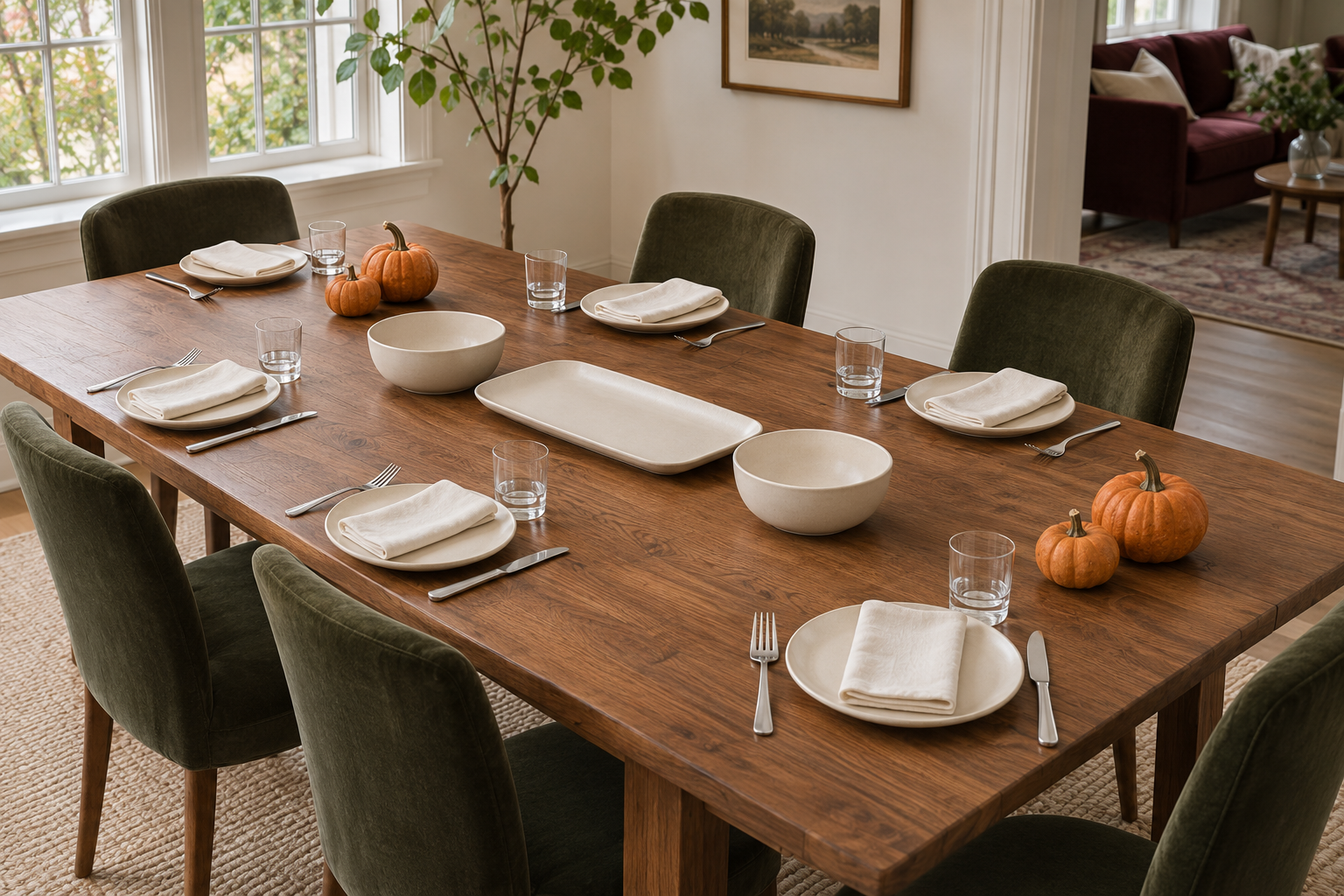
For a Thanksgiving table built around exposed wood, gather low orange pumpkins toward the ends and leave the middle for serving dishes. Their rounded forms give the ends a decorative emphasis without drawing a line of objects through the center. Pair them with cream plates and simply folded cream napkins. Compared with the patterned cloth, this arrangement puts the seasonal color into separate objects and lets the wood remain the main background.
Treat an occupied end as a place setting first and a decorating opportunity second. Position its plate, glass and utensils, then try the pumpkins in the space that remains. Avoid placing a group directly where the end guest's plate belongs just to complete the picture. The two groups can differ in size or sit slightly inward; a balanced-looking photograph is less useful than an arrangement that accommodates the people actually eating there.
Test the middle with the serving pieces intended to stay through dinner. A long platter and several round bowls suggest a different arrangement from a row of similarly shaped dishes, so build around your own collection. In this look, the pumpkins are intended to remain while food occupies the center. If a group competes with a needed bowl or an end setting, reduce it or move it before guests sit down.
The tradeoff is that table-end decoration still uses table space. Low pumpkins do not automatically make the arrangement workable, and empty ends in an inspiration image should not be mistaken for room at your own dinner. Favor this look when you want orange accents to remain visible through the meal and your settings allow them. If every available patch is needed for dishes, keep the wood-and-cream palette and move the seasonal display off the table.
3. Cream Pumpkins on a Board That Leaves Before Dinner
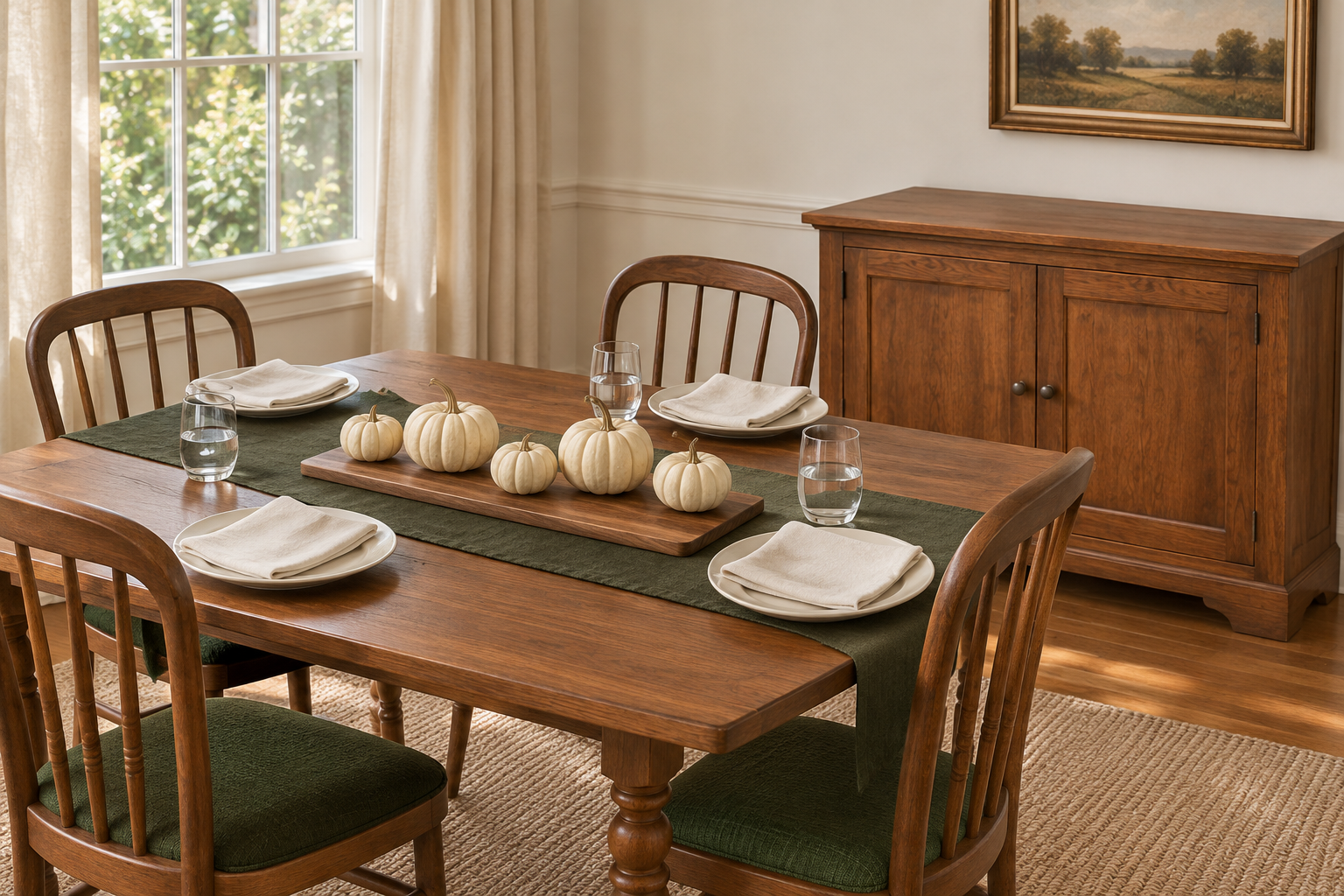
Gather cream pumpkins on one wood board for a Thanksgiving centerpiece that is deliberately cleared before dinner. Choose a low, elongated arrangement so the warm wood remains visible around the pale rounded shapes. With cream napkins and plain plates, the board becomes the main decorative feature of the ready-to-welcome table. This plan offers a centerpiece for the beginning of the gathering without asking it to share the middle with serving platters.
Reserve the board's landing place before arranging the pumpkins. Try it on that surface with the display in place, and leave the spot available until you move it. A nearby cabinet can work only if it is not also needed for the dishes waiting to come to the table. Assigning the same patch to both jobs postpones the problem. Keep water glasses and other gathering essentials out of the reserved landing area.
Before food arrives, clear the pumpkins and board to the reserved surface. Only move them together if your particular board and arrangement can be handled comfortably; otherwise, transfer the pumpkins separately and follow with the board. The useful idea is a contained display with a planned destination, rather than a promise that any decorative board works as a carrying tray. Set the serving pieces into the newly available area instead of building them around leftover decorations.
Accept the visual change as part of this look: the table loses its centerpiece when dinner begins. Keep the cream napkins, plates and exposed wood as the remaining composition, with the shared dishes now taking the central role. If you want pumpkins beside the food throughout the meal, the table-end arrangement is a better direction, provided it works with your settings. The removable board is preferable when you value a decorated arrival and a clear serving area at different moments.
4. Evergreen and Cream on the Sideboard
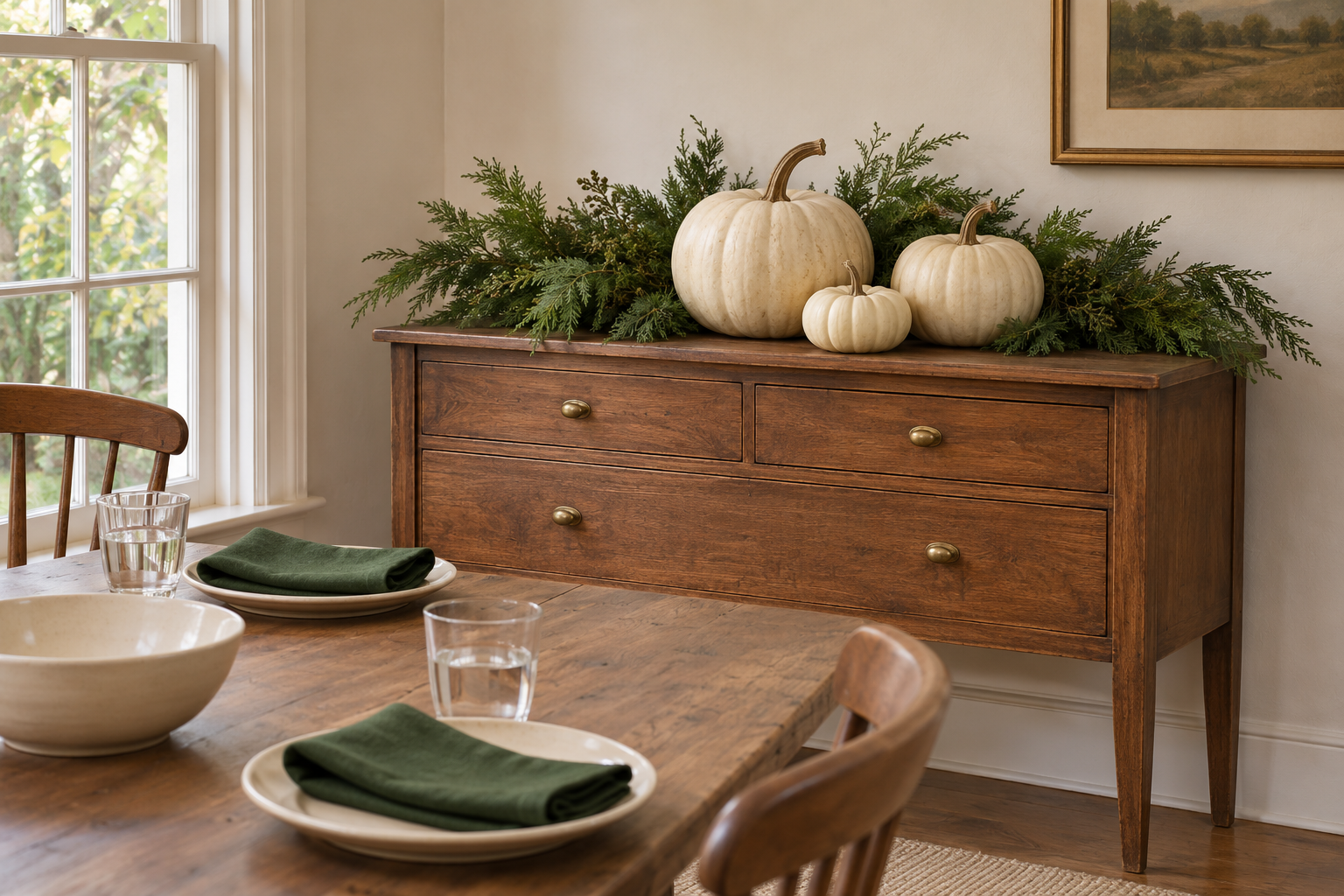
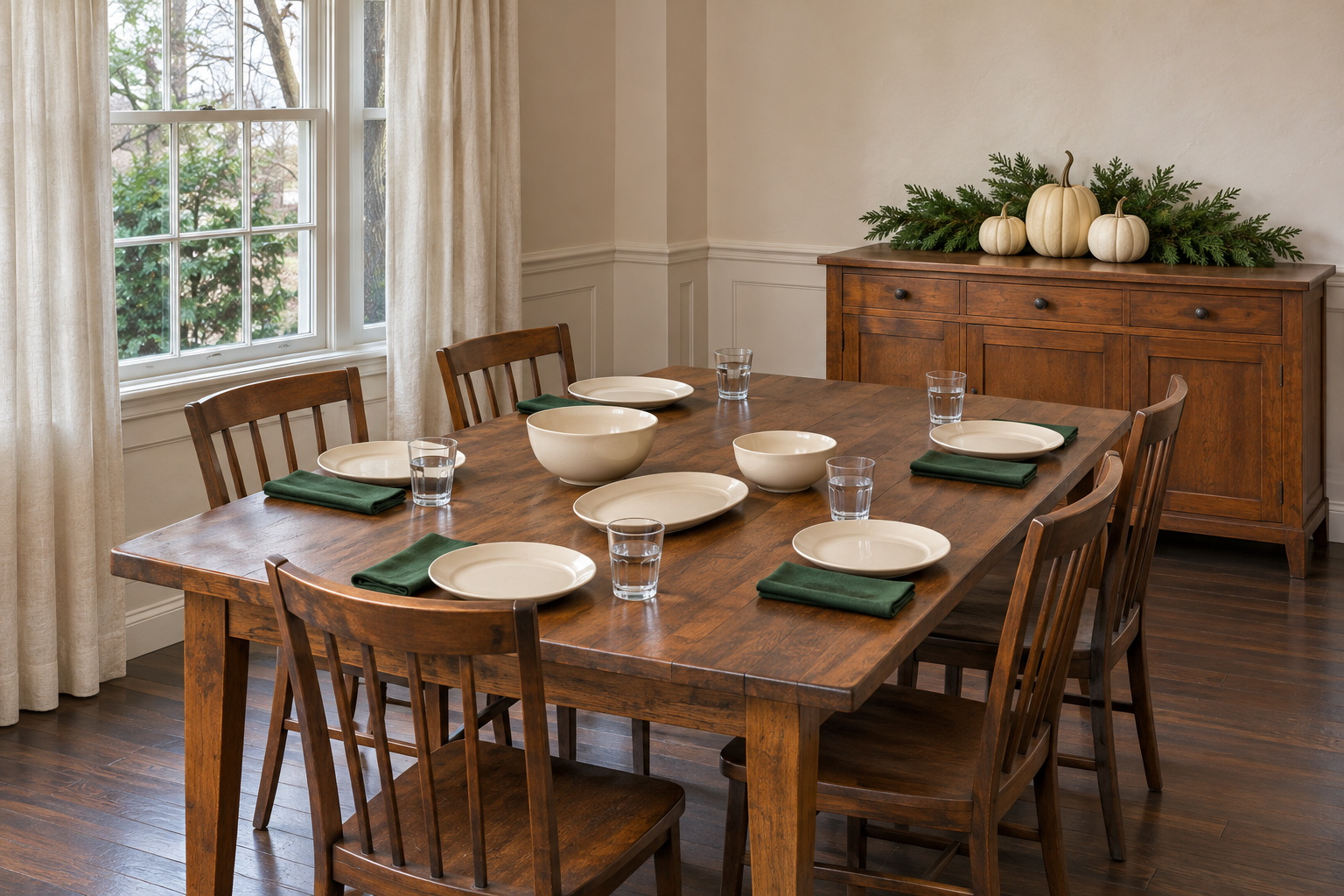
Move the Thanksgiving focal point off the dining table from the start with an evergreen-and-cream sideboard display. Arrange a low sweep of greenery behind a group of cream pumpkins, leaving the pumpkins' pale shapes clearly visible. Repeat the green in plain napkins at otherwise simple table settings. The connection is color rather than a matching centerpiece, giving you a seasonal view across the room while keeping decoration out of the shared serving area.
Decide whether the sideboard is a display surface or a food-serving surface before styling it. For a dinner with shared dishes staying on the table, it can remain decorative throughout the meal. If guests will serve themselves from the sideboard, place the actual serving pieces there first and assess what remains. Do not arrange a full-width display and assume the dinner dishes can be fitted between its branches and pumpkins afterward.
Keep the dining table quieter than the sideboard: exposed wood, cream plates, green napkins and clear water glasses are enough to repeat the palette. Fold the napkins simply so the green reads as part of each setting rather than another decorative project. From the seats, consider whether the sideboard display is a pleasing part of the room. Position the cream pumpkins where they can be seen against the greenery instead of hiding them behind it.
The benefit of this arrangement is continuity: unlike the removable board, the focal point can remain in place through dinner. Its compromise is the use of a separate surface. If that surface must hold food, simplify or relocate the display before serving rather than treating it as permanent. Begin with the serving routine, choose the surface that can genuinely remain decorative, and then connect it to the table with the green napkins.
Sources and editorial method
These layouts and styling suggestions are editorial ideas. Concept illustrations do not show a tested installation or prove product fit.