Try black as a fine outline beside cream and warm wood. These five alternatives help you choose where that outline belongs, from pale artwork to a striped cushion.
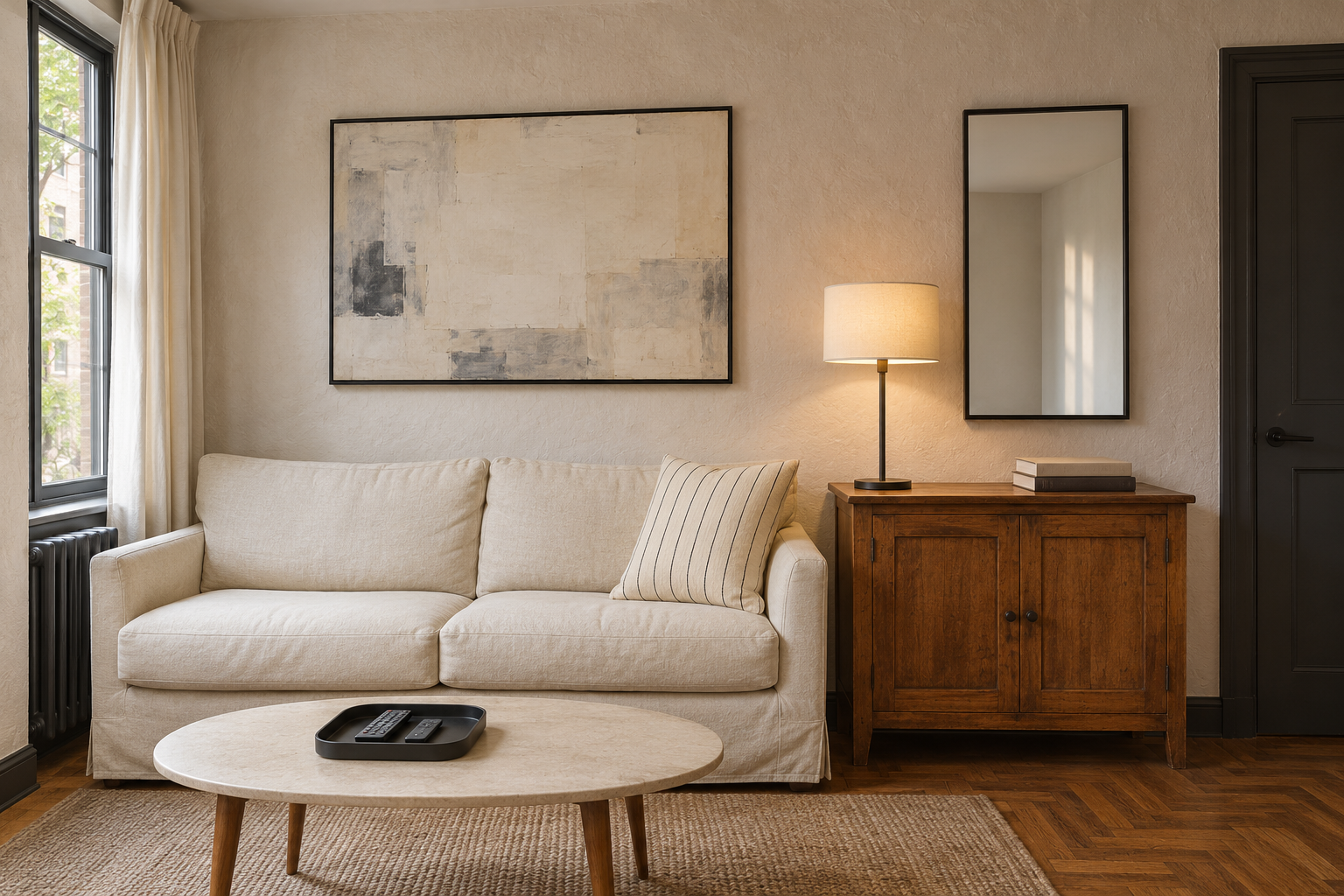 Concept image
1. Give pale artwork a slim black outline
Try a straight-sided cream drum shade on a black lamp when you want to repeat the straight edges of a square sofa arm or rectangular cabinet. Choose a tapered cream shade instead when you prefer an angled, more traditional-looking profile beside warm wood. Then consider a fine-striped cream cushion as a quiet way to repeat the dark line. The five choices below are alternatives for connecting black details across a pale seating area, rather than a shopping list to complete; start with a frame, lamp or fitting you already have.
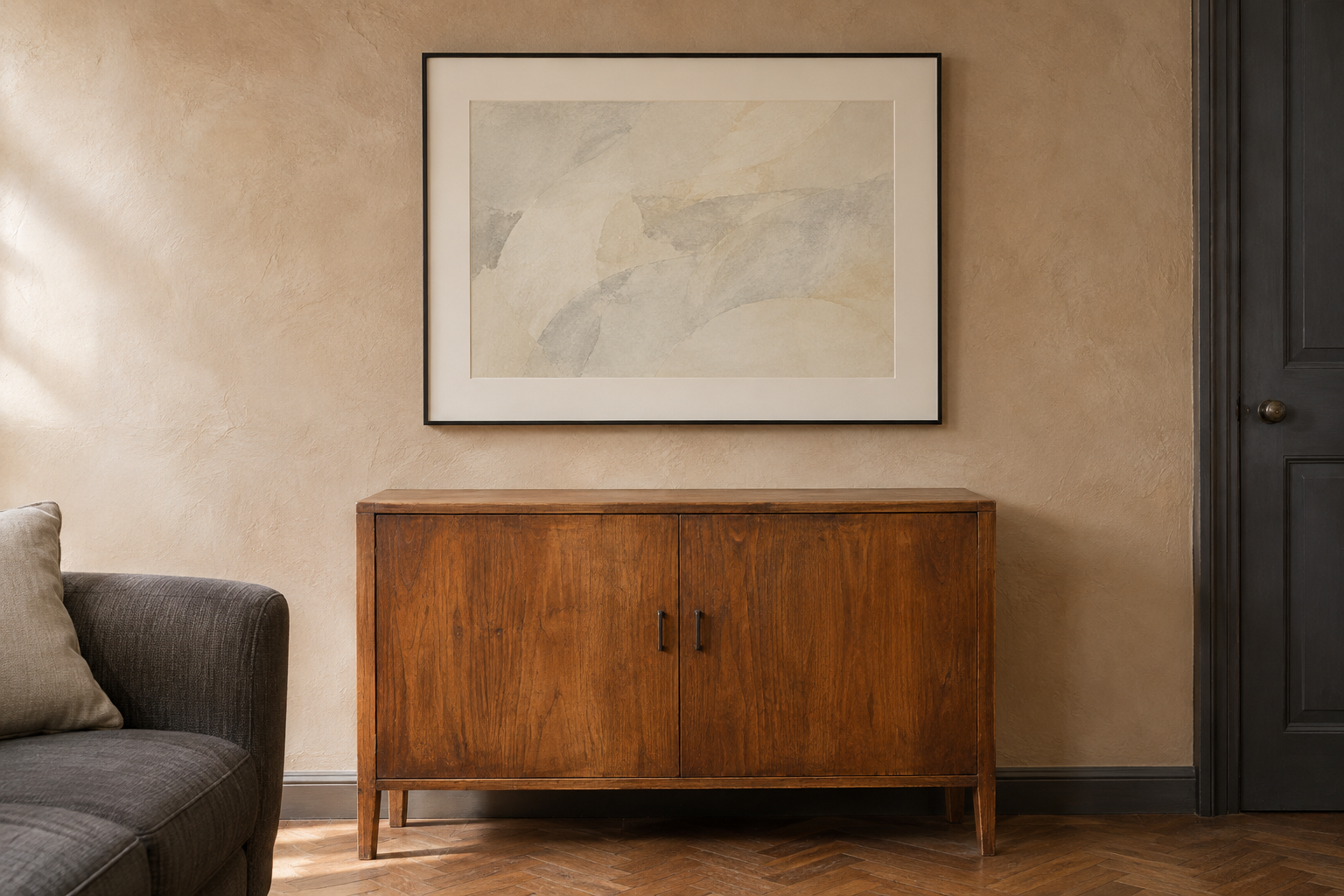
For artwork with a pale background, consider a slim black frame and a generous light mat. The narrow edge offers a crisp boundary without making the border the main event. A broad dark frame is a different decorating choice: try it when you want a small print to have a more substantial presence above a cabinet. If the image itself contains strong black shapes, begin with the slim option so the border does not compete with them.
Place the framed piece over a wood surface with some bare wall visible around it. I would leave the cabinet top directly below mostly clear, particularly when the artwork is detailed. That arrangement gives the frame, pale paper and wood grain separate roles. For a quieter composition, repeat the frame's line elsewhere in the room rather than placing a cluster of small black ornaments beneath it. A dark cabinet handle may already provide enough of an echo.
Large black poster frame
A large black frame that turns one print or poster into a single clear focal piece.
Product details
Americanflat 24 × 36 poster frame, black
- Listed size: 24 × 36 in
- Listed finish: Black, engineered wood
2. Compare light shade shapes on a dark lamp
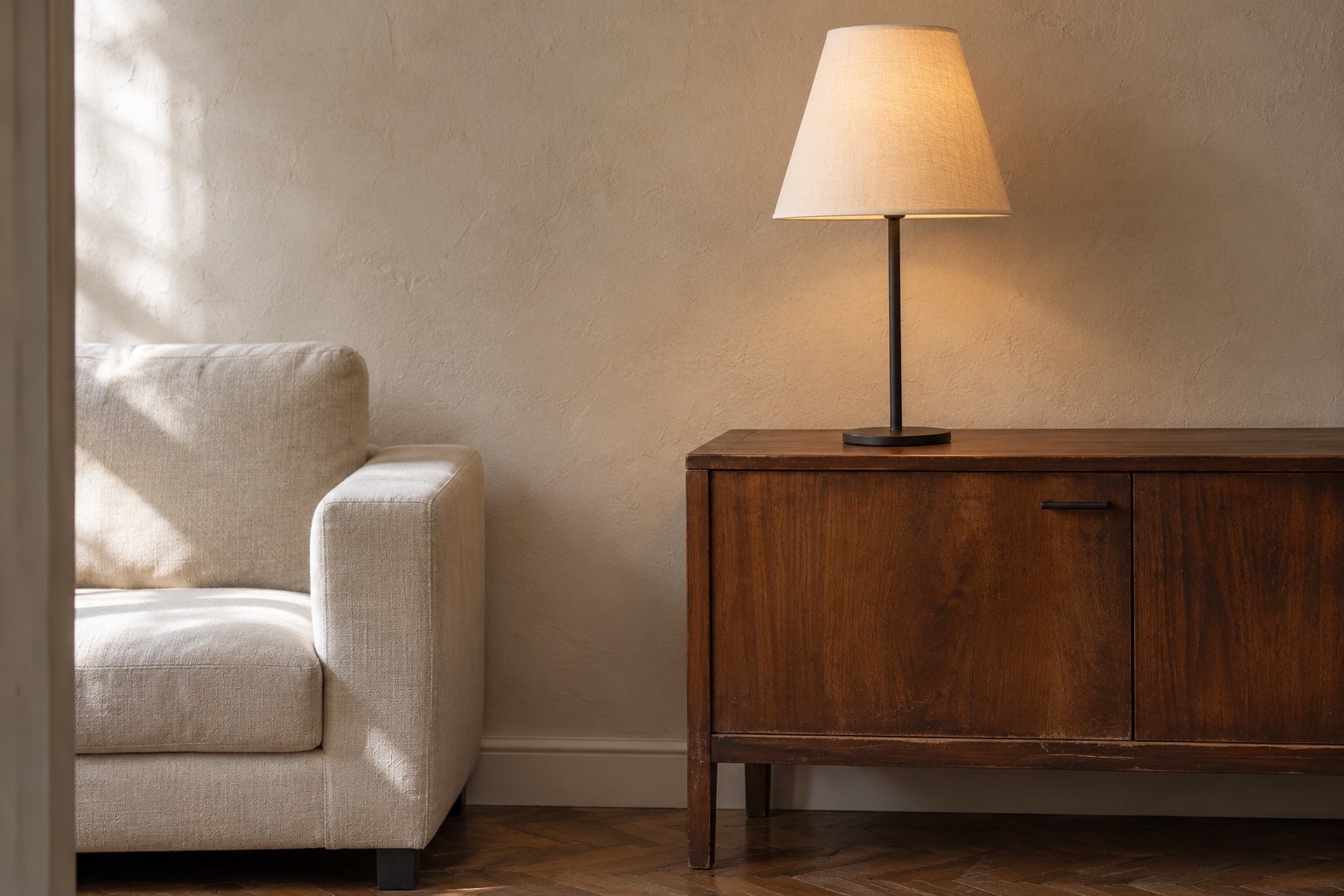
Make the shade silhouette your next decision. A straight-sided drum offers a simple outline beside a square sofa arm or rectangular cabinet. A tapered shade introduces an angled profile; consider it when you prefer a more traditional-looking lamp against otherwise plain furniture. Keep the stem slender if you want the dark part to read as a line. A broad black base would be a stronger visual anchor and deserves more space around it.
Here, compare the shades for their silhouettes. Compare the profiles from the sofa and from the room entrance, where the shade will sit against different backgrounds. Beside a busy bookcase, I would favor the simpler drum. Against an uncluttered wall, the tapered outline has room to be noticed. If replacing a shade, confirm compatibility with the existing lamp separately before committing to the look.
Compare the proposed cream shade with your upholstery under the lighting you normally use; treat the pairing as a preference rather than expecting identical color names to produce a match. Coordinate black finishes in the same view, too. With matte handles nearby, I would start with another subdued finish. Beside glossy fittings, either repeat that sheen deliberately or let one glossy piece remain the exception. There is no need to replace every fitting to make the room coherent.
Off-white pleat linen lampshades, set of 2
Compare this off-white pleated two-shade set as a detailed alternative on compatible existing lamps.
Product details
Springcrest Jody pleat shades, set of 2
- Listed size: 7 × 14 × 11 in, set of 2
- Listed fitter: Spider
3. Put a slim rectangular mirror beside warm wood
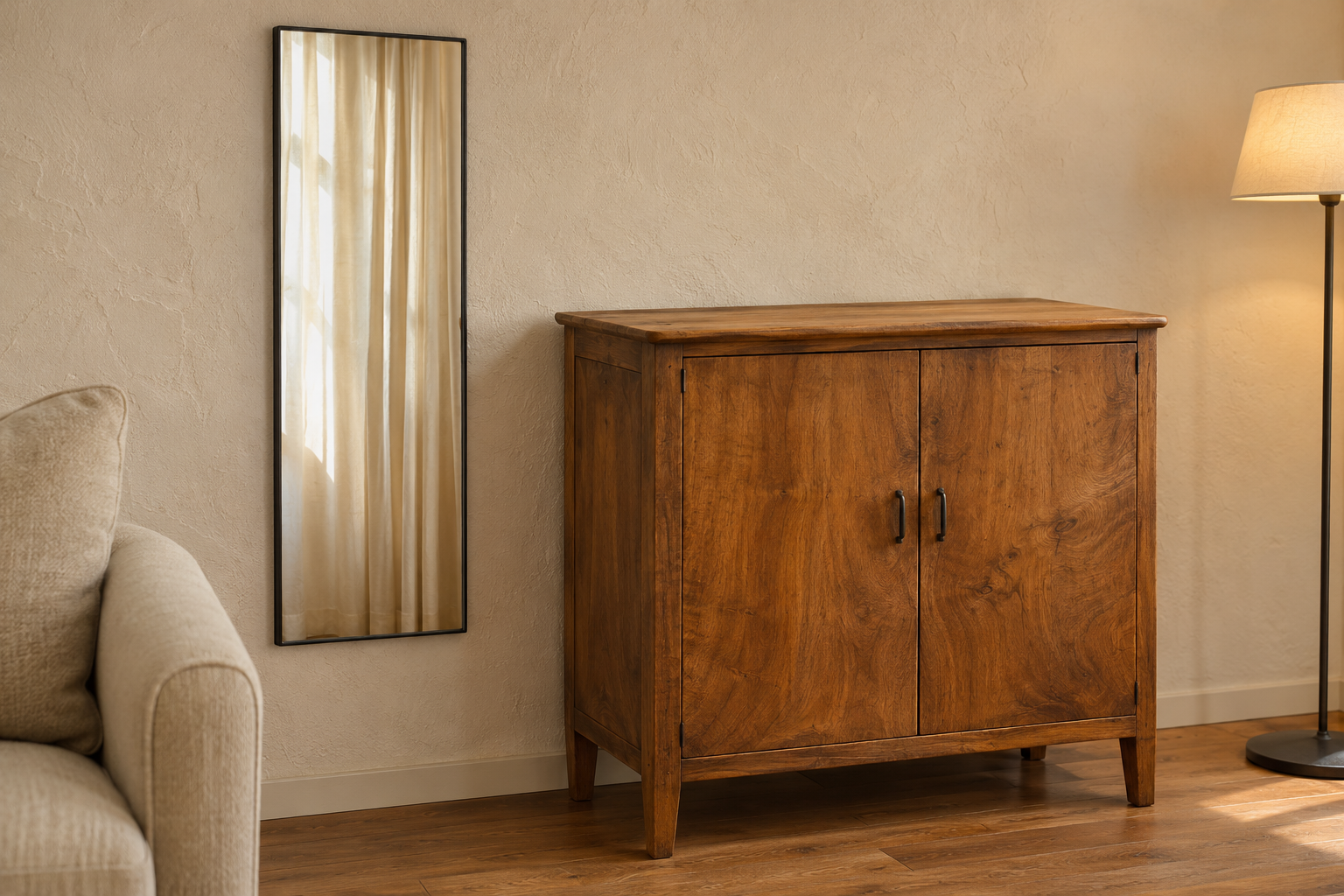
Try a narrow rectangular black-framed mirror on the wall beside a wood cabinet, leaving a visible strip of wall between them. Keep the cabinet's wood top or side clearly in view. In this arrangement, the mirror contributes a dark perimeter while the cabinet supplies the substantial shape. The exposed wood matters to the composition: it gives the eye a brown surface between the mirror's black line and any dark handles or objects nearby.
A slim frame is the starting point when you want the mirror to join existing black details quietly. Consider a wider black surround only when you want the mirror itself to become a dominant feature. I would avoid pairing that wider surround with a dark cabinet and a row of black accessories in the same small area; the distinction between outline and dark mass would become less clear. Leave more of the wood exposed instead of adding another pale ornament as a correction.
Before settling on the wall position, look at what the mirror would reflect from your usual seat. Aim for a view you enjoy, such as a stretch of curtains or part of the seating arrangement, rather than treating any available wall as equally useful.
Rectangular Bathroom Mirror, 30"x20" Black Metal Framed Vanity Mirror
A black metal-framed rectangular option for the mirror-and-wood arrangement; compare its border with the slim outline you want.
Product details
AMOISE · Black · 30"L x 20"W
- Color: Black
- Size: 30"L x 20"W
- Product Dimensions: 30"L x 20"W
- Mounting Type: Wall Mount
4. Gather remotes in one matte-black tray
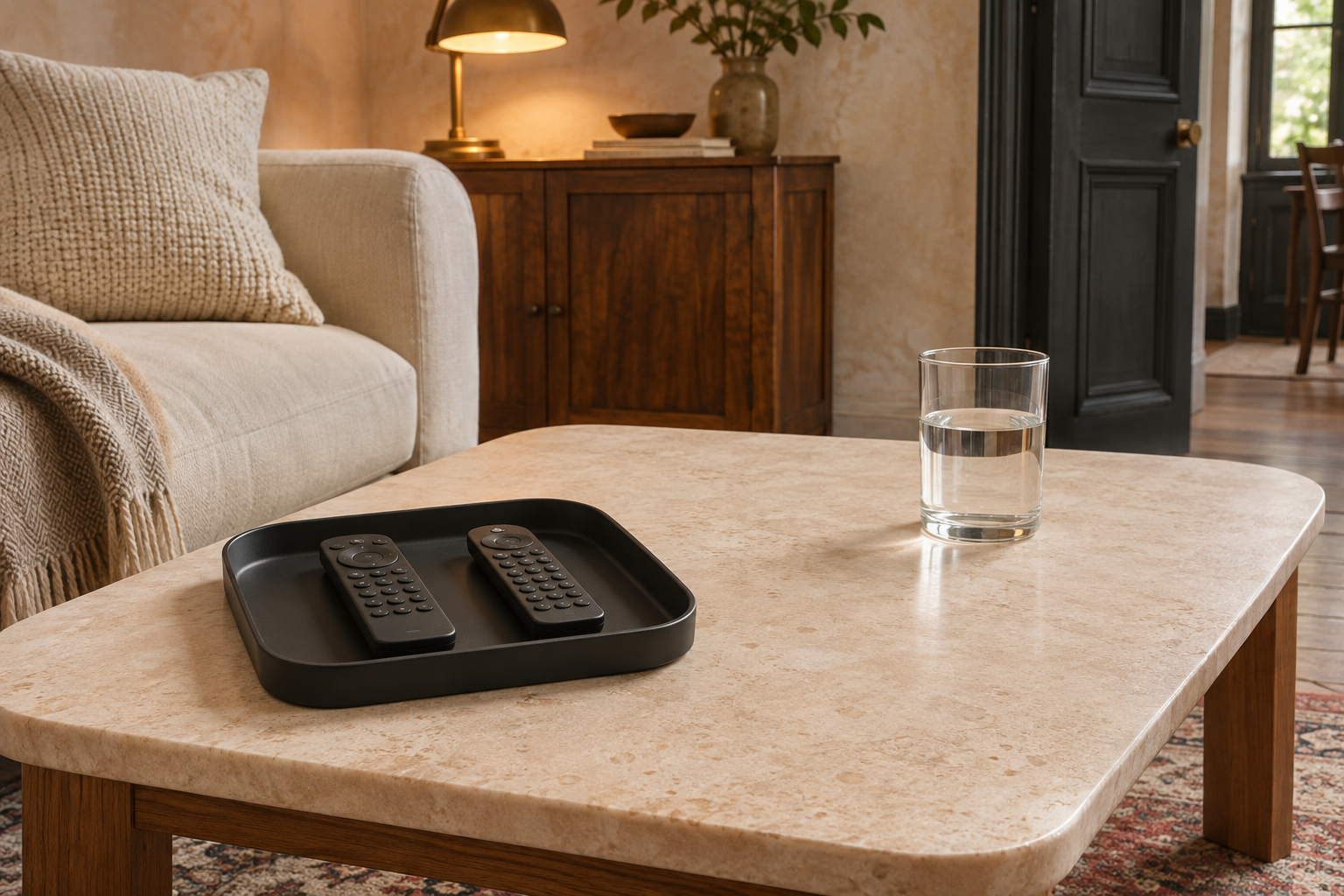
On a pale coffee table, try one compact matte-black tray as a defined home for remotes. A rounded or oval outline offers a curved interruption among rectangular controls and furniture. A rectangular tray makes a more orderly-looking arrangement when the remotes sit side by side. Neither shape needs decorative filler. Let the controls be its contents, especially if a vase, books or a bowl would leave the tray too crowded for everyday use.
Set the tray toward one side of the table, within comfortable reach of the main seat, and preserve an open area for a drink or whatever you regularly put down. If the tray dominates the surface, try fewer contents or a different location rather than treating a larger tray as the automatic answer.
For shopping, keep the brief specific: a compact matte-black tray for the remotes you actually use. Confirm the selected finish and usable interior dimensions before buying. Lay out your controls as you want to store them and compare that arrangement with the interior space, rather than relying only on outside dimensions. An oval's curved ends may interrupt a side-by-side layout; a rectangle worth considering must still leave the surrounding tabletop useful. Allow enough room to take the controls out and put them back.
Fermus · Matte Black
If your remote fits, this matte-black stainless steel tray gathers it on a pale table while echoing dark fittings beside warm wood.
Product details
Fermus · Matte Black
- Color: Matte Black
- Material: Stainless Steel
- Product Dimensions: 7"L x 3.2"W x 0.4"H
- Item Dimensions L x W x H: 7"L x 3.2"W x 0.4"H
Hanobe · Black
If your remotes fit, this black wooden tray groups controls on a pale table while its round outline contrasts with rectangular frames.
Product details
Hanobe · Black
- Color: Black
- Material: Wood
- Product Dimensions: 11.22"L x 11.22"W x 1"H
- Item Dimensions L x W x H: 11.22"L x 11.22"W x 1"H
5. Repeat a dark line in a cream cushion
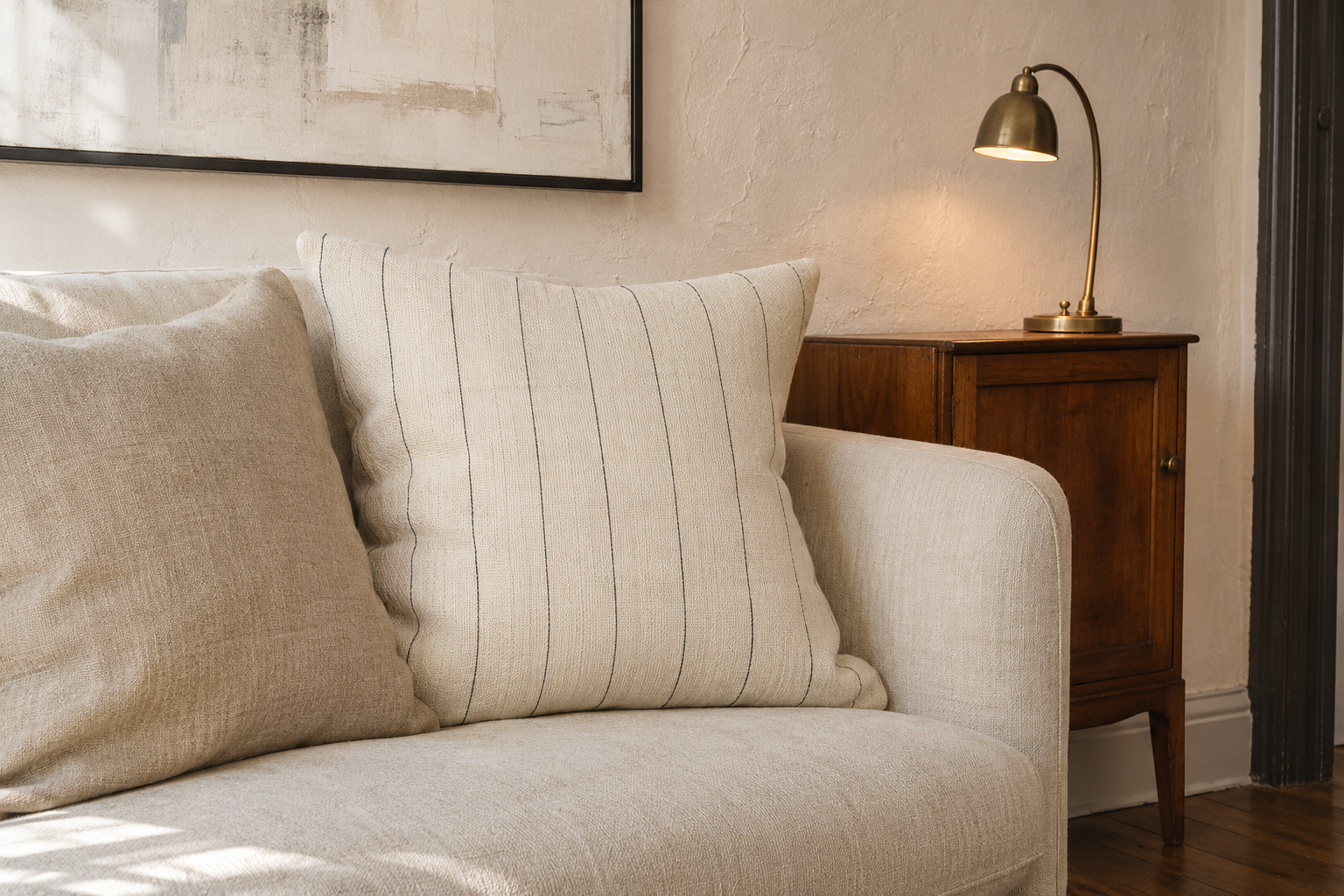
A cream cushion with narrow black stripes is an option when you want the repeat to stay mostly light. Place it at the sofa end nearest an existing dark frame or lamp so both appear in the same view. Compare it with a larger black motif before deciding: fine lines offer a restrained graphic detail, while a broad check or substantial woven shape makes the cushion more of a focal point. Choose the larger pattern because you want that emphasis, not simply because it contains black.
Keep the neighboring cushion plain if the stripe is meant to provide the pattern. Cream, oatmeal or a brown already present in the wood are possible companions; compare them against the actual upholstery rather than introducing all three. On a sofa with a pronounced weave, I would start with a widely spaced fine stripe instead of a dense pattern. On smooth upholstery, a more visible motif may be the detail you prefer.
The cushion shopping brief remains a cream cover with a restrained black pattern. Confirm the selected ground color and pattern separately: a beige-and-black woven design is not automatically the same choice as a cream fine stripe. Compare the cover with an existing plain cushion before adding another companion.
Sweetshow · Black Dots · 18" x 18" (Pack of 2)
Black dots on cream linen connect pale upholstery with existing dark fittings, offering a patterned alternative to fine stripes beside warm wood.
Product details
Sweetshow · Black Dots · 18" x 18" (Pack of 2)
- Color: Black Dots
- Size: 18" x 18" (Pack of 2)
- Material: Linen
- Product Dimensions: 18"L x 18"W
Sources and editorial method
These layouts and styling suggestions are editorial ideas. Concept illustrations do not show a tested installation or prove product fit.
Affiliate links. As an Amazon Associate I earn from qualifying purchases. Not hands-on tested; the illustrations do not show these exact products.