Choose between rich velvet, graphic paper stars, cool silver, earthy terracotta and simple gingham—with a different arrangement for each Christmas mantel palette.
 Concept image
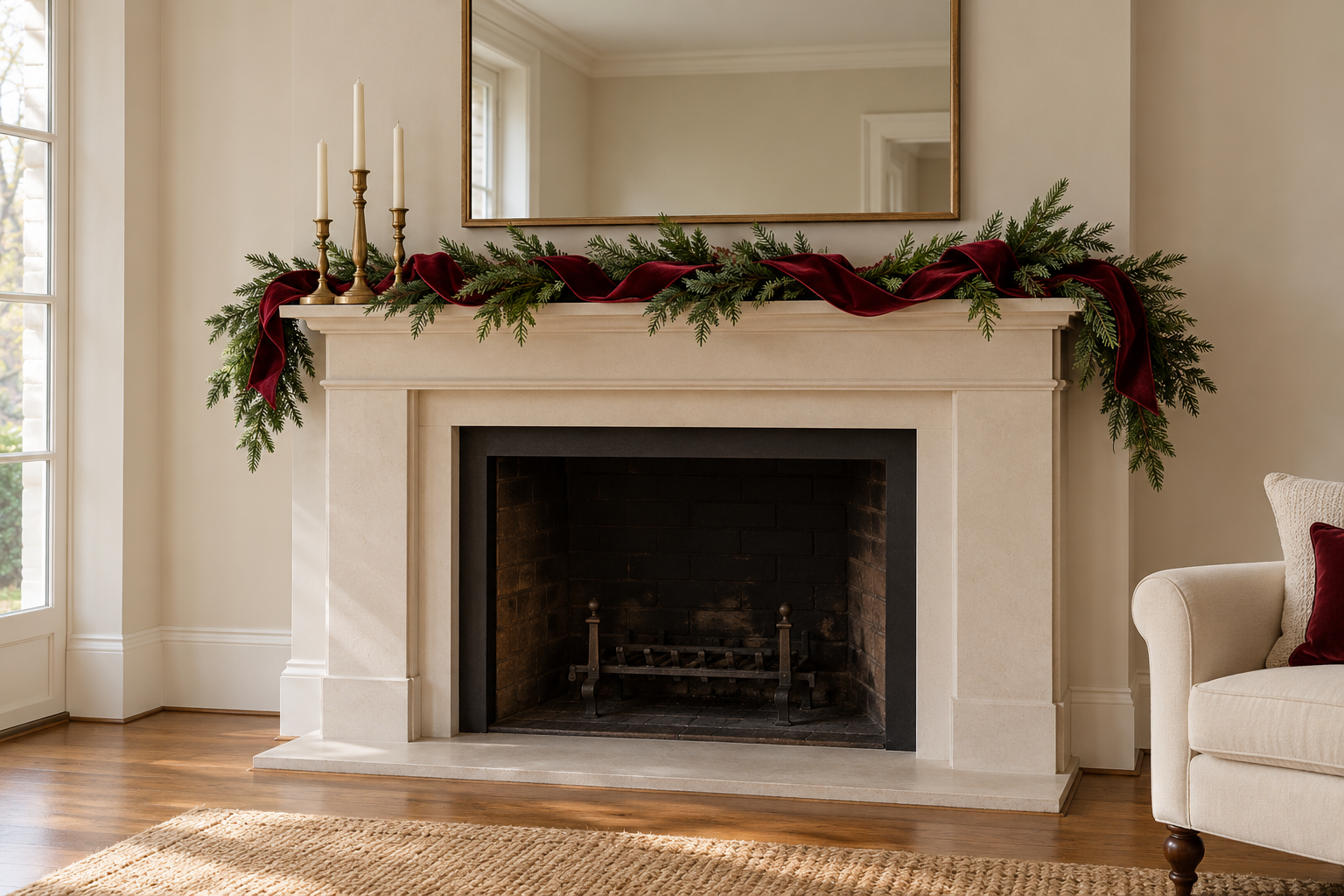
Start with burgundy velvet, muted brass and evergreen if you like rich fabric with restrained shine: repeat low ribbon folds, cluster the brass and leave greenery visible. For a lighter, graphic alternative, choose ivory paper stars and pale wood.
Explore the ideas
1. Burgundy Velvet, Muted Brass and Evergreen
Choose this palette if you want rich Christmas color while keeping the greenery prominent. Arrange evergreen along the mantel, then repeat burgundy velvet in low, loose folds rather than one oversized bow. Shape the ribbon accents separately before placing them among the branches so you can adjust their fullness and spacing.
Group muted brass candleholders with unlit candles toward one end instead of distributing shine across the entire shelf. The clustered metal gives the velvet a contrasting finish without competing with every fold. Beneath detailed artwork, keep the ribbon low and the brass grouping compact; beside a plain mirror, let one ribbon accent spread a little wider.
2. Ivory Paper Stars and Pale Wood
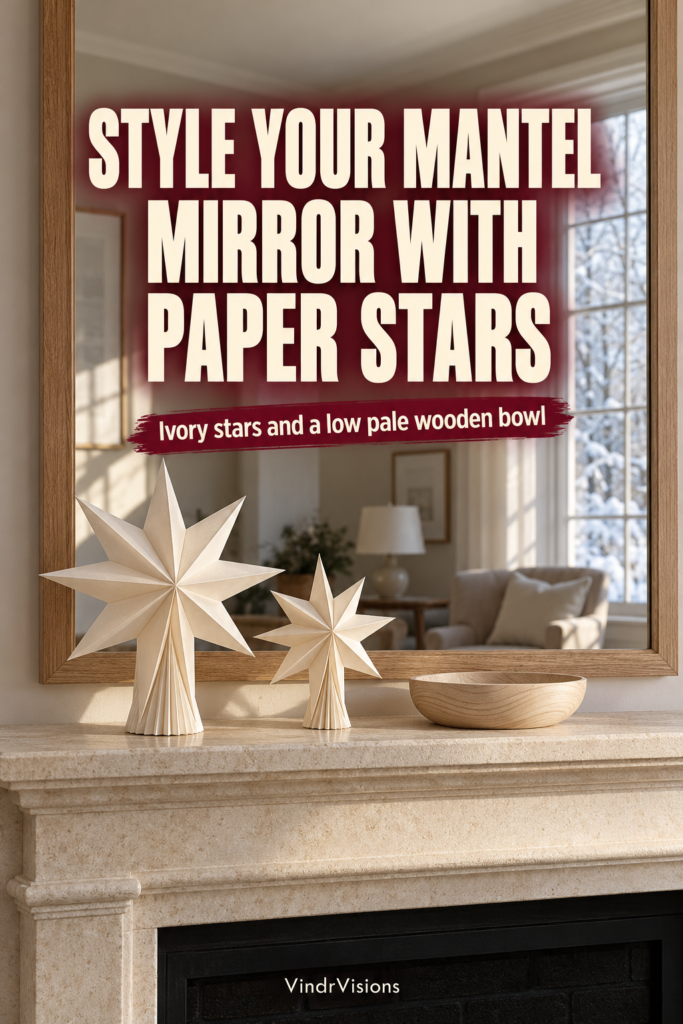
Choose ivory paper stars and pale wood when you prefer a graphic, matte mantel to a ribbon-heavy display. Stagger the star heights and leave gaps so their points remain distinct. Repeat ivory across the stars and use a low wooden bowl as the quiet horizontal shape beneath their sharper silhouettes.
Use paper decorations designed to stand on their own bases; a hanging paper shade is not a freestanding ornament. Against a mirror, try a compact, off-center group to leave some glass visible. Beneath busy artwork, use a simpler spread of smaller silhouettes rather than filling the space with overlapping points.
3. Navy Ribbon, Silver and Spruce
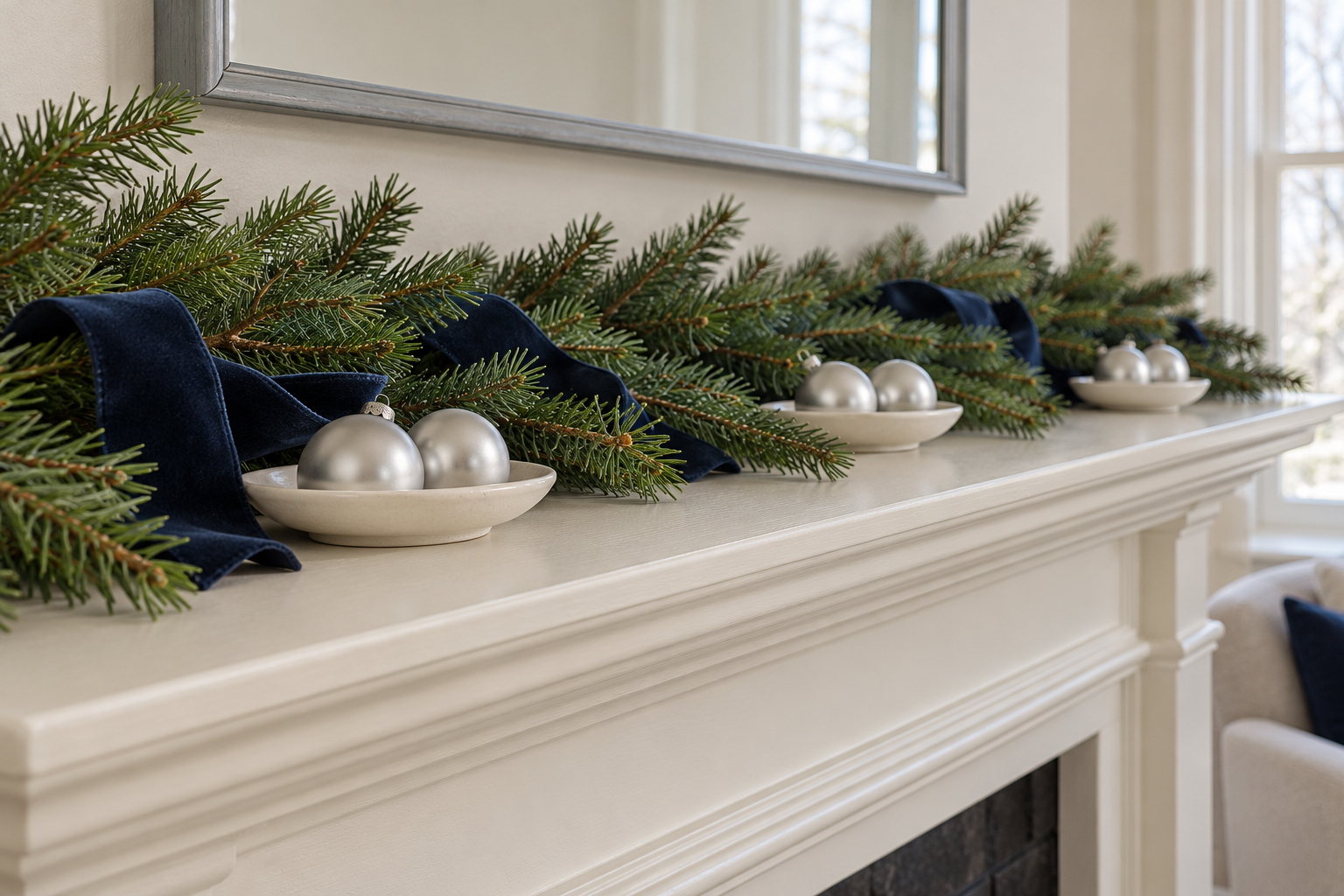
Navy ribbon, silver-colored accents and spruce offer a cooler, more tailored alternative to burgundy and brass. Repeat short navy folds through the greenery, then space the silver accents with visible stretches of spruce between them. Keeping the reflective pieces separate gives each one a clear outline instead of making one continuous shiny band.
Choose one silver shape to repeat, such as round ornaments gathered in shallow dishes, rather than mixing bells, stars and figurines. A plain mirror can accommodate a fuller spruce line; beneath patterned artwork, shorten the greenery arrangement and let navy provide the main color connection. Use restrained folds if crisp edges appeal more than billowing bows.
4. Terracotta Vessels and Dried Orange
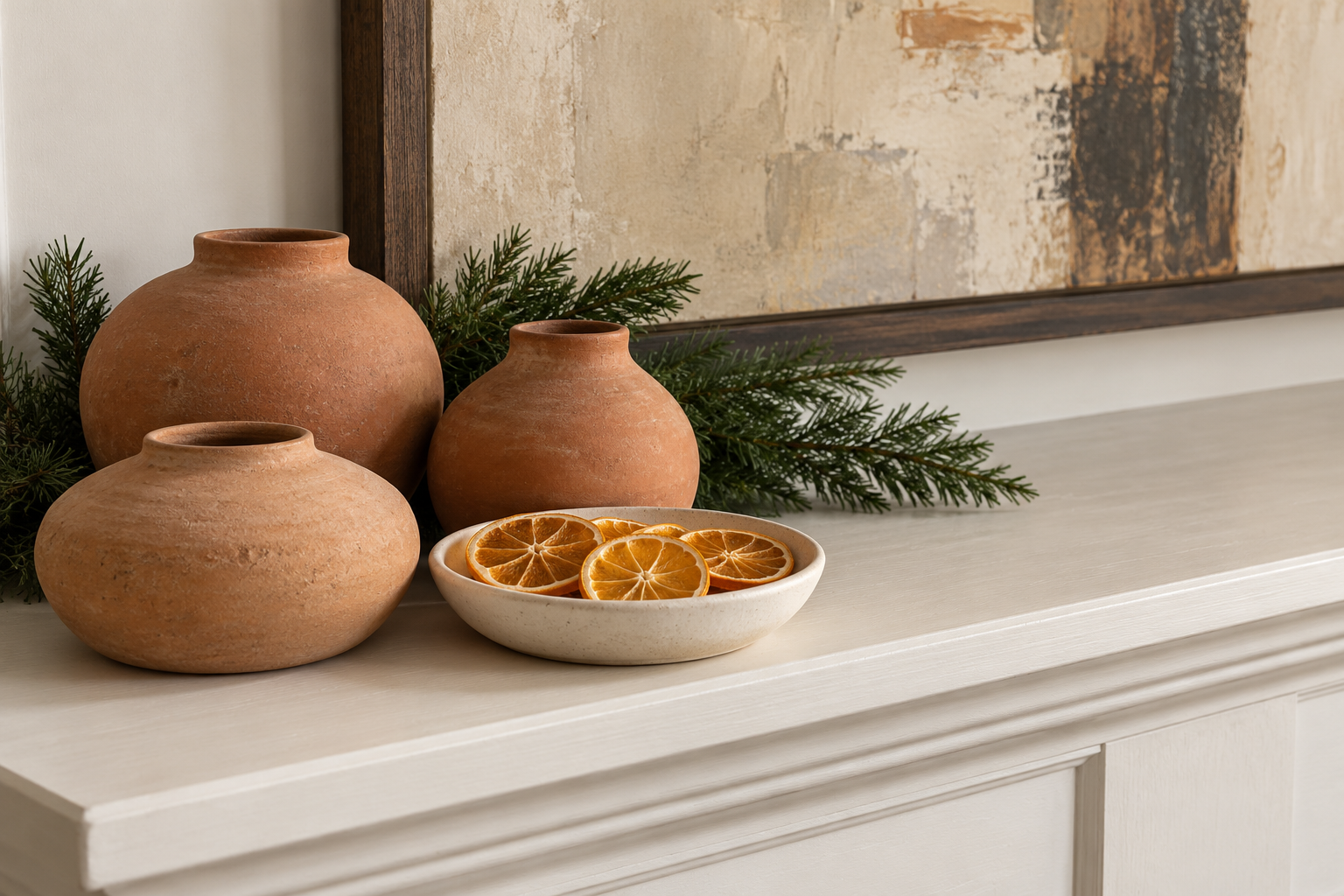
Terracotta vessels and dried orange suit readers who want Christmas color through earthy surfaces rather than metallic sparkle. Cluster squat vessels beside a shallow dish of orange slices, keeping the composition low and broad. Repeat the clay color in different rounded forms, with a little evergreen behind the group to make the orange-and-brown palette feel distinctly seasonal.
Let the orange slices supply the detail; leave the vessels plain instead of adding patterned ribbon. Beneath a large artwork, gather the arrangement toward one side so it reads as a deliberate group. With a small mirror, spread the low pieces more loosely along its base, keeping every vessel fully supported by the mantel.
5. Forest Green, Gingham and Cream
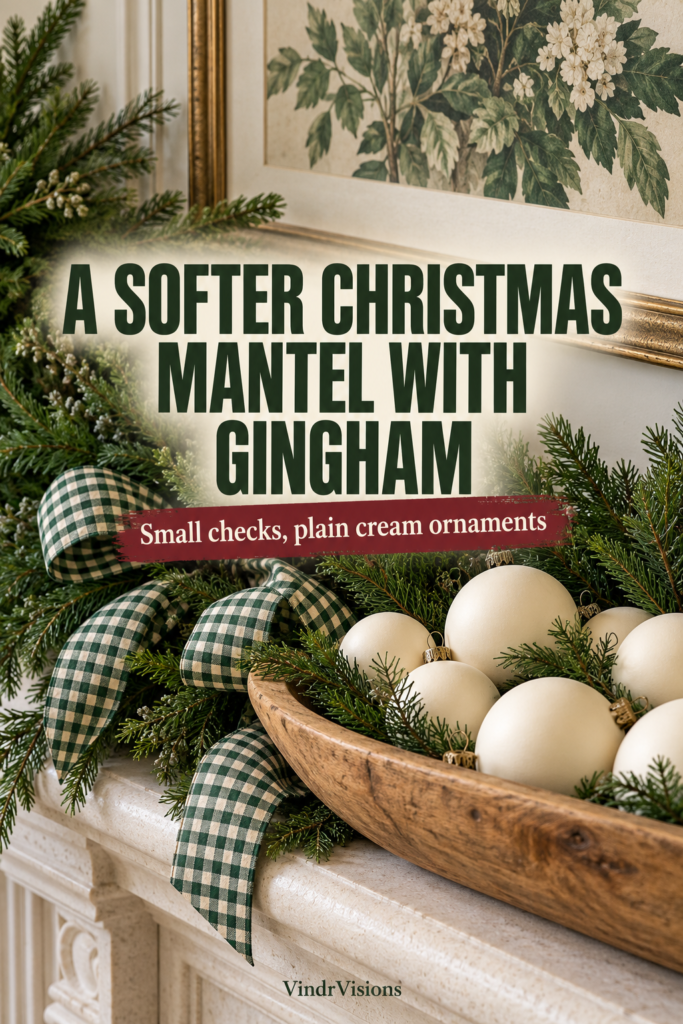
Choose forest green, green-and-cream gingham and plain cream ornaments when you want pattern without several competing motifs. Keep evergreen as the broad background, repeat gingham in small ribbon accents and gather cream ornaments in a shallow wooden bowl. The plain ornaments give the checked fabric a quieter companion than another patterned decoration would.
Keep gingham as the only printed motif, and repeat its cream color in simple ornament shapes. Beneath detailed artwork, concentrate the ribbon near the bowl and leave the remaining greenery unadorned. Beside a plain mirror, space the gingham accents farther apart. This is the softer, patterned alternative to the sharper paper-star silhouettes.