Keep white plates and clear water glasses, then choose where Christmas color belongs: across a cloth, along a runner or just in the napkins. Five material combinations give that decision a distinct look.
 Concept image
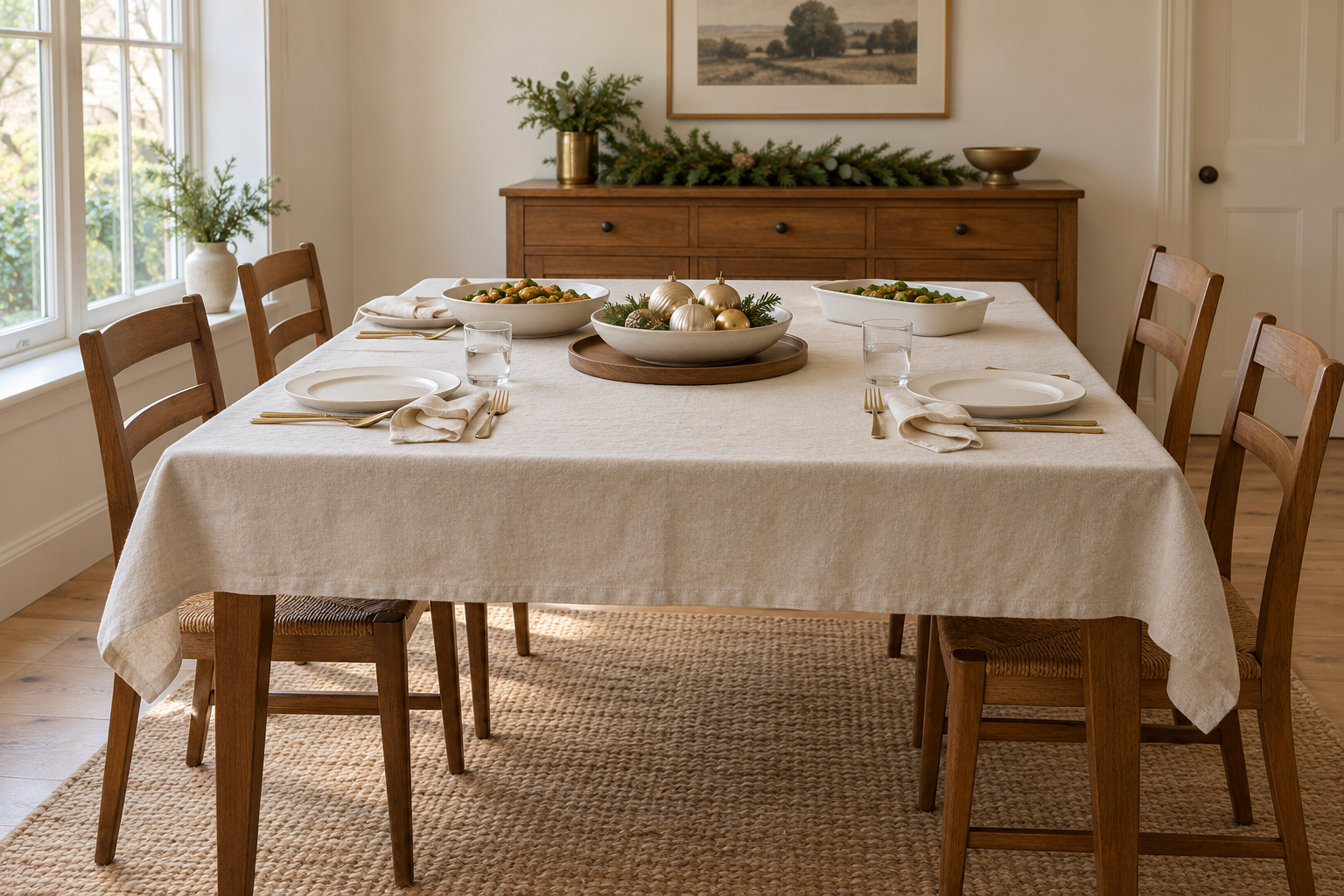
1. Cream Linen, Brass-Colored Details and Rounded Shapes
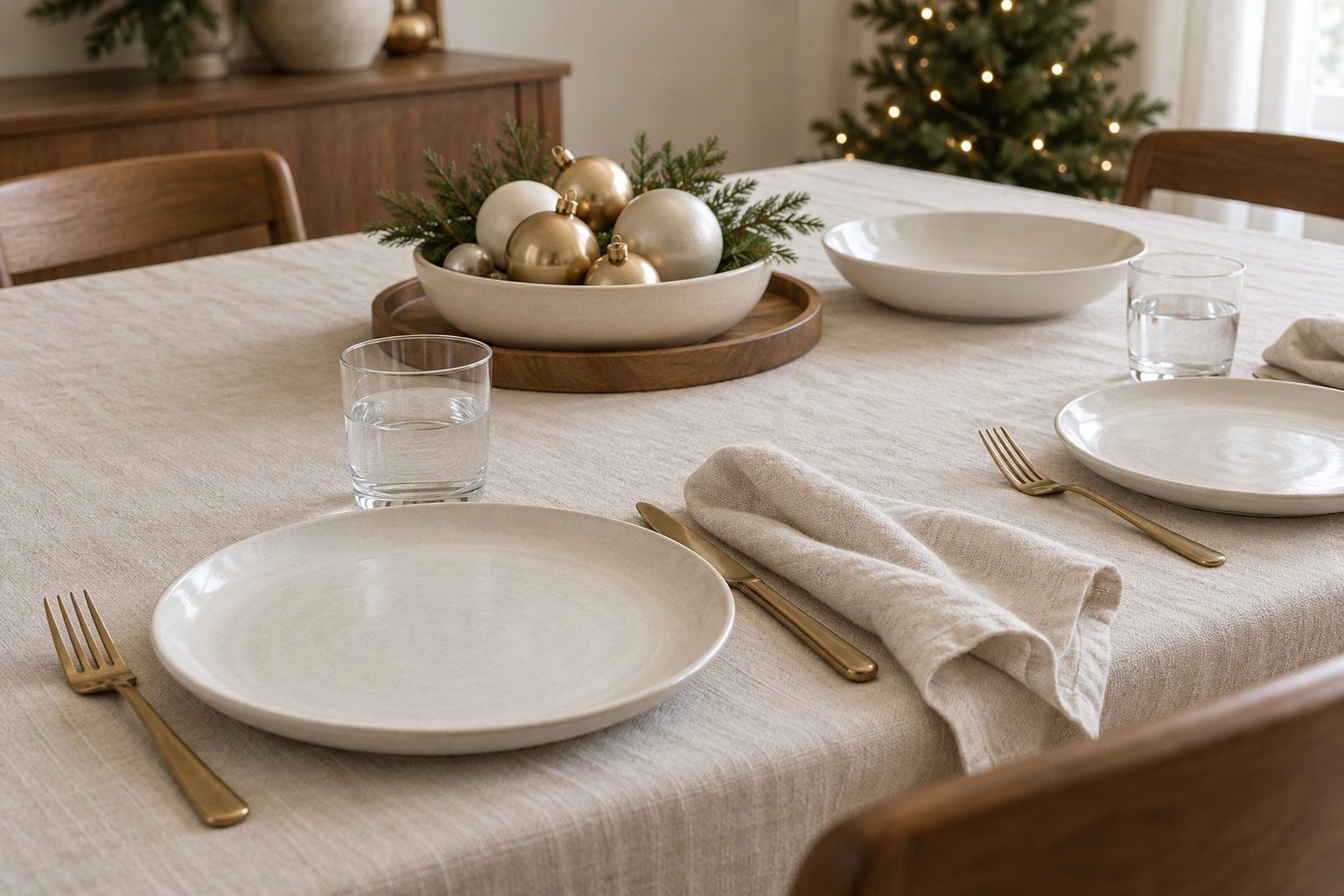
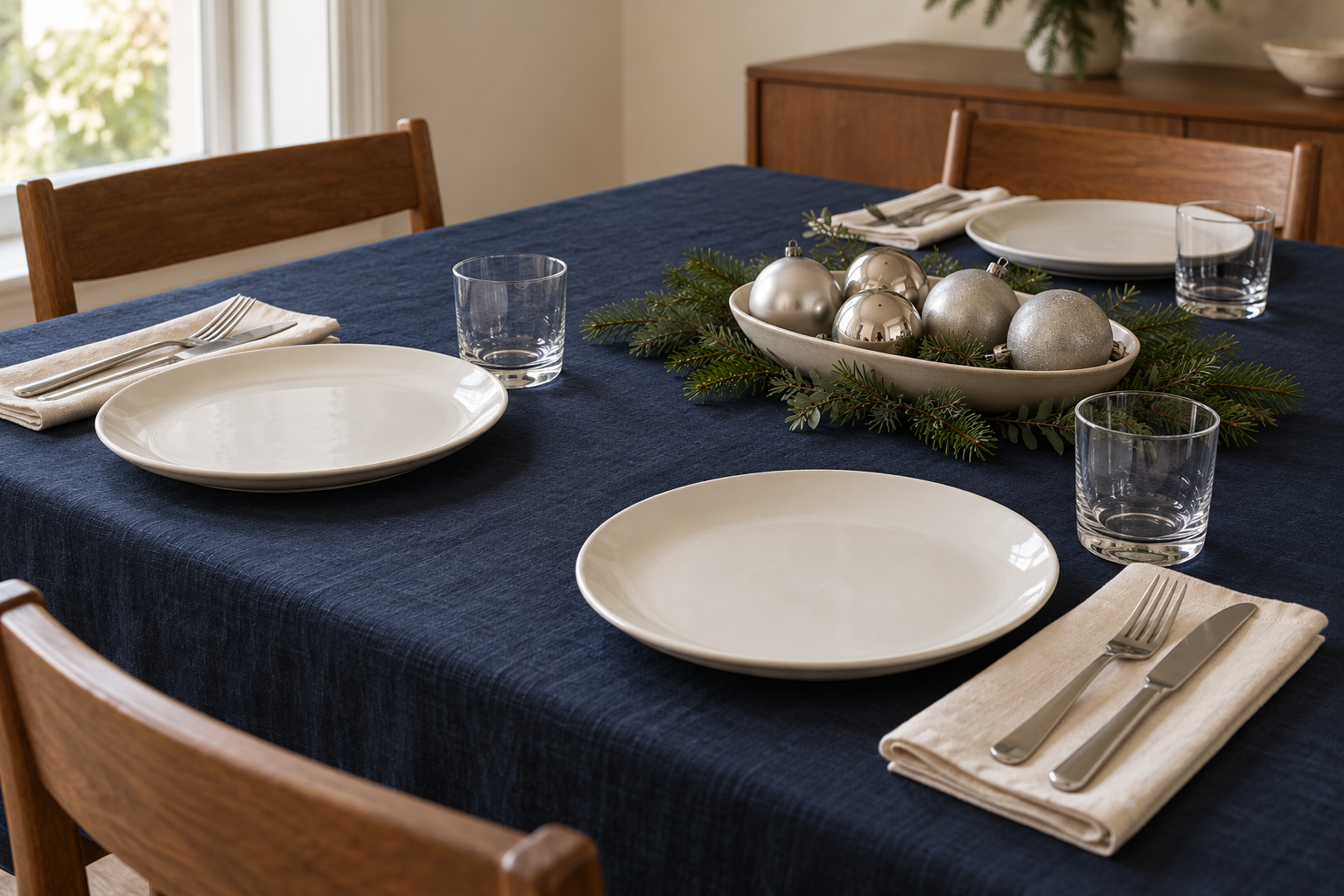
Start with the same white ceramic plates and clear water glasses for all five Christmas tables. For understated formality, spread cream linen beneath them, add brass-colored details and gather ornaments in a shallow bowl. The other looks move color onto gingham napkins, a green runner or a navy cloth, or exchange metallic accents for terracotta and citrus. First decide how much of the table you want covered; then choose the material combination.
Let rounded shapes carry the cream setting: circular plates, the curved bowl and ornaments with simple spherical forms. Fold cream napkins loosely beside the plates, leaving a soft edge rather than making a rigid rectangle. Use brass-colored flatware as the repeating accent at each place. Keeping that finish in one repeated role gives the linen and ceramic room to remain the main surfaces.
Place the ornament bowl on a shallow tray at the center, making one contained arrangement rather than scattering ornaments between glasses. If shared platters need that space, move the whole tray to a nearby sideboard before serving. The tray adds its own footprint, so arrange the actual serving dishes first and reserve a landing spot; a movable centerpiece still needs somewhere to go.
For a less formal version, expose the wood table and use cream napkins with the same bowl and brass-colored accents. You keep the rounded composition while reducing the amount of pale fabric. Prefer a cloth-covered table but little metallic shine? The terracotta look below starts with cream linen too, then changes the character through matte vessels and orange rounds rather than reflective details.
2. Red Gingham Napkins on a Bare Table
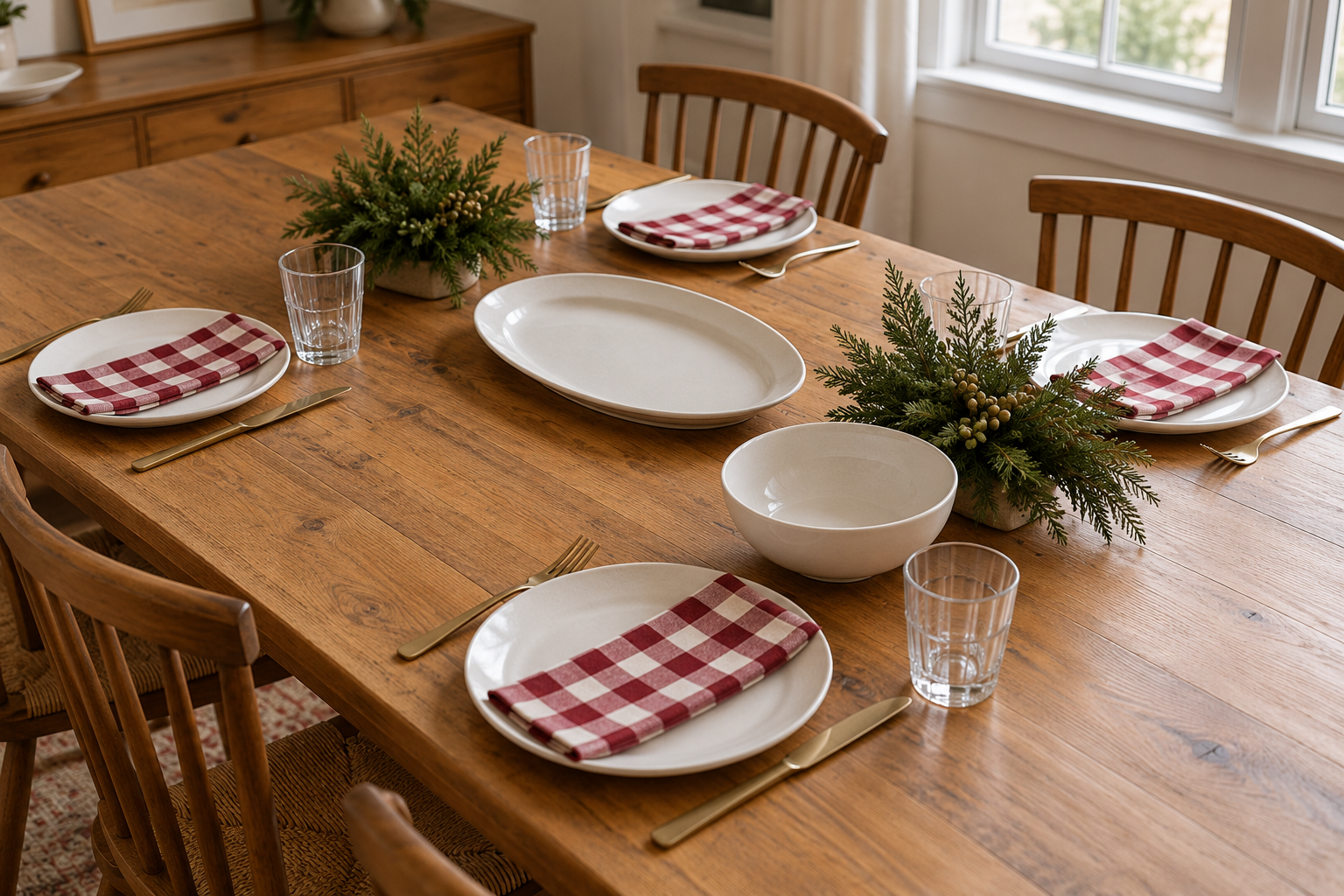
Put the Christmas pattern in the napkins and leave the wood table exposed. Red gingham beside plain white plates gives each place setting a cheerful patterned patch without covering the whole surface. Repeat the same napkin fabric around the table, then keep serving pieces white. Compared with a patterned cloth, this arrangement makes the checks a series of small accents rather than the background for every dish.
Try a broad, simple fold across the lower portion of each plate, with some white ceramic still visible. The gingham already supplies a grid, so an elaborate fold would introduce another competing shape. For a looser family-meal arrangement, place the folded napkin beside the plate instead. Keep the orientation consistent from setting to setting; the repetition can provide order without making the table feel ceremonial.
Arrange low evergreen in short sections between the places reserved for shared dishes. Leave real gaps rather than creating a continuous garland and trying to fit platters around it afterward. Keep greenery separate from plate rims and food-serving surfaces. A low white bowl can gather one section into a contained centerpiece if loose sprigs would crowd the meal.
This is an appealing direction for an informal Christmas lunch where the wood tabletop is part of the decoration. If the checks feel too busy beside strongly figured grain, exchange them for solid red napkins and retain the plain white serving pieces. If you want more fabric and less exposed wood, move to the navy-cloth look instead of layering a second pattern under the gingham.
3. A Forest-Green Runner With Exposed Wood
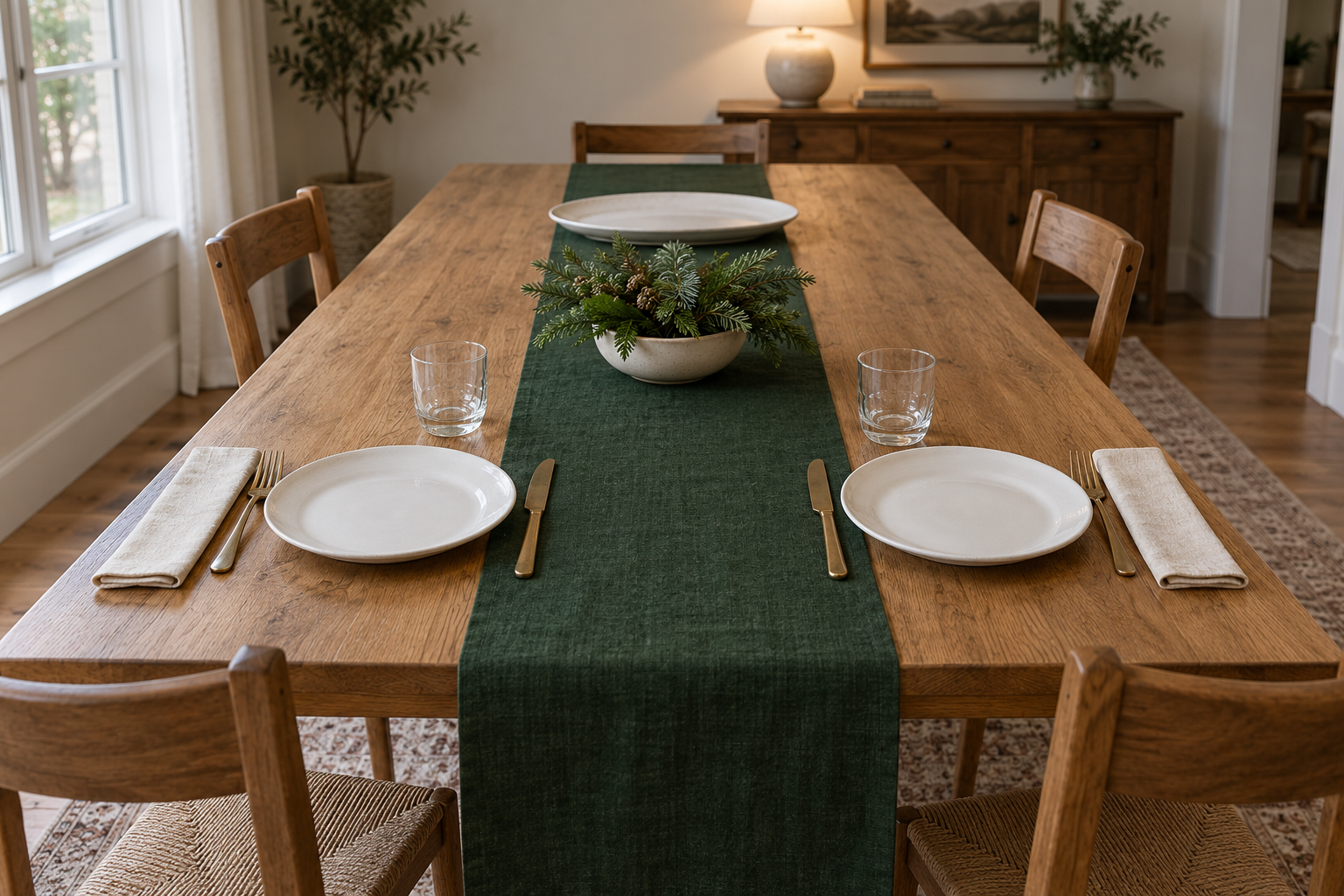
Use a narrow forest-green runner as a central stripe, leaving wood visible between the place settings. Think of this as the middle option between napkin-only color and a full tablecloth: green connects the length of the table, while the plates still sit against grain. Lay out the dishes before choosing the runner's width so the exposed wood reads as a deliberate part of the composition.
Fold cream napkins into rectangles and align them with the runner. Straight napkin folds give round white plates a more tailored setting without changing the dishes. Place each rectangle beside its plate to show its full outline, or center it on the plate for a more compact arrangement. Use one approach around the table rather than alternating positions and weakening the repeated lines.
Let the runner organize serving space as well as color. Position a low evergreen bowl near the center, then leave an undecorated stretch for the largest shared platter. On a table where several dishes stay out throughout dinner, replace the central bowl with separated small arrangements between serving positions. Resist filling every remaining interval; the visible stripe and wood already contribute to the look.
Keep the napkins plain when the wood has an assertive grain; their rectangles can supply the geometry without adding another pattern. For softer lines, use a loose cream fold while retaining the green stripe. That small change is worth trying before replacing the runner. The green-and-wood direction emphasizes the existing table, whereas the cream and navy cloth settings make fabric the dominant background.
4. Navy Cloth, Cream Napkins and Silver-Colored Lines
5. Cream Linen, Terracotta Vessels and Dried Citrus
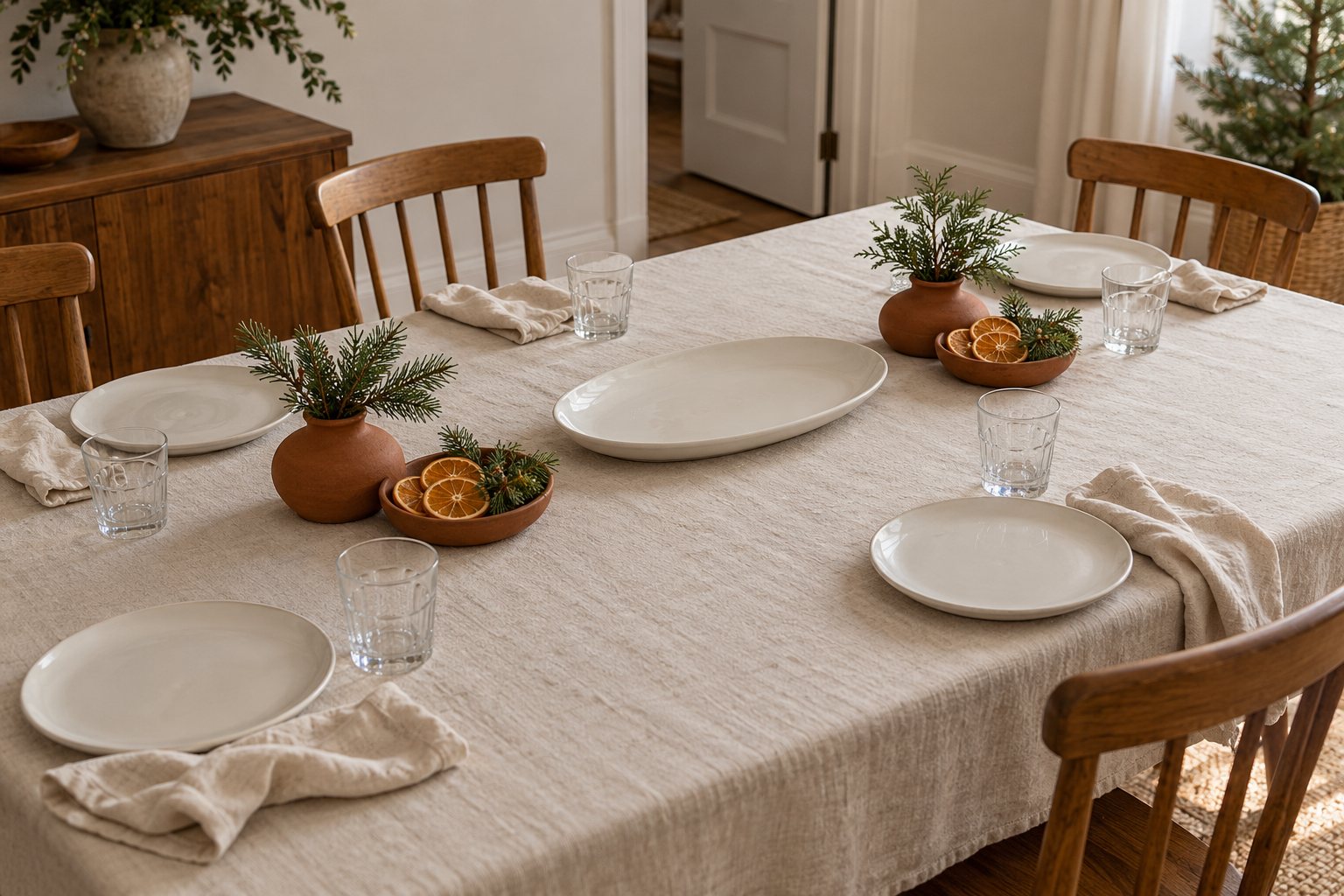
Return to cream linen, but replace brass-colored accents with squat terracotta vessels and dried citrus rounds. Keep white plates and clear water glasses as the foundation. This direction puts orange and clay beside pale fabric for an earthy alternative to Christmas red. Compared with the first cream setting, the interest sits in the vessels' matte surfaces and broad forms rather than small metallic glints.
Arrange the citrus in a shallow decorative dish beside the vessels so its circular slices echo the plates. Leave some linen visible between the dish and each vessel instead of making an unbroken mound. Add a short evergreen accent to connect the earthy colors with the Christmas setting. Keep decorative citrus within its own arrangement, separate from the dishes used to serve the meal.
Try separated low clusters when shared platters belong down the center of the table. Place a squat vessel and a small citrus dish together, then repeat the relationship farther along, leaving serving gaps between them. Small trays can gather the clusters for individual moves, but include their edges when laying out the table. If trays crowd the dishes, omit them and simplify the decoration instead.
Use loose cream napkin folds to continue the rounded composition, or try rectangles if you want the earthy palette with a more orderly outline. Before setting every place, assemble one plate, glass and napkin beside the proposed centerpiece and your largest serving platter. Change the textile coverage or fold first, then adjust the decoration. That gives you a useful way to compare the five looks using dishes you already have.
Sources and editorial method
These layouts and styling suggestions are editorial ideas. Concept illustrations do not show a tested installation or prove product fit.