Choose between plush burgundy, cheerful gingham, tailored navy, quiet wood and ivory, or forest green with copper accents—each with its own ornament shapes and ribbon rhythm.
 Concept image
For a rich burgundy Christmas tree, pair large matte baubles with tonal velvet loops and small antique-gold clusters. Leave out metallic ribbon so the gold stays a distinct accent. The other four schemes offer different balances of pattern, shape and contrast.
Explore the ideas
1. Burgundy and Antique Gold: Plush, With Small Glints
Use large matte burgundy baubles as the main shapes, then tuck burgundy velvet loops between them. Keep the loops separate rather than connecting them into a continuous spiral. Gather smaller antique-gold ornaments into occasional clusters; concentrating the shine gives it a distinct role beside the broad matte surfaces.
Leave out metallic ribbon so it does not compete with the gold clusters. Let each cluster sit beside a velvet loop, with visible foliage between these groupings. Use this combination for a plush, dressy tree without an all-over glitter finish. Repeat the burgundy in one velvet sofa cushion rather than adding more gold around the room.

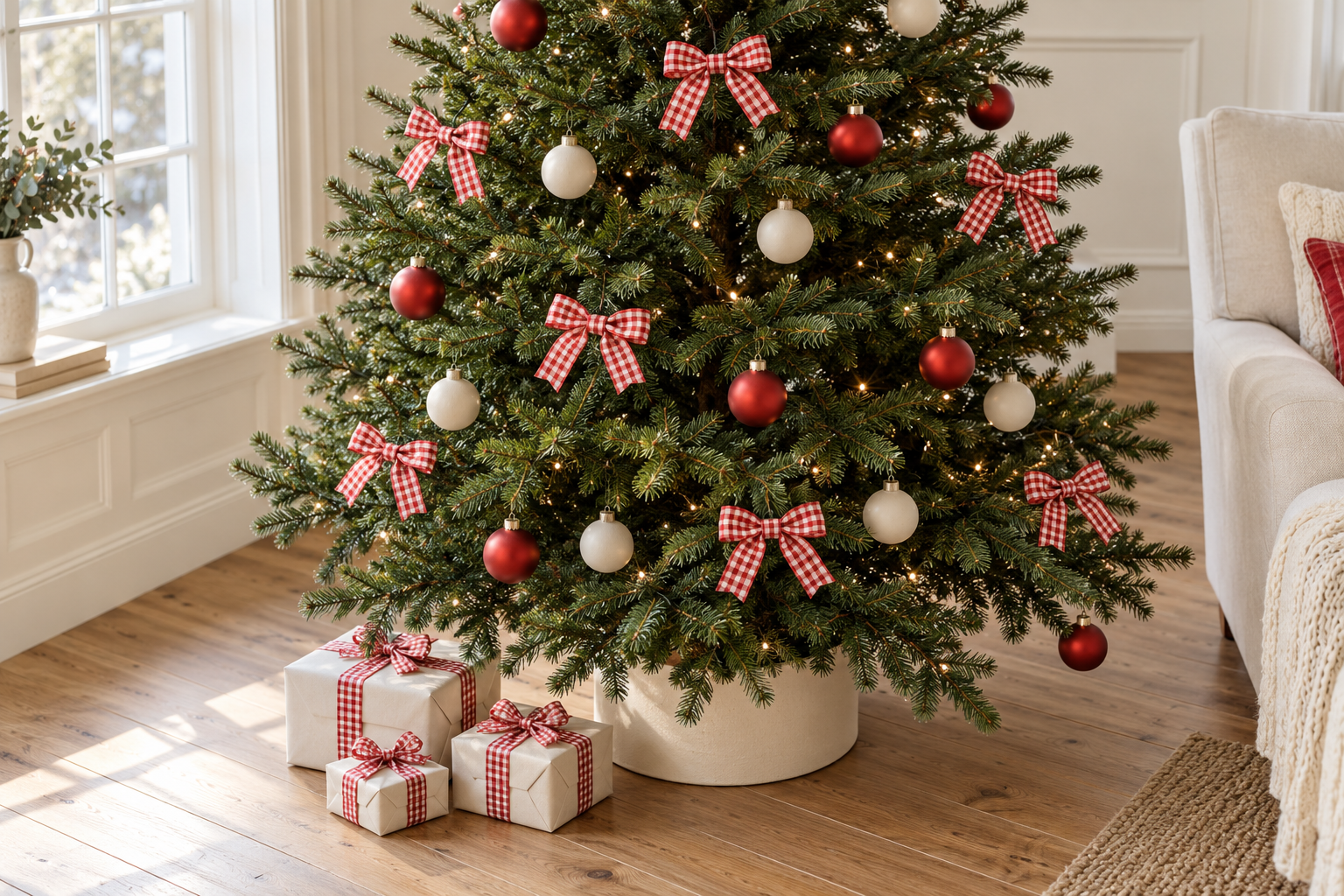
2. Red and Cream Gingham: Cheerful, With Breathing Room
Choose red-and-cream gingham bows with open branch space between them, then fill selected gaps with plain red and cream round ornaments. Keep the rounds large enough to read as solid shapes beside the checks. Smaller patterned ornaments would introduce another competing scale; plain surfaces let the gingham remain the recognizable detail.
Stagger the bows around the tree instead of lining them up in horizontal bands. Keep their tails short enough that neighboring bows remain separate. Choose this scheme if you enjoy a cheerful, homey Christmas look. Echo it on gifts already beneath the tree: plain cream wrapping with a gingham bow carries the pattern beyond the branches.
3. Navy and Silver: Tailored, With Long Shapes
Make elongated silver-colored drops the defining shape against navy round ornaments. Space the drops individually, leaving their lower points visible below the surrounding needles. Compared with a tree filled entirely with balls, this mix offers a more linear look; keep the navy rounds substantial enough to balance those narrow silver accents.
Use navy ribbon in small bows with short tails, keeping the long vertical lines for the ornaments. Avoid pairing every drop with a bow, which would turn the arrangement into repeated badges. If you prefer a tailored Christmas palette, this combination is a good fit. One navy sofa cushion can connect the tree to the seating without introducing another metallic display.

4. Natural Wood and Ivory: Quiet, With Contrasting Forms
Pair flat wooden stars and circles with rounded ivory ornaments. The useful contrast is in form as much as color: thin silhouettes sit beside fuller, pale shapes. Choose ivory rounds that are visually larger than the wooden pieces, so the tree has clear anchors rather than a scattering of equally small details.
Add loose ivory fabric ties at scattered intervals, leaving their ends relaxed rather than forming crisp bows. This is the gentlest option for readers who prefer wood grain and pale textiles to metallic sparkle. Repeat the combination with an ivory holiday card in a small wooden holder on an available windowsill, preserving the coffee table for everyday use.

5. Forest Green and Copper: Tonal, With Bright Edges
Place larger forest-green ornaments where their rounded outlines remain visible against the needles, then position smaller copper-colored details near the branch tips. Green ornaments can blend into foliage; the copper gives the outer branches a contrasting accent. Favor a few readable copper shapes over a fine scatter that disappears into the tree.
Use forest-green ribbon as occasional short ties, keeping it behind the copper accents rather than wrapping the tree in a broad band. Choose this scheme if you want the foliage to remain the dominant color. Repeat the copper tone in one shallow tray on a side table; leave the other nearby accents quiet so that small metallic note stays deliberate.