Pair pale rose walls and matching painted details with flax upholstery and pale ash for a warmer-looking, continuous backdrop.
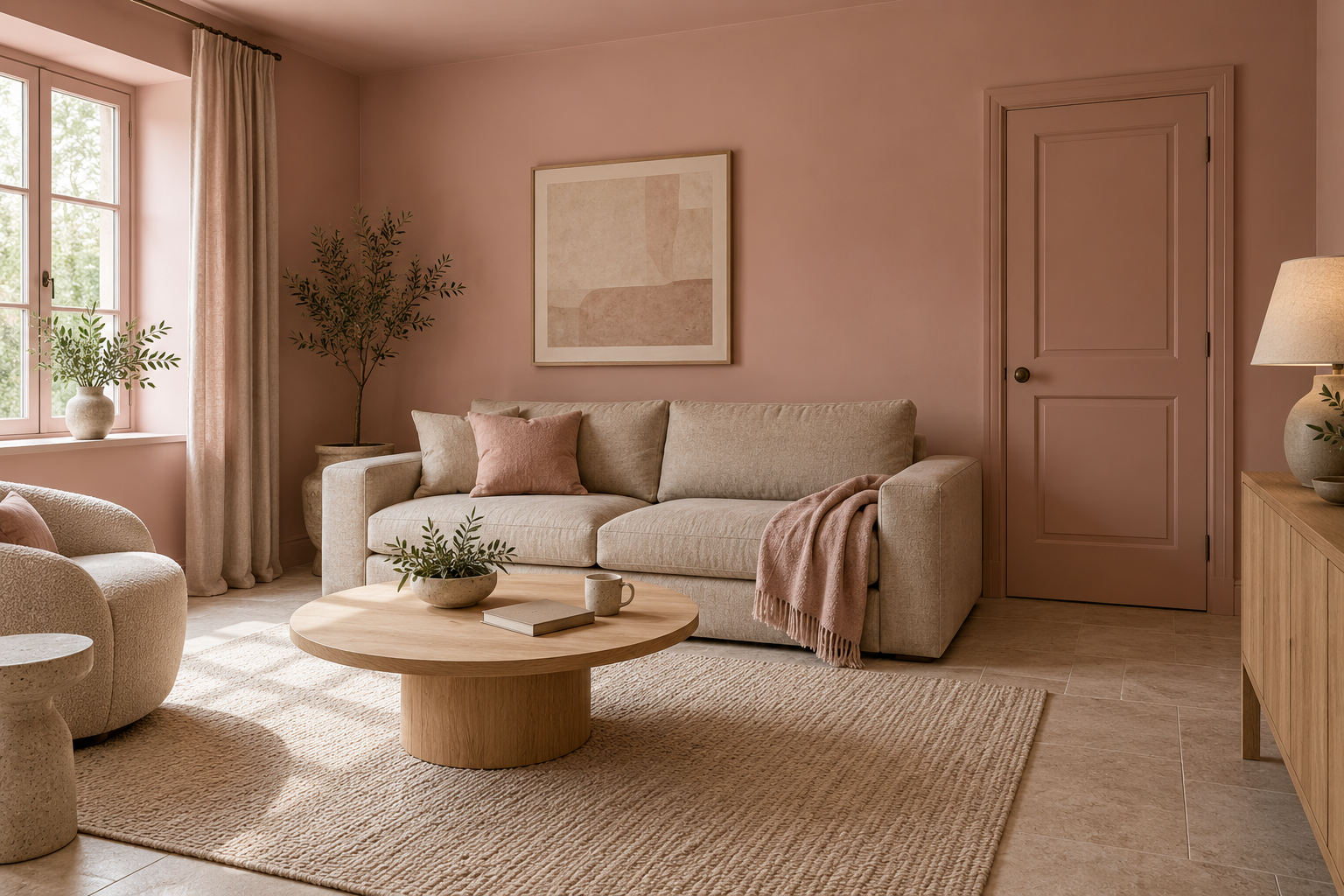 Concept image
Try pale, muted dusty rose on the walls, baseboards, and interior door. Keeping those adjoining surfaces one color reduces color breaks, an editorial approach to making a small living room feel more continuous. A flax-colored sofa and low, rounded pale-ash table give the seating area definition through shape and material.
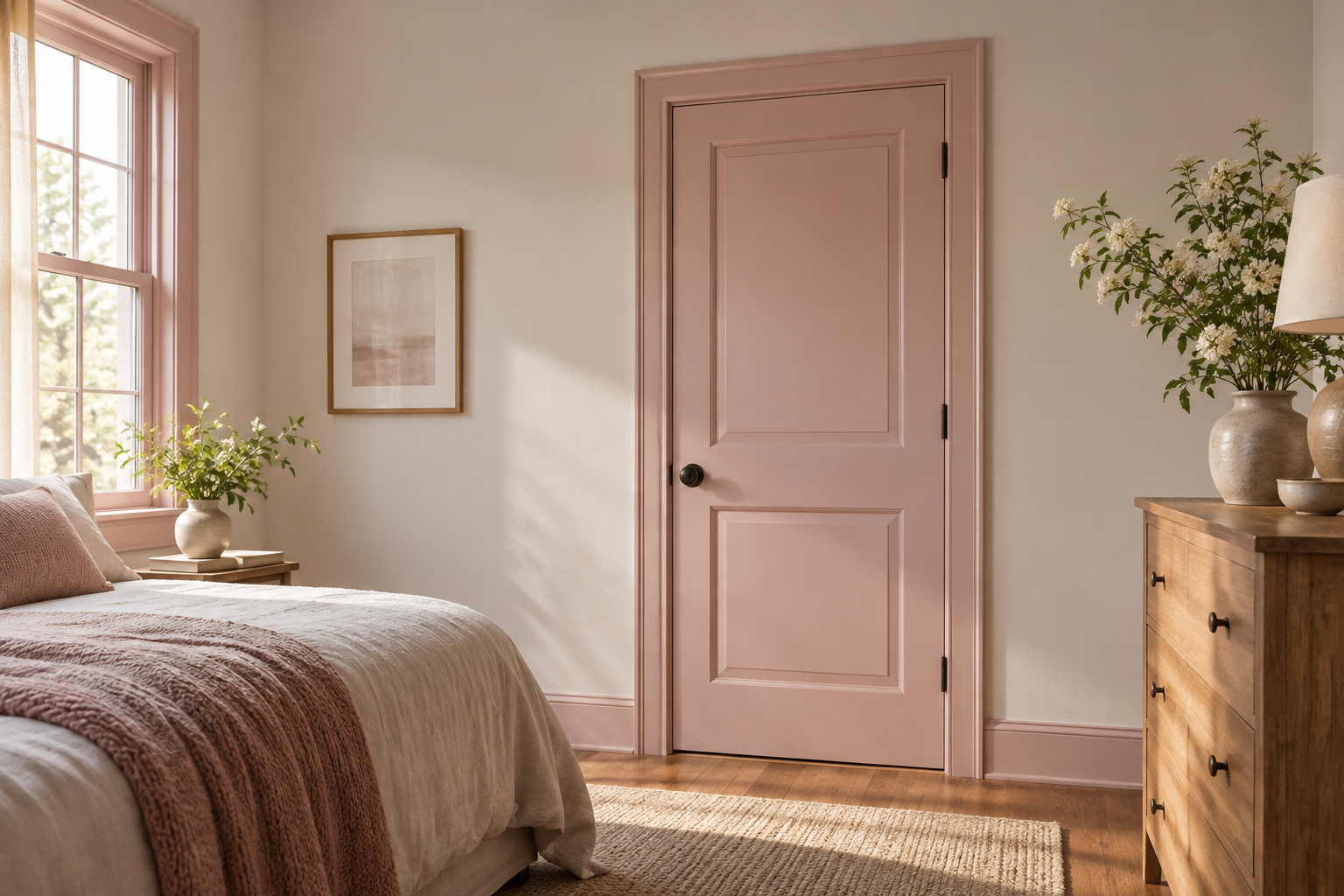
Let the rose run across the painted edges
Keep the rose pale rather than saturated, and carry it onto the paintable door casing as well as the door and baseboards. It gives you warm color without drawing attention to every architectural edge. Treat it as a visual preference: paint does not increase the room’s dimensions.
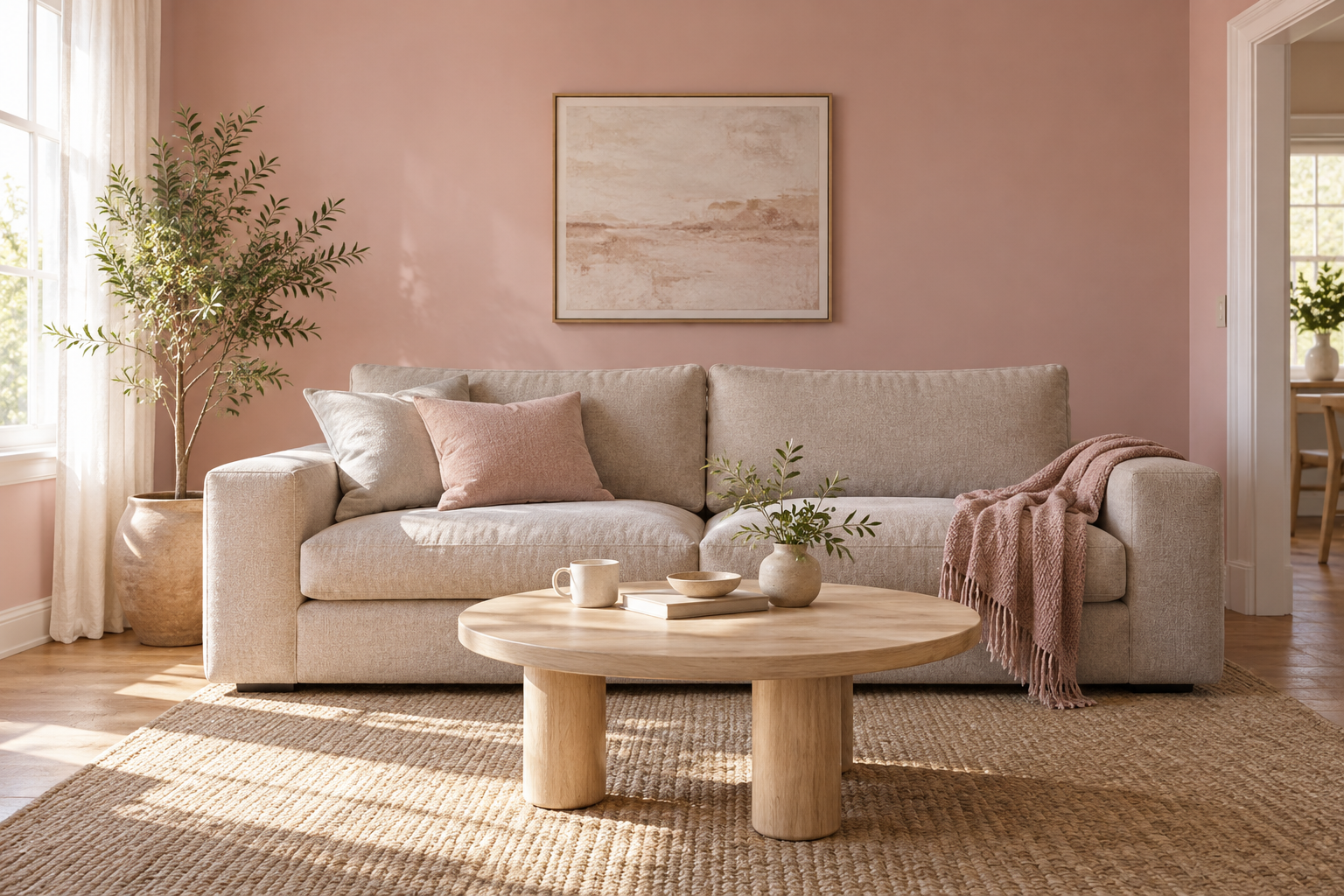
Give the furniture its own outline
Choose a rectangular flax sofa with broad, simple cushions, then place a low, rounded pale-ash table in front. The sofa’s woven fabric and the table’s pale timber surface supply differences within the quiet palette. The tabletop gives you an everyday place for a mug or book; its curved silhouette contrasts with the sofa’s straight lines.
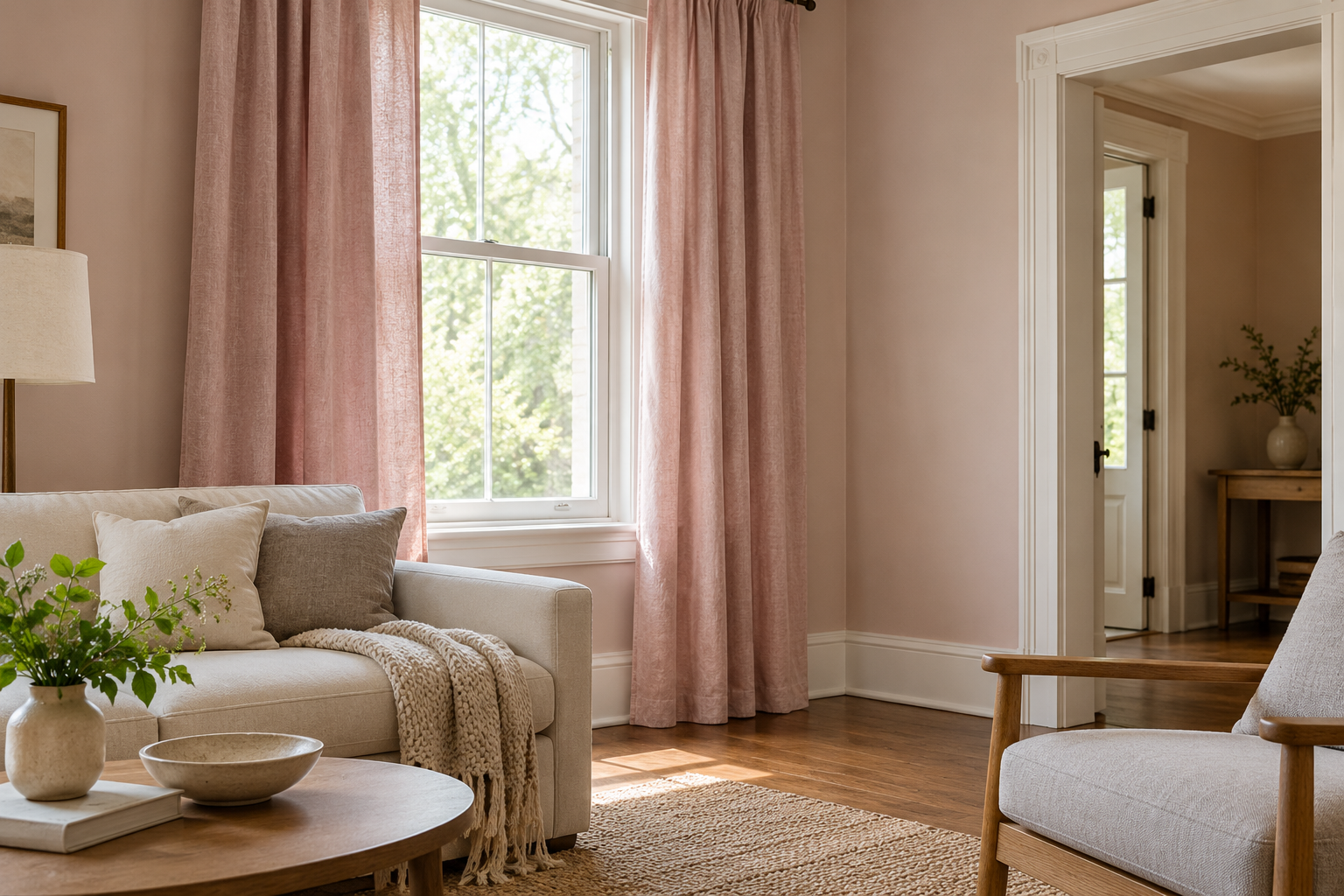
Use a plain curtain when trim must stay
If repainting trim is off limits, repeat the pale wall rose in a plain curtain instead. It is a good route for renters, or for anyone keeping an existing wood or painted finish. The visible trim will still interrupt the color, but the curtain carries rose onto another large surface while the flax-and-ash seating recipe stays intact.
Test the shade before you commit
Pale rose changes a lot with the light. The same paint can read soft pink in a sunny room and gray-mauve in a room that only gets cool daylight. Paint two or three large swatches, at least the size of a sheet of paper, on different walls: one near the window and one on the darkest wall. Look at them in the morning, in the late afternoon and in the evening with your own lamps on before you choose.
- Too sweet? Move to a shade with more gray or beige in it. It will still read as rose, just quieter.
- Too gray? Pick a slightly warmer version, or check whether your bulbs are very cool. Bulbs labelled around 2700K make pale rose look warmer than 4000K bulbs.
- Not sure at all? Try the color on the wall behind the sofa first. It is the largest surface you look at, and the easiest to repaint.
Choose finishes that keep it calm
A matte or flat finish on the walls hides small dents and uneven patches, which helps a pale color look smooth. An eggshell finish is a little easier to wipe, which matters in a living room with children or pets. On baseboards, casings and the door, a satin or semi-gloss finish is common because it stands up to knocks. Keeping one color and changing only the sheen keeps the surfaces continuous while the trim still has a slight glow.
Colors that sit well beside pale rose
Pale rose is easy to live with when the rest of the palette stays soft and natural. Good partners for the walls:
- Flax, oatmeal and sand for upholstery and rugs. They keep the room warm without competing.
- Pale wood such as ash or oak, which reads lighter than dark walnut against a pale wall.
- Muted olive or sage in a plant pot, a cushion or a print. A small amount of green makes the rose look fresher.
- Charcoal or soft black in thin lines only: a picture frame, a lamp base or a curtain rod. One or two dark details give the room an outline.
Avoid bright white trim next to a pale rose wall if you are not painting the trim rose. A creamier white blends better and makes the color break less obvious.
Common mistakes
- Too many pinks. Rose walls, a pink rug and pink cushions together can feel themed. Keep the rose on the walls and let the textiles stay neutral.
- A saturated shade. Strong pinks look darker on four walls than on a small swatch. Stay paler than you think you need.
- Skipping the ceiling decision. A bright white ceiling above rose walls can look stark. A warm white, or the wall color mixed lighter, keeps the room soft.
A quick plan
- Test two or three swatches on different walls for a few days.
- Decide whether the trim and door will be painted too. If not, plan a rose curtain instead.
- Keep the sofa, rug and table in flax, sand and pale wood.
- Add one green and one dark detail.
- Check the curtain length before you buy: our guide to how high to hang curtains has the heights for 8 to 12 ft ceilings.