Keep green, ivory and black in the palette. Let a cushion or artwork you already own decide where the strongest pattern belongs.
 Concept image
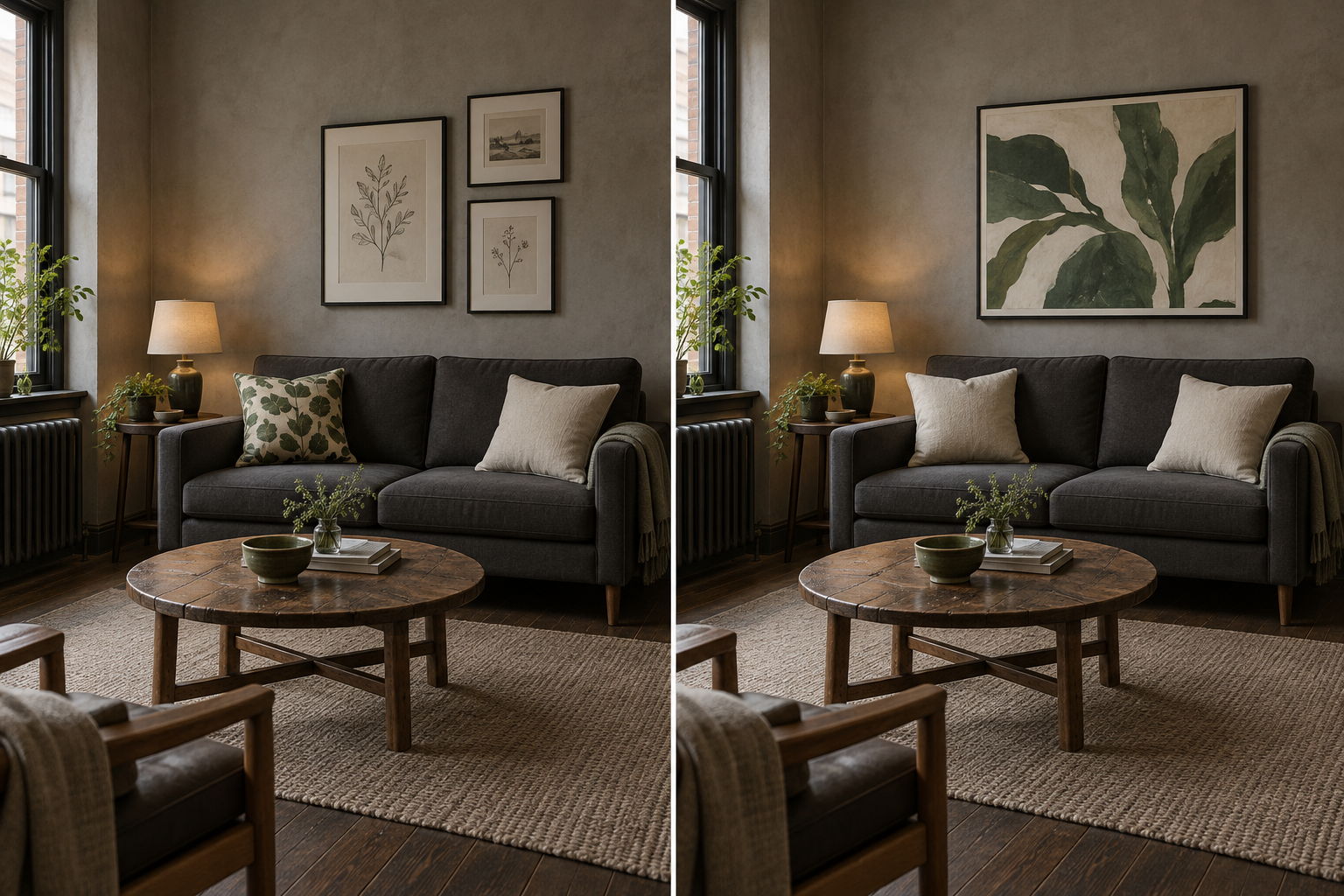
A leafy-green cushion beneath quiet ivory drawings puts the accent on the gray sofa; plain ivory cushions beneath a larger green artwork put it on the wall. Try the first arrangement around wall pieces you want to keep, or the second when you want one substantial artwork above the sofa.
Choose one place for green
-
Keep the gallery wall
Bring a green patterned cushion down to the sofa. Keep the art above it quiet and the other cushions plain.
-
Keep the statement artwork
Let the larger green shapes stay above the sofa. Plain ivory cushions repeat the painting’s light ground without adding another pattern.
-
Move before you shop
Borrow a cushion or framed piece from another room. Try each arrangement from the doorway, then decide which gap you actually want to fill.
Start with the green piece you want to keep
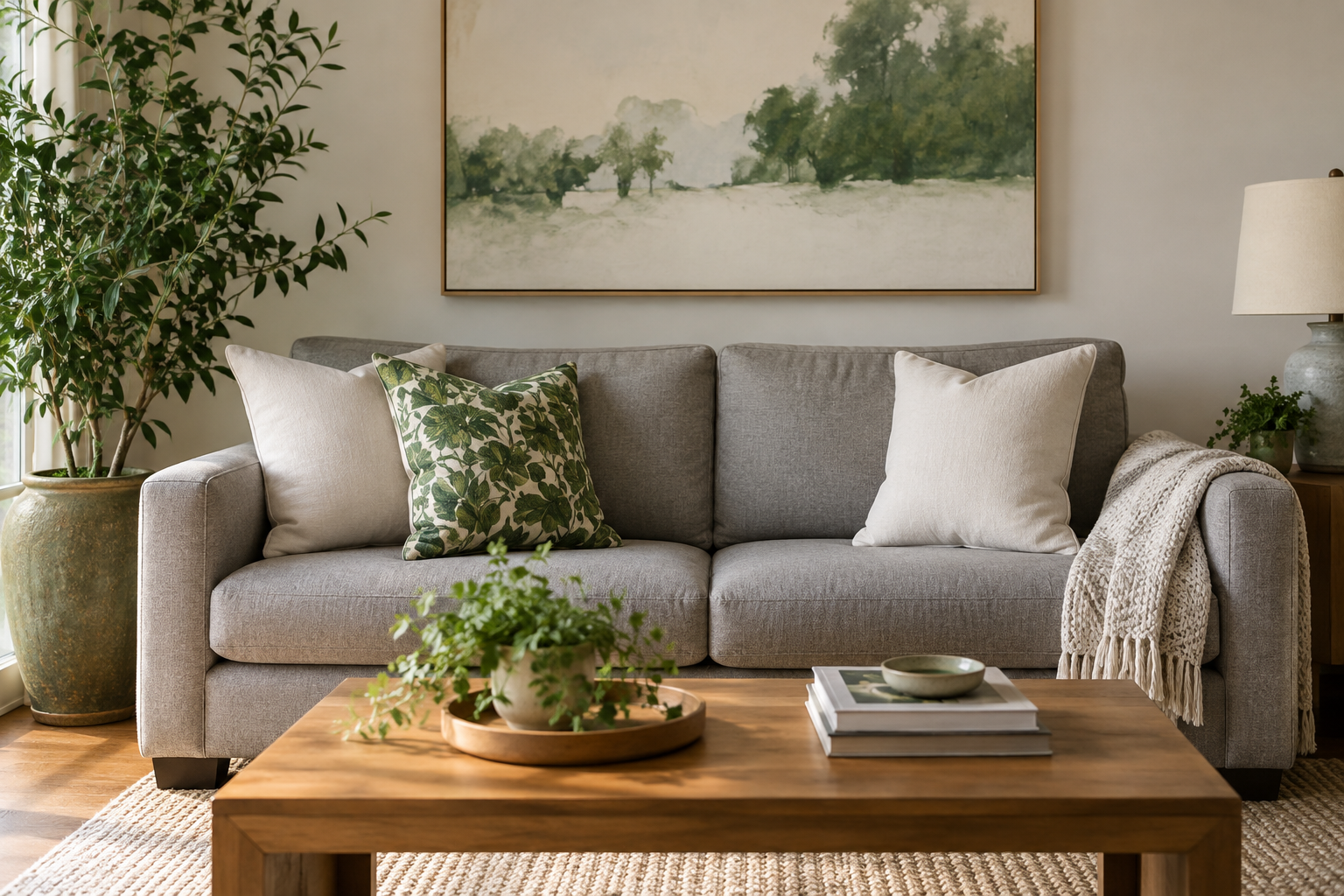
An owned patterned cushion gives you a starting point at seat level. Pair it with plain ivory, and keep the artwork above it pale and restrained. If your starting piece is a green painting, reverse that balance: let broad green shapes fill the frame and use plain ivory cushions below.
Choose where the pattern gathers
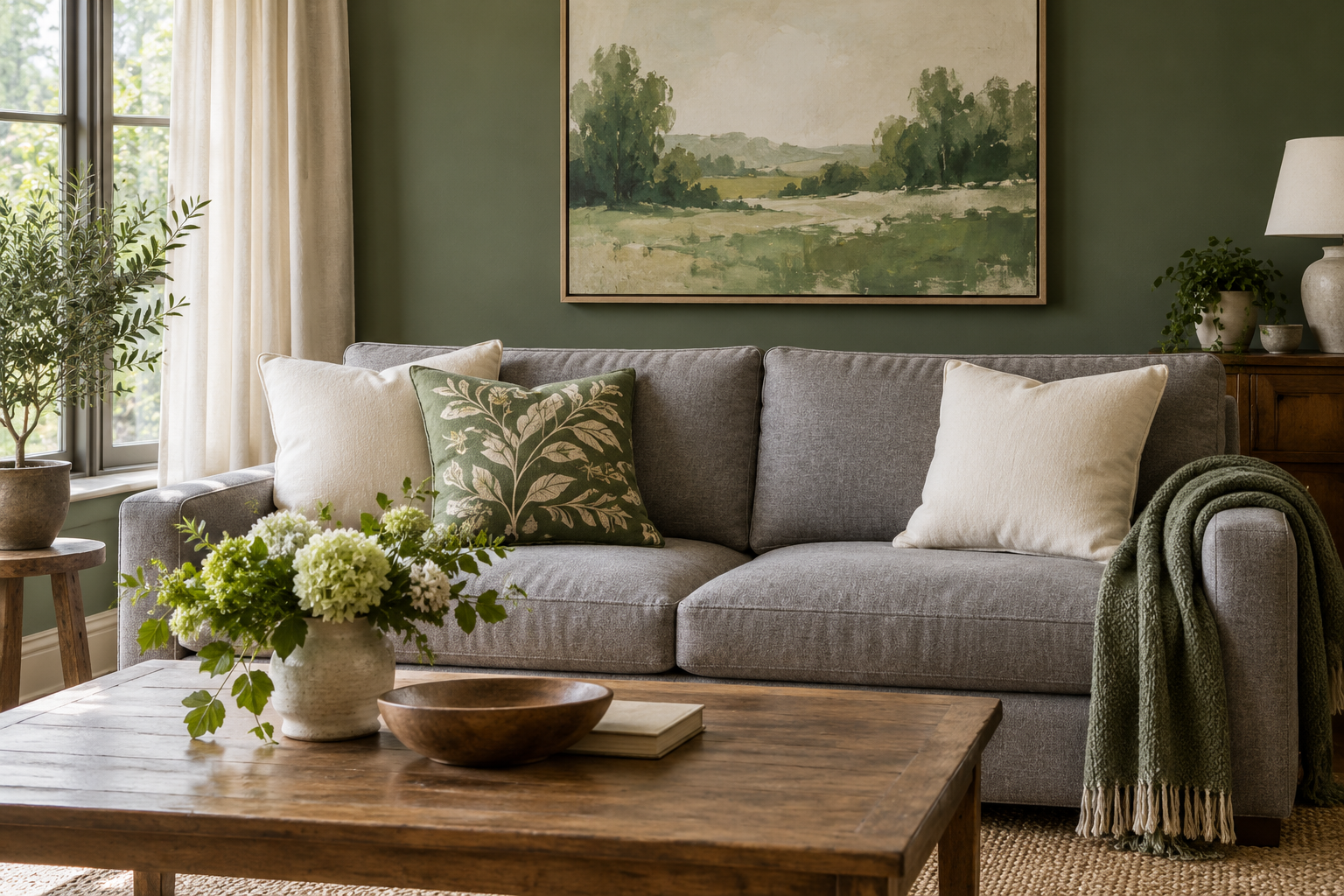
The cushion arrangement is the one to choose if you are keeping a gallery wall. Slim black frames connect the separate ivory drawings, while one leafy cushion brings a larger botanical pattern down to the seat. Start with that single patterned cushion; several competing prints may feel busy beneath an existing display.
The artwork arrangement works best on a bare wall where you want one focal piece. A larger green-and-ivory abstract gathers the color into a single rectangle. The plain cushions leave the charcoal upholstery visible and repeat the painting’s pale ground without introducing another pattern.
Carry one color through the room
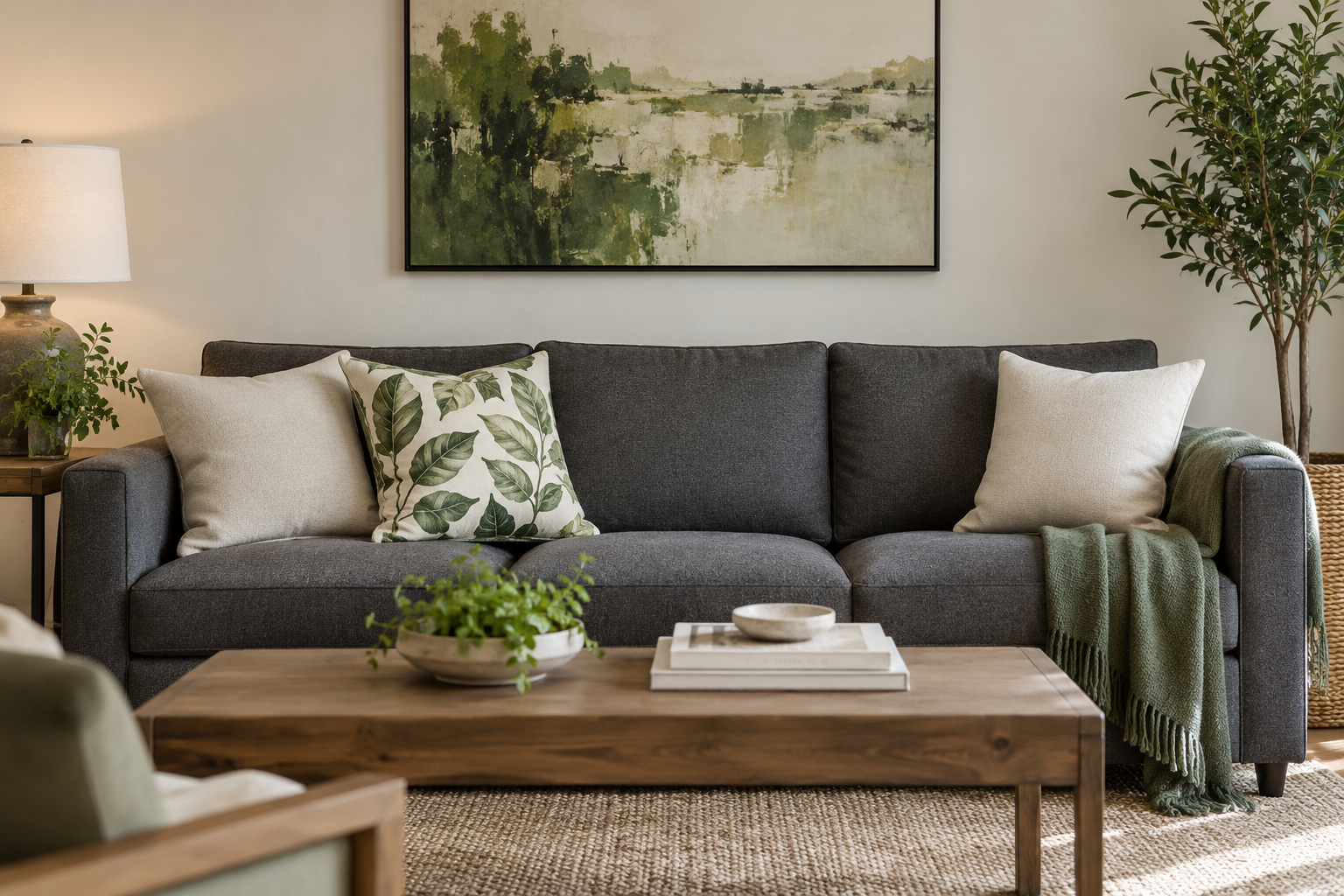
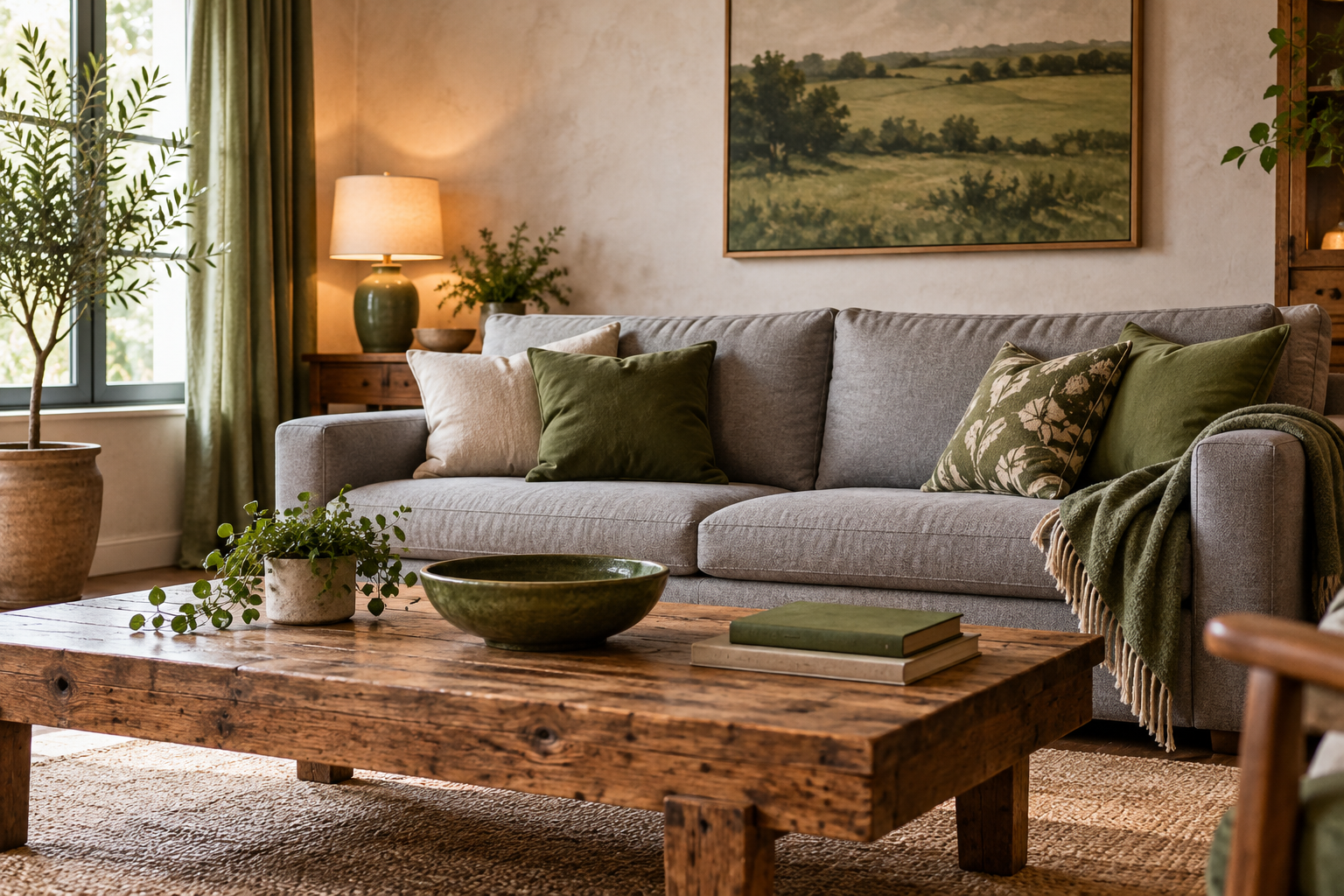
Echo the cushion or painting in one existing detail, such as a green bowl or book cover. Favor a similar undertone rather than an exact match. Keep the worn timber table, textured plaster and warm lighting as the shared backdrop; there is no need to replace those pieces to try either arrangement.
Check your sofa’s undertone first
Gray sofas are rarely neutral gray. Hold a sheet of white printer paper against the fabric in daylight. If the gray looks slightly brown or beige next to it, the sofa is warm; if it looks slightly blue or green, it is cool. Warm grays sit well with olive, moss and leafy greens. Cool grays pair better with sage, eucalyptus and blue-greens. Choosing the green with the sofa’s undertone in mind is what makes the cushion or painting look as if it belongs.
Get the sizes right
Proportion matters as much as color in both arrangements.
- Cushions: on a standard three-seat sofa, cushions around 20 to 22 inches square look in proportion. Two plain cushions and one patterned cushion are usually enough; more starts to hide the sofa.
- One large artwork: a common rule of thumb is a piece about two-thirds the width of the sofa, hung with its bottom edge roughly 8 to 10 inches above the sofa back.
- Gallery wall: keep the gaps between frames even, about 2 to 3 inches, so the group reads as one shape.
For a closer look at why art above a sofa often looks too small, see art above the sofa.
A third option: green in the textiles, not on the sofa
If you would rather not add either a patterned cushion or a large artwork, move the green to a rug or curtains. A green-and-ivory rug in front of a gray sofa does the same job as the cushion, at floor level. Check the size before you buy: our rug size guide shows how far the rug should reach under the front legs.
Common mistakes
- Two strong patterns at once. A busy cushion below a busy painting compete. Choose one place for the pattern.
- Too many greens. Keep to one green family; a mix of lime, emerald and sage looks accidental.
- Bright white with a warm gray. Ivory or cream usually looks better beside a warm gray sofa than stark white.
Try it in one evening
- Do the paper test to find the sofa’s undertone.
- Collect anything green you already own: a cushion, a print, a throw, a plant.
- Try the cushion arrangement, then the artwork arrangement, and look at each from the doorway.
- Keep the one you like and buy only the piece that is missing.