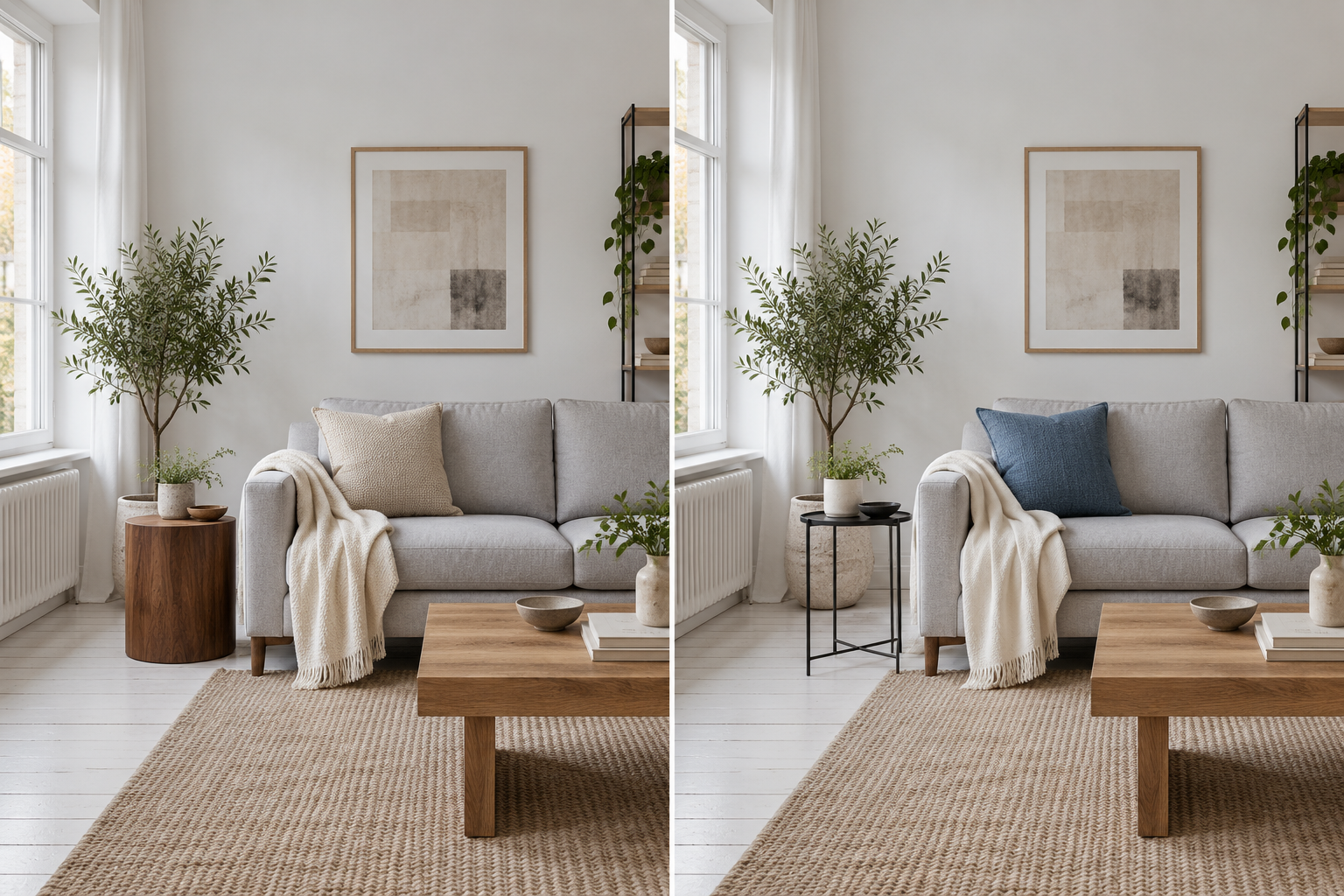
Warm light can make white look creamier. Compare two ways to frame the sofa end: a solid walnut cylinder with pale textiles, or an open black table with slate blue.
 Concept image
Warm artificial light can make a white wall appear creamier or yellower after dark; the paint’s undertones also influence its appearance. Before repainting, consider whether you want the sofa end to blend into that warmth or have a clearer outline. These two looks keep the wall and sofa constant.
Soft continuity: a solid cylinder and pale textiles
Pair an oatmeal cushion and ivory throw with a round walnut side table. The useful distinction is the table’s solid cylindrical shape: it puts a broad patch of brown beside the sofa, with no open space beneath the top. Its curved edge echoes the cushion’s rounded corners and the throw’s loose folds.
Oatmeal carries beige onto the gray upholstery; ivory offers a pale layer without making bright white the focal point. Try this combination if you like the wall’s creamy evening appearance and want a substantial wooden shape beside your seat. Keep the tabletop simple—a cup or small bowl leaves the wood visible.
Defined contrast: an open frame and a blue accent
Keep that same sofa-end arrangement, but use a slate-blue cushion, off-white throw and slim black side table. The open frame leaves the floor visible beneath the top, while its dark legs draw an outline beside the upholstery. Choose this if you prefer a more open-looking table base and a distinct accent on the sofa.
Slate blue gives the eye a separate color to settle on; the off-white throw retains a pale connection to the wall. Black repeats the idea of an outline at floor level. This is a composition choice: blue and black do not neutralize yellow light or change the paint’s undertone.
Separate the styling choice from the lighting question
Hold an existing white cloth beside the wall in daylight and again under your evening lights. Notice whether both seem warmer or the wall looks creamier beside the cloth. Treat this as an informal clue, not a diagnosis: the cloth has its own color.
If the shift appears mainly after dark, compare your existing lamps before choosing paint. Different artificial lights can cast colors differently. If repainting still appeals, observe white paint samples in daylight and evening lighting before deciding. The images illustrate accessory arrangements in neutral light, not a lighting test.