The smaller table is useful only if it has somewhere to go. Give a nesting pair three different jobs, then compare its footprint with your own room.
This guide contains paid links. We may earn a commission if you buy.
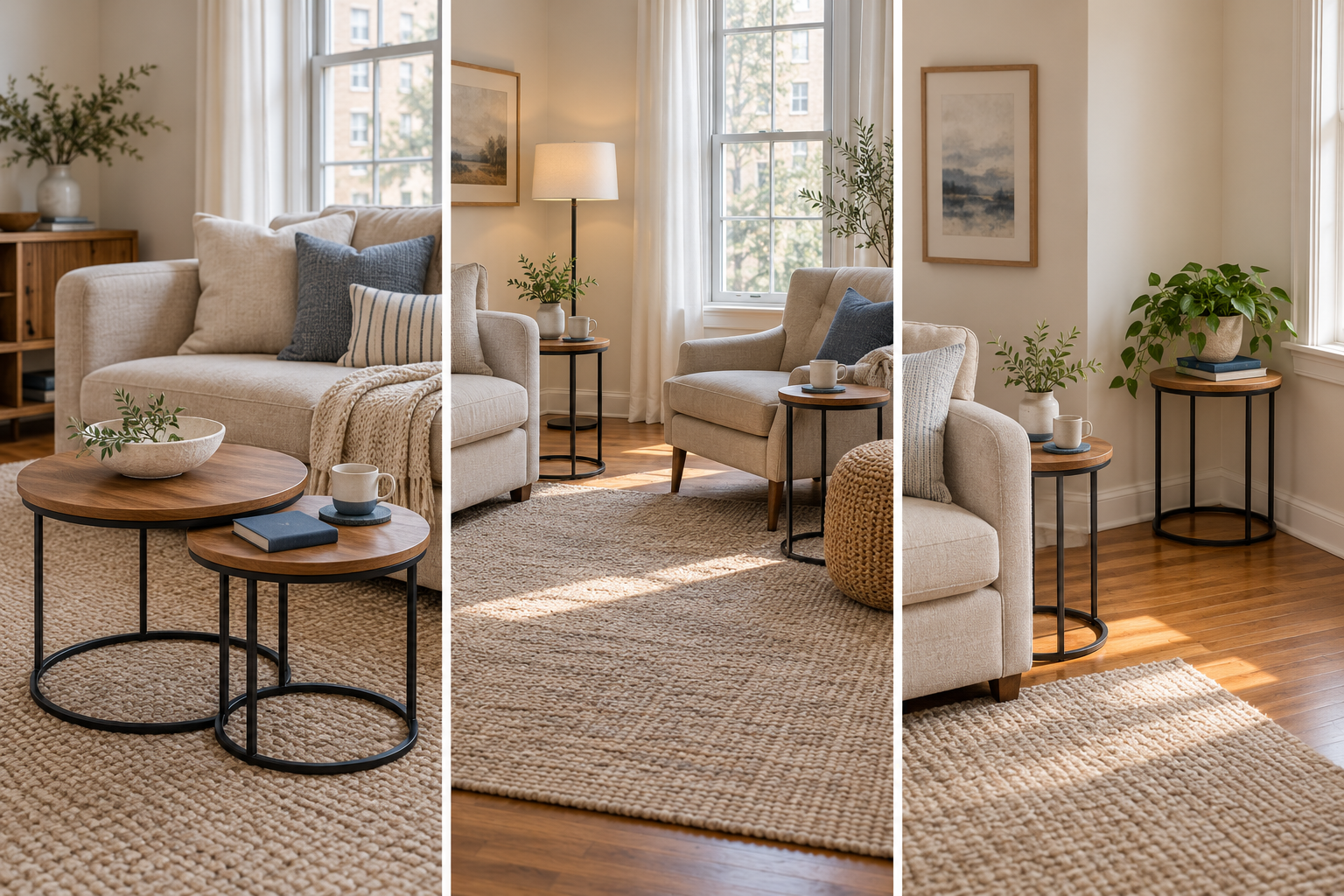
Keep the larger surface near the sofa. Give the lower one a second job: a guest's drink, a sofa-side book, or a little display. If it never leaves the larger table, a single coffee table may be the simpler choice.
Which arrangement would you actually use?
-
Most evenings
Overlap the two circles slightly. Keep one low bowl on the larger table and leave the lower surface ready for a cup.
-
When a friend visits
Move the lower table to the armchair. Both seats get a drink surface; the route between them stays open.
-
When the middle feels crowded
Try the lower table beside the sofa and the larger one in a bare corner. First check whether their different heights work for those jobs.
The detail that makes the overlap feel relaxed
Turn the pair slightly off-center instead of lining up both circles like a target. Warm wood tones, a narrow black outline and an ivory rug work together here: the wood adds warmth, the legs echo a frame or lamp, and the rug keeps the arrangement from floating between the seats. A short stack of books and one ceramic bowl are enough; keep the second surface useful rather than filling it with matching ornaments.
The useful comparison: nested versus separated
Nesting saves the space the smaller table would use on its own. It does not make the larger table disappear. For the Stella set below, compare a 31.6-inch-wide larger table with the center of your room, then mark the separate 23.6-inch-wide spot the lower table would need beside the chair. Try your normal route through the room before choosing the split arrangement.
The height difference changes the job, too. The larger table is 18.1 inches high and the smaller one is 13 inches high. Imagine reaching for your drink from the actual seat: the lower table may be better for occasional use than as your everyday sofa-side surface. This is a room-planning comparison, not a universal clearance rule.
What to keep when you change the layout
Keep the sofa, rug and main color palette in place while you try the three arrangements. Repeat one existing color in a cushion or book, rather than buying a collection of new accessories. The change worth making is where the second surface works—not how many objects you can style on it.
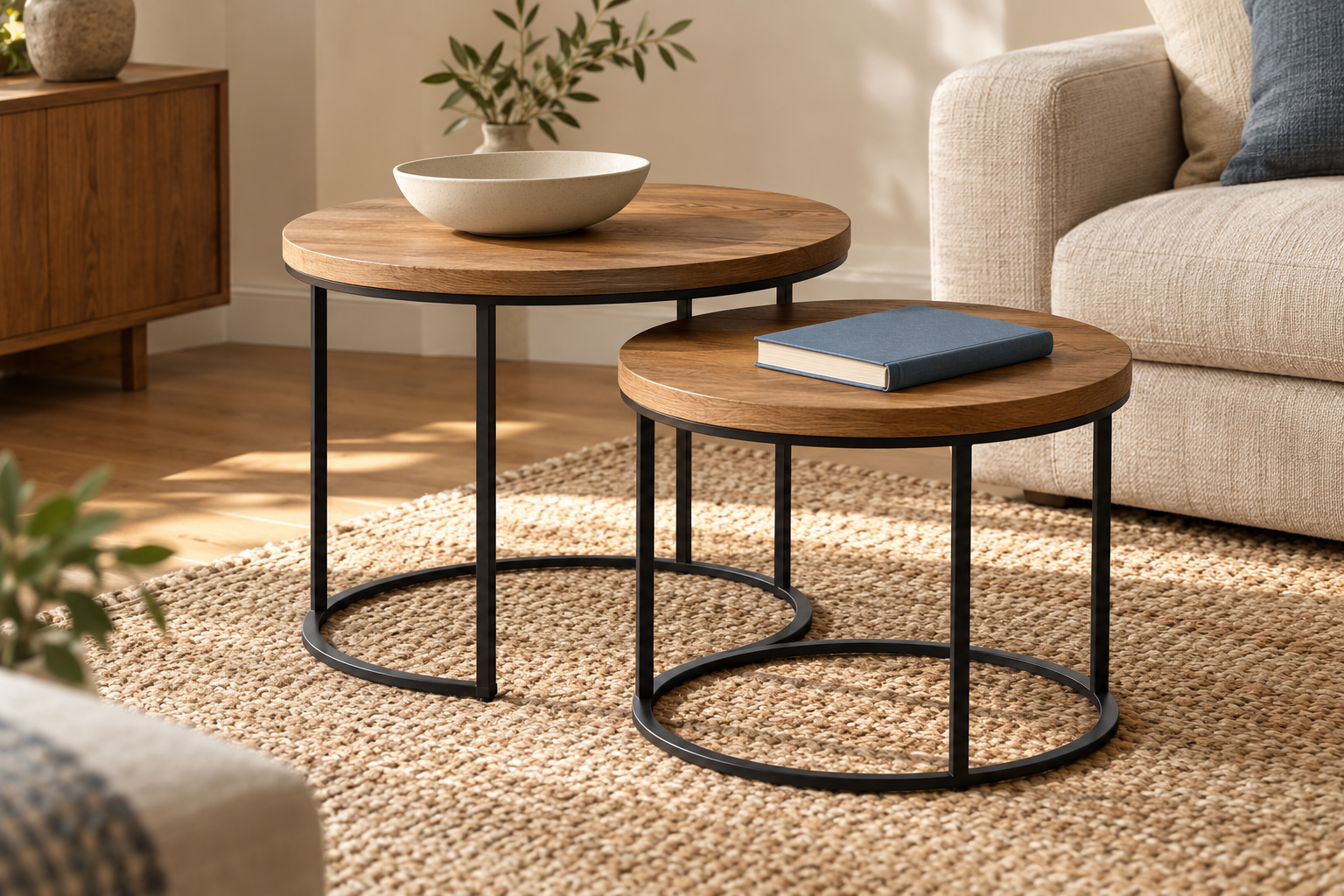
Nathan James Stella nesting tables
The Stella set gives this idea a warm wood-look surface and a slim matte-black outline. Its two different heights make it more flexible than a matching pair, but decide where the lower table will work before you buy.
- Model
- 34001
- Larger table
- 31.6 in wide · 18.1 in high
- Smaller table
- 23.6 in wide · 13 in high
- Materials
- Laminate, engineered wood and metal
Good for: Two seats that sometimes need separate drink surfaces, with room for the lower table when you split the pair.
Consider: The lower table is 13 inches high. The tops are laminate over engineered wood, so choose another finish if solid wood is the point of the purchase.
See photos & details on Amazon
Paid link. As an Amazon Associate I earn from qualifying purchases.
Model details & sources
Set of two · Nutmeg / Matte Black. Dimensions and identity checked 2026-10-02. Manufacturer specifications.
We have not tested this product. Check the exact variant, seller, price, delivery and returns on Amazon before ordering. The illustrations show the idea, not this model.