Use curtains to conceal the gathered vertical blinds while keeping them in place. Start with a compatible headrail attachment or suitable wooden trim, then position the folds around the blind stack.
 Concept image
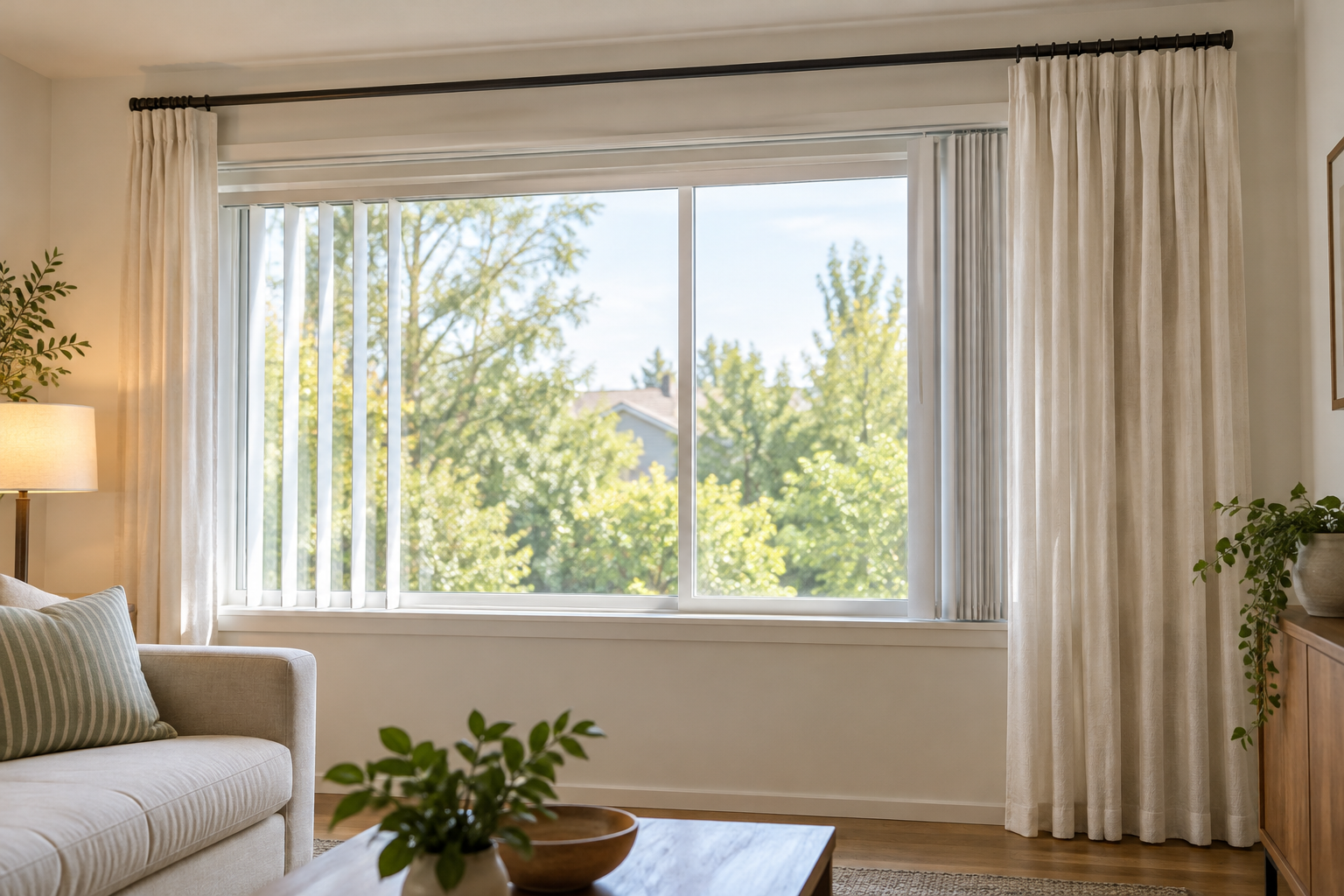
Gather the vertical blinds behind full curtain folds, leaving the center open for daylight and room for the blinds to rotate and travel. Before buying fabric, choose an attachment that suits your actual headrail or trim. A headrail bracket needs a confirmed compatible rail; tap-in brackets need suitable wooden trim and permission for their small punctures.
Give the gathered blinds somewhere to disappear
The useful detail is the stack of slats when the blinds are open. Put your fullest curtain folds beside that stack, rather than dividing the fabric evenly just because the window is symmetrical. If the blinds gather at one side, that is the side that needs enough fabric to cover them.
Try chalk-white fabric against chalk-white walls for a continuous backdrop, or a slightly warmer linen-look tone if you want the folds to stand out. Keep the center open for daylight, and leave room behind the fabric for the blinds to rotate and travel. Two narrow decorative strips may frame the window without hiding the slats.
Headrail brackets: use the rail you already have
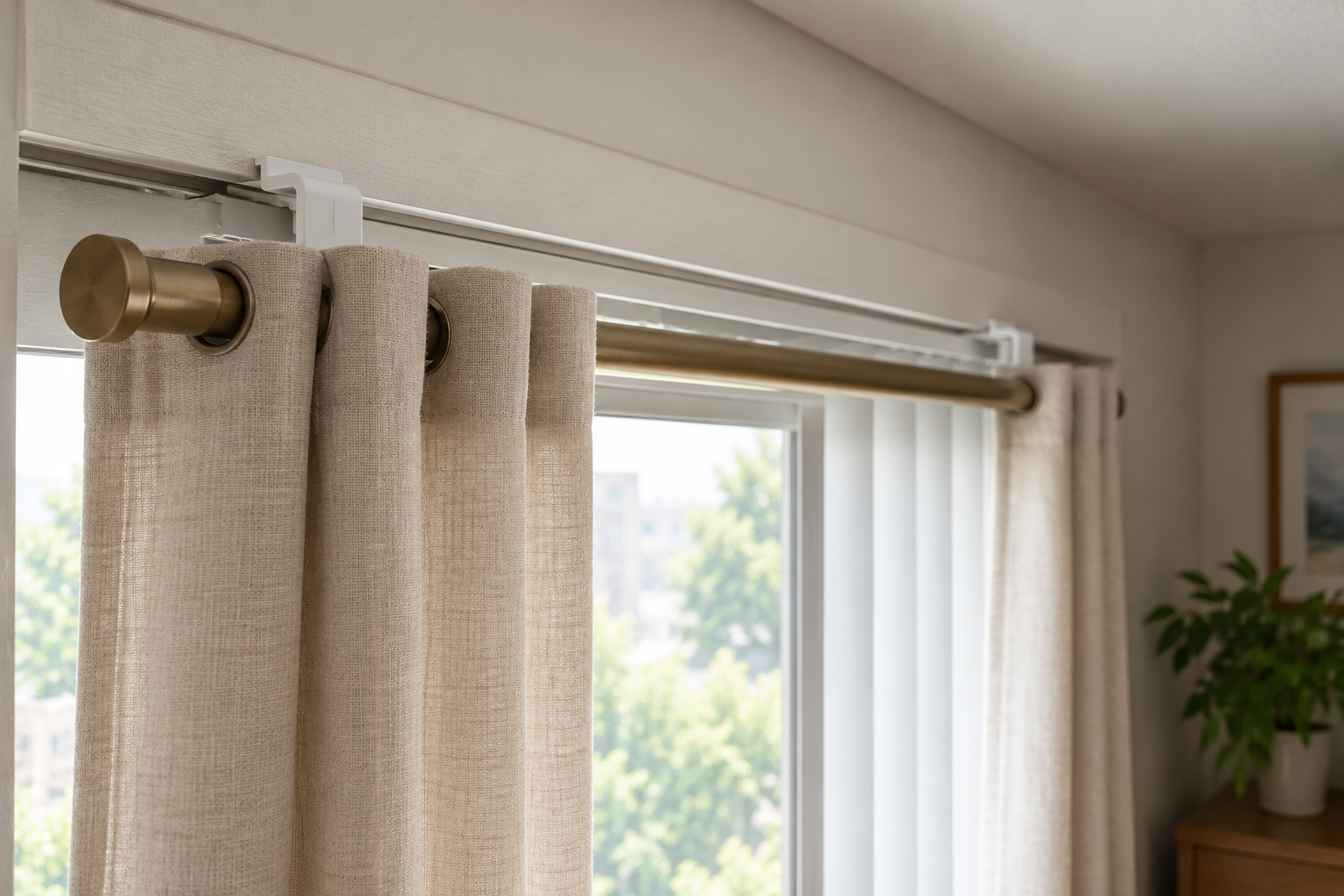
The white headrail brackets in the product picks are an option for compatible outside-mounted blind headrails. This route uses the existing rail instead of introducing punctures in the trim. Compare the exact shape and dimensions of your headrail with the bracket instructions before choosing it; outside mounting alone does not establish compatibility.
Choose this route when your headrail is a confirmed match and you want a quiet white attachment. Check the listed rod allowance and the complete curtain setup, not just the bracket color. An attachment described as no-drill is not a universal promise of damage-free use.
Tap-in brackets: a different route for suitable trim
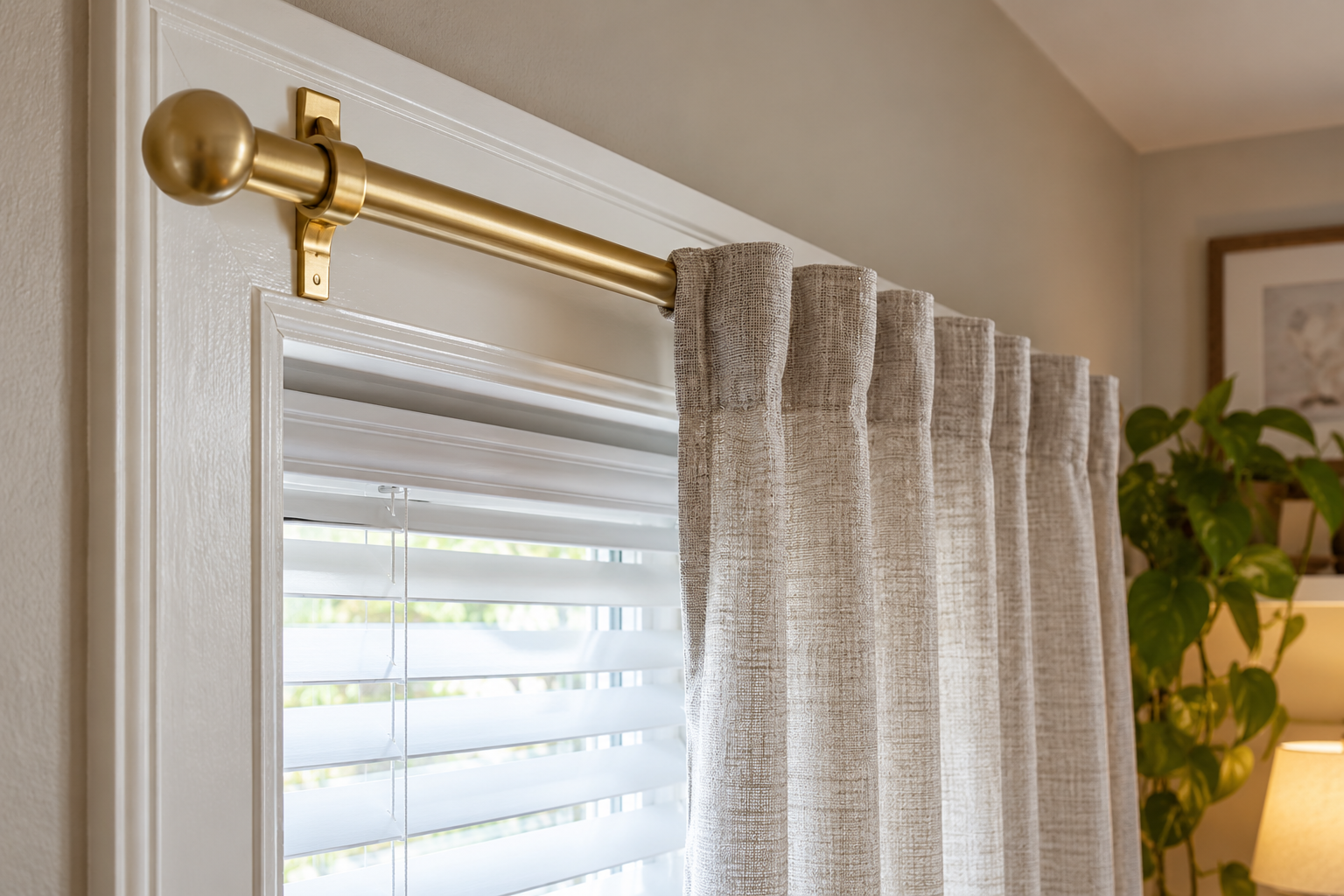
The gold tap-in pair is an alternative when headrail brackets are unsuitable and you have suitable wooden window trim. Its prongs make small punctures, so choose it only if you have permission for those marks. Check the exact trim and rod requirements before deciding that it suits a rental.
Let the hardware decision come before the fabric purchase. Once the attachment and rod position are settled, measure the curtain drop and check whether the open folds will actually overlap the blind stack. Keep using the blinds behind the fabric when you need their separate light or privacy control.
Size the curtains so they really cover the stack
Curtains only hide the blinds if there is enough fabric beside the window.
- Rod width: extend the rod beyond the frame on the side where the blinds gather, far enough that the curtain stack can sit over the blind stack. Measure the blind stack when the blinds are fully open.
- Fullness: a curtain that is about one and a half to two times the width it covers looks full when closed. Less fabric looks flat and lets the slats show through gaps.
- Length: curtains that just touch the floor, or stop about half an inch above it, look tidy and hide the bottom of the blinds. Our curtain height guide has the heights and panel lengths for 8 to 12 ft ceilings.
Leave room for the blinds to move
Vertical blinds need space to rotate and to slide open. Before you fix the rod, turn the slats fully and check how far they stick out from the window. The curtain rod and rings must sit in front of that, or the slats will catch on the fabric. Brackets that hold the rod a little further from the wall solve most clashes.
Choose a heading that slides easily
Because you will still open the blinds behind the curtains, choose curtains that move freely. Grommet or ring-top panels slide along a rod with little effort. Rod-pocket curtains bunch and drag, so they suit curtains you rarely move. Light-filtering fabric keeps the room bright in the day; a blackout lining is worth it only if the blinds alone do not darken the room enough.
Before you buy
- Open the blinds fully and measure the stack and how far the slats project.
- Choose the mounting route your lease allows.
- Set the rod width so the curtain stack can cover the blind stack.
- Order curtains with enough fullness and the right length.
Choose your starting point: Choose the mounting route first, settle the rod position, and measure the curtain drop. Put enough fabric beside the gathered blind stack to cover it while keeping the blinds usable behind the curtains.