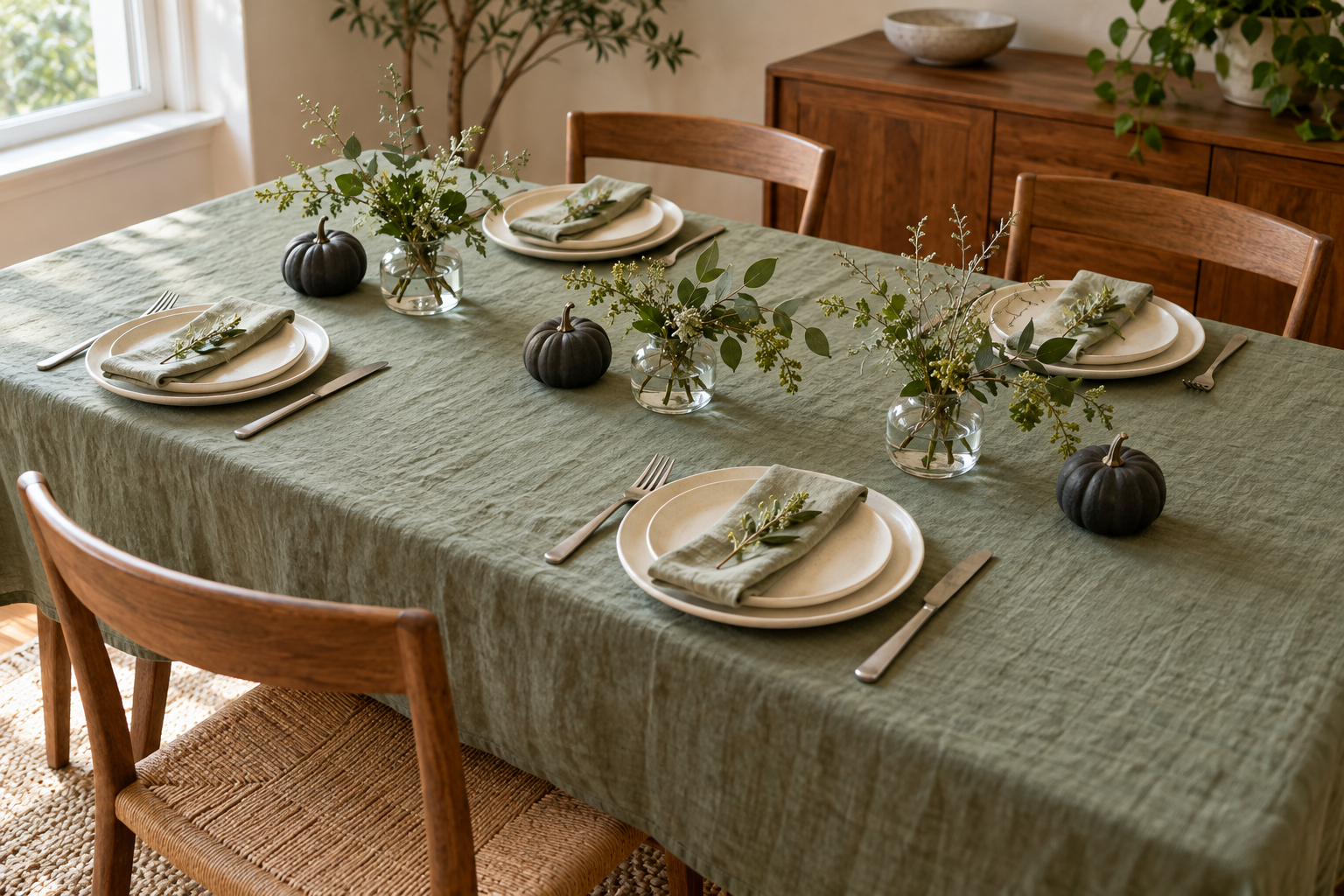
Choose graphic black-and-cream, playful orange paper, romantic plum, autumn wood or botanical sage—and give ordinary dishes a distinct Halloween setting.
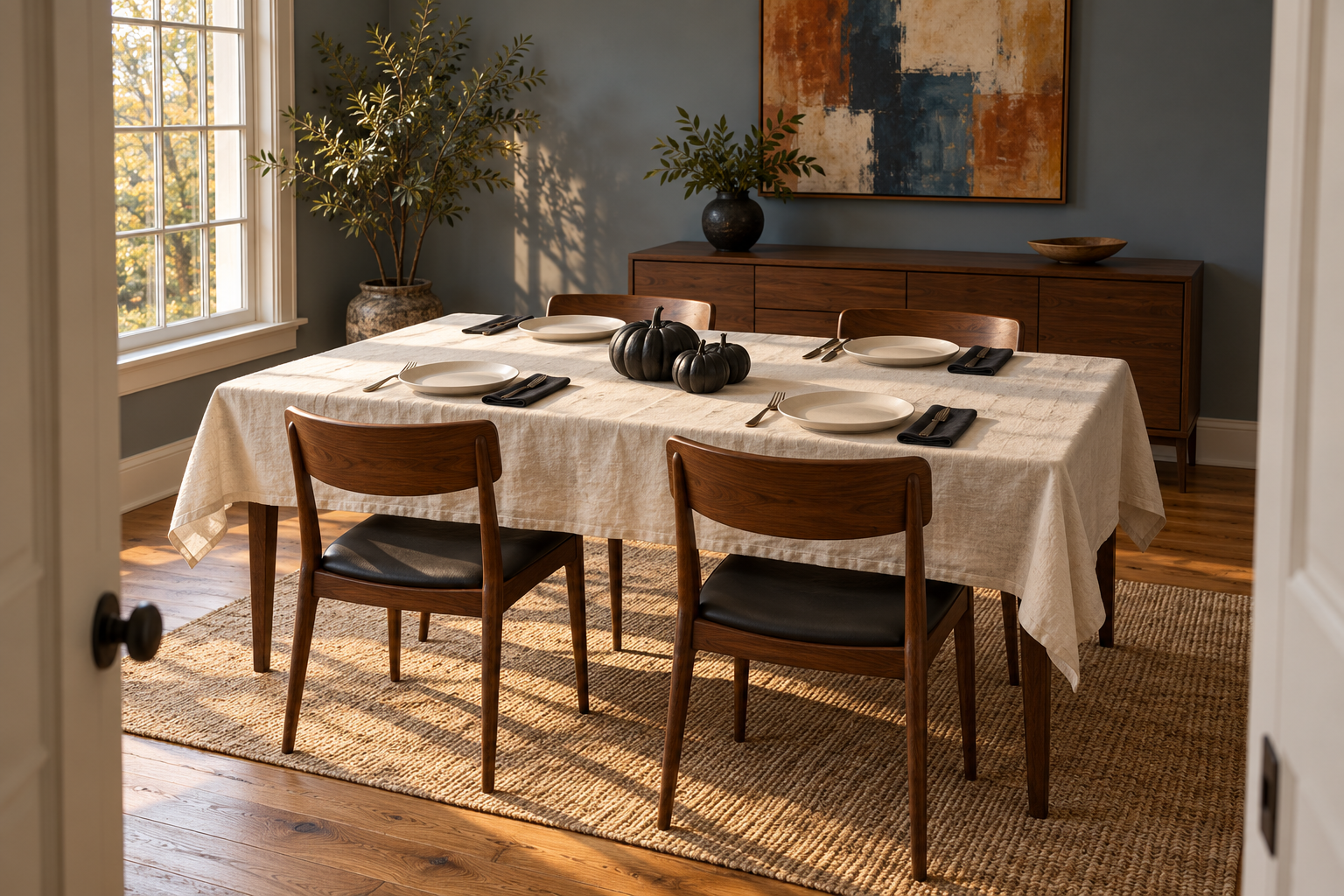 Concept image
For a romantic Halloween table, pair plum linen with cream plates and loose burgundy flowers in a low vessel. Prefer sharper contrast? Try black napkins against cream. The five looks below use different centerpiece shapes and repeated details to give everyday dishes seasonal character.
Explore the ideas
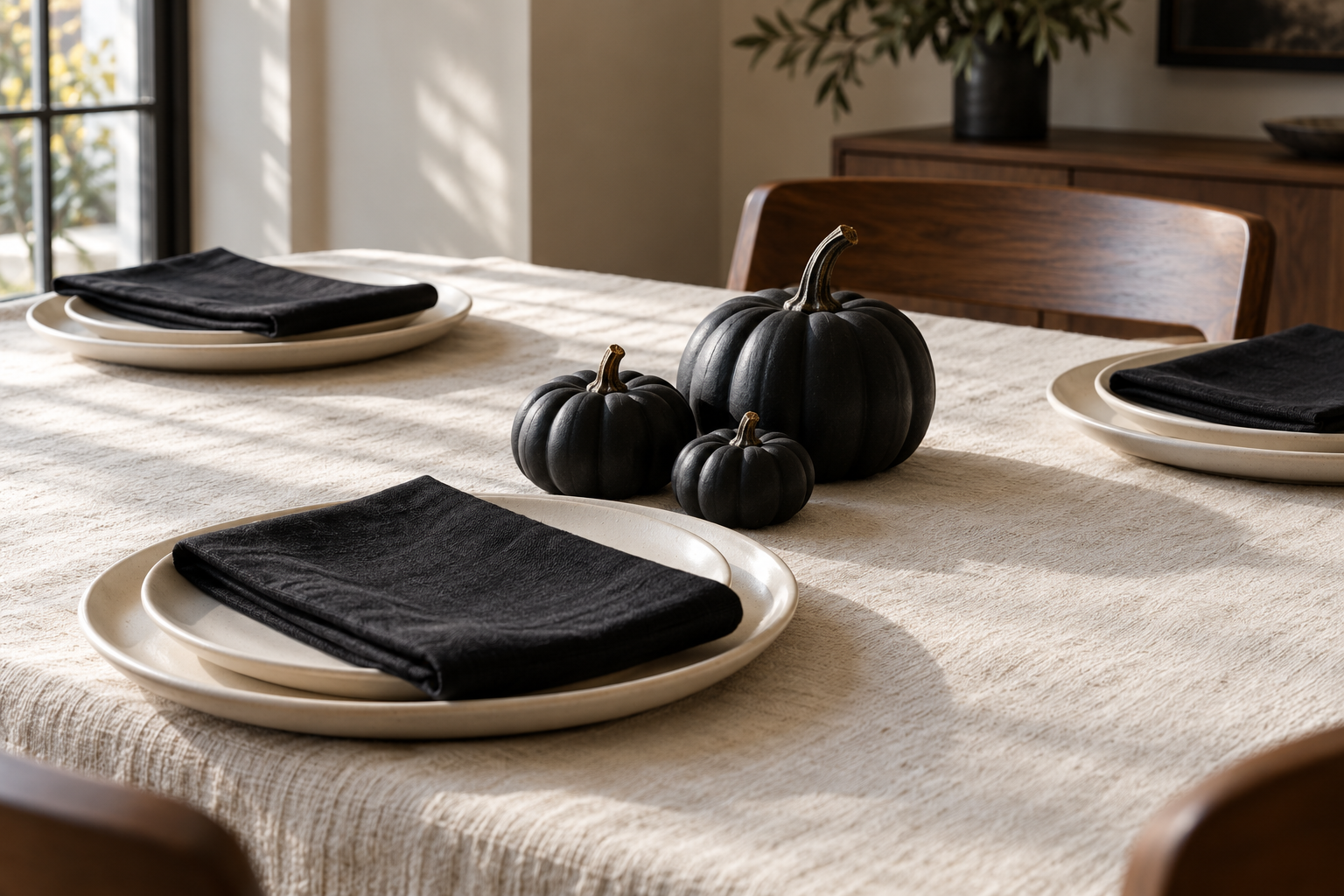
1. Graphic Black-and-Cream
Start with cream linen and cream plates, then repeat a neatly folded black napkin at every setting. Low black pumpkin shapes supply the Halloween cue without introducing another color. Choose this look if you prefer graphic silhouettes to elaborate seasonal decorations; the rounded pumpkins contrast with the napkins’ straight folds.
Keep the pumpkins in one loose central group so the cream cloth remains visible around them. For a shared meal, reduce the group when serving dishes arrive. Repeating the dark napkins already carries the palette across the table, so the centerpiece can stay small.
2. Playful Orange Paper
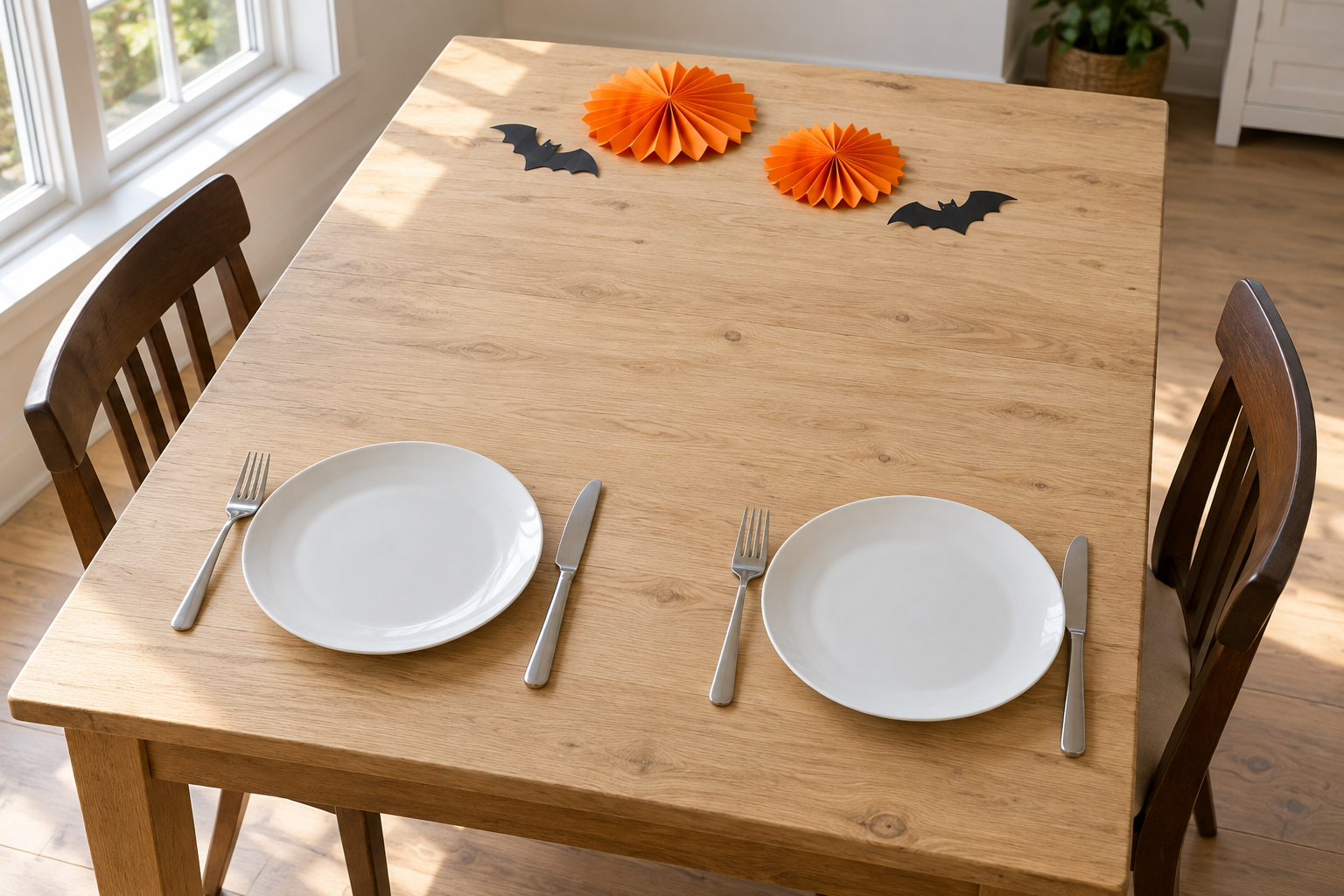
Use white dishes as the quiet base for orange folded-paper fans and flat black silhouettes beside the place settings. This suits a playful Halloween meal where the decoration feels more like paper craft than formal floristry. Repeat the fan’s pleated circle, letting its shape do more work than a crowded mix of motifs.
Set the fans flat on the bare tabletop beside the plates, with silhouettes nearby rather than on eating surfaces. If each setting has paper accents, leave the center mostly open. For a less busy version, concentrate the paper arrangement at one end and keep the individual settings plain.
3. Romantic Plum
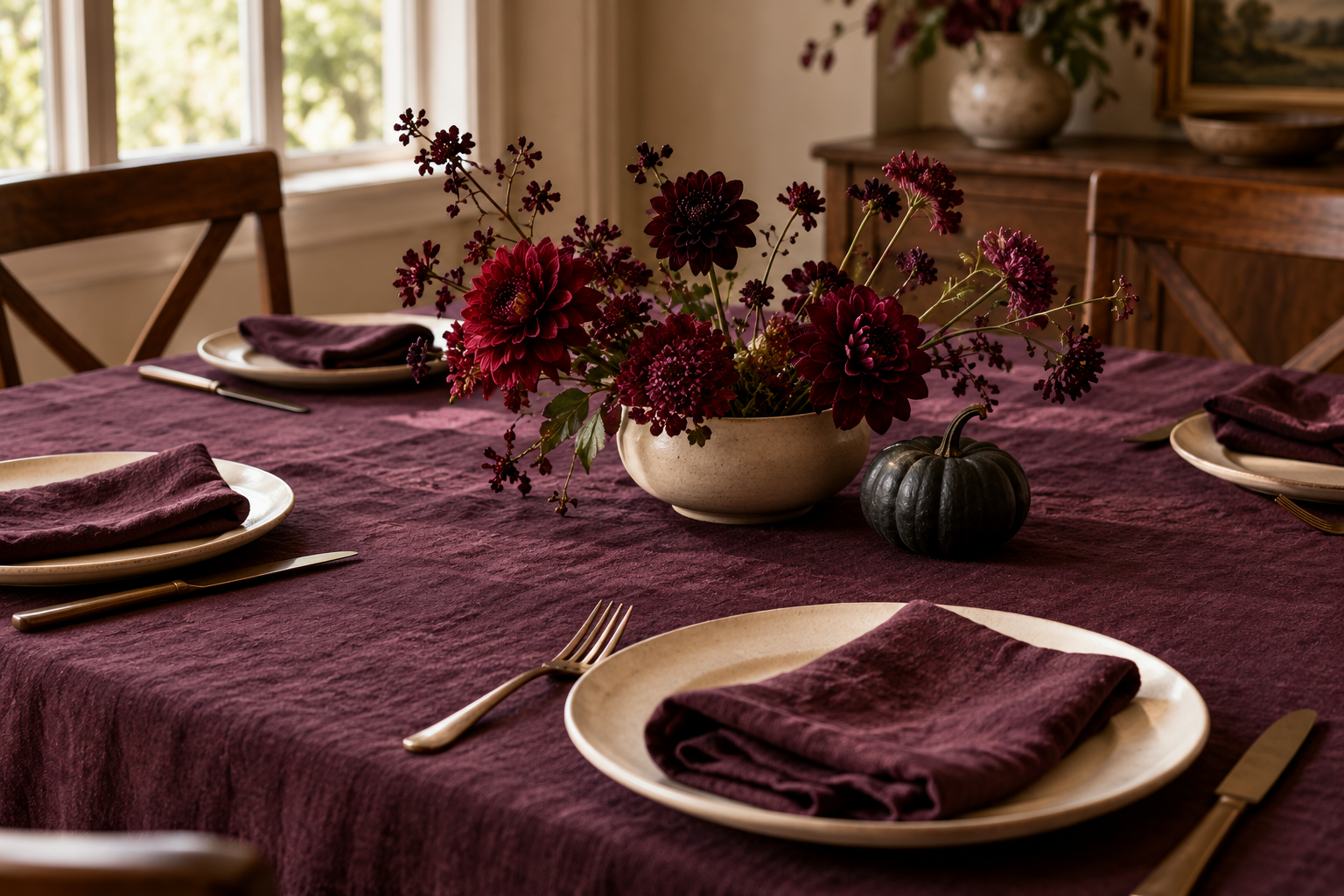
Pair plum linen with cream plates and a low, loose arrangement of burgundy flowers. Leave visible gaps between flower heads rather than making a dense dome. Choose this look for a softer Halloween dinner: the cream plate rims offer a pale contrast beside the dark petals, while a small black pumpkin supplies the seasonal cue.
Repeat plum through the tablecloth and folded napkins, allowing the cream dishes to separate those dark areas. Compared with graphic black-and-cream, this combination favors layered color and irregular flower shapes. For a lighter textile treatment, use a finished plum linen runner over exposed wood; simplify to one floral vessel when serving bowls need the center.
4. Autumn Wood
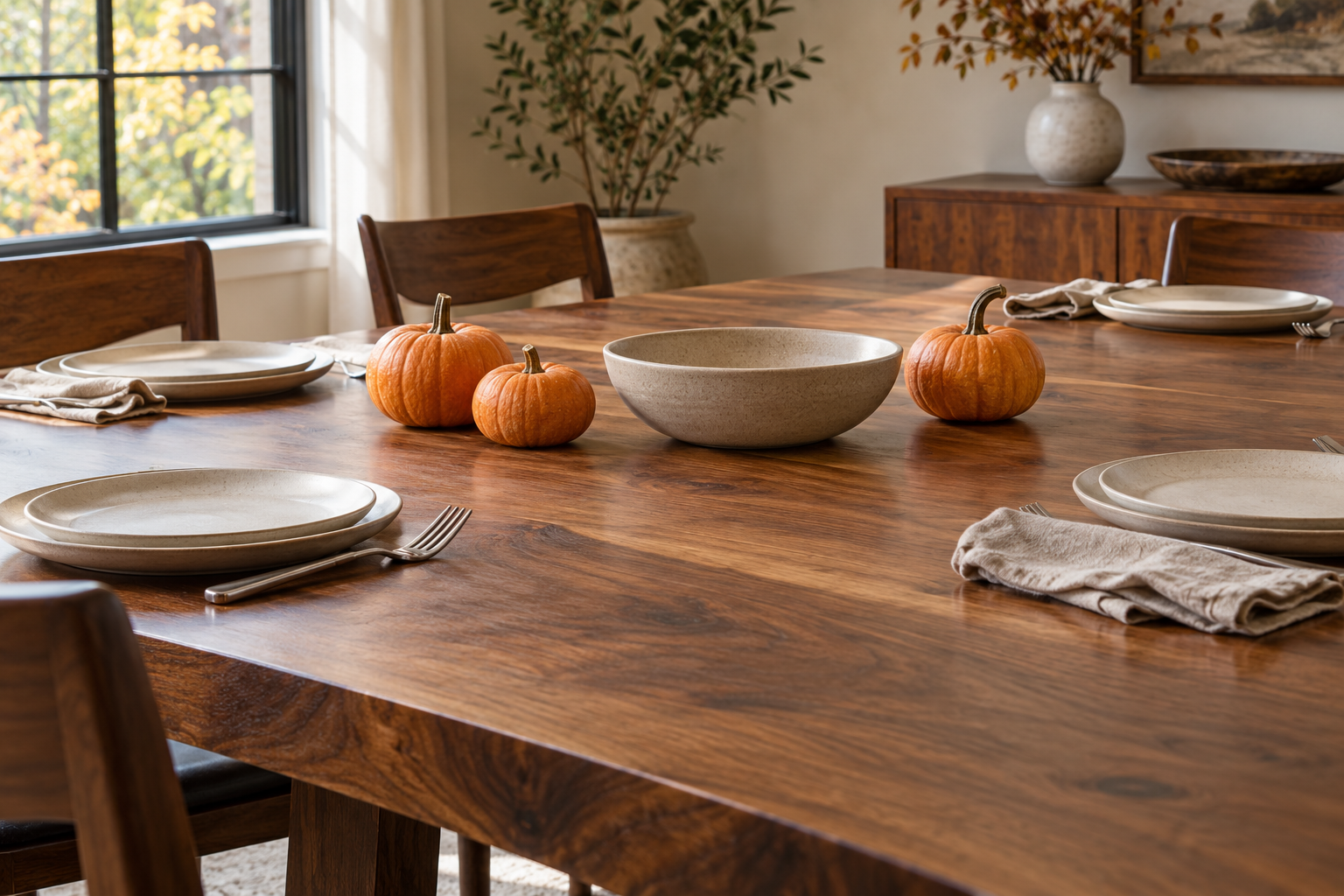
Leave the timber tabletop exposed and pair plain stoneware with flax napkins. Arrange simple pumpkin shapes in a short, interrupted line down the middle. This is the earthiest option for readers who want Halloween cues to sit alongside their everyday dining furniture, with wood grain taking the place of a patterned cloth.
Repeat the pumpkins’ rounded shape rather than adding more decorative categories, and leave gaps for serving dishes from the start. On a shorter table, use a single central cluster instead of extending the line. Keep napkins loosely folded so the setting feels less tailored than the black-and-cream version.
5. Muted Green Botanical
Combine sage linen, cream dishes and short leafy stems divided among separate low vessels. Small charcoal pumpkin shapes distinguish the arrangement as Halloween decor rather than an everyday botanical table. Choose this palette if you like foliage and subdued color but want something lighter in mood than plum and burgundy.
Repeat one vessel shape to connect the separate stems, leaving clear gaps between groups. Move an individual vessel aside when a serving dish needs its spot; several small containers can still crowd the table. A finished sage runner is an alternative to a full cloth when you want the timber visible.