Start with where you’ll sit, then add only the support that spot needs. Compare eight arrangements, from a window-side chair to a reading seat on your existing sofa.
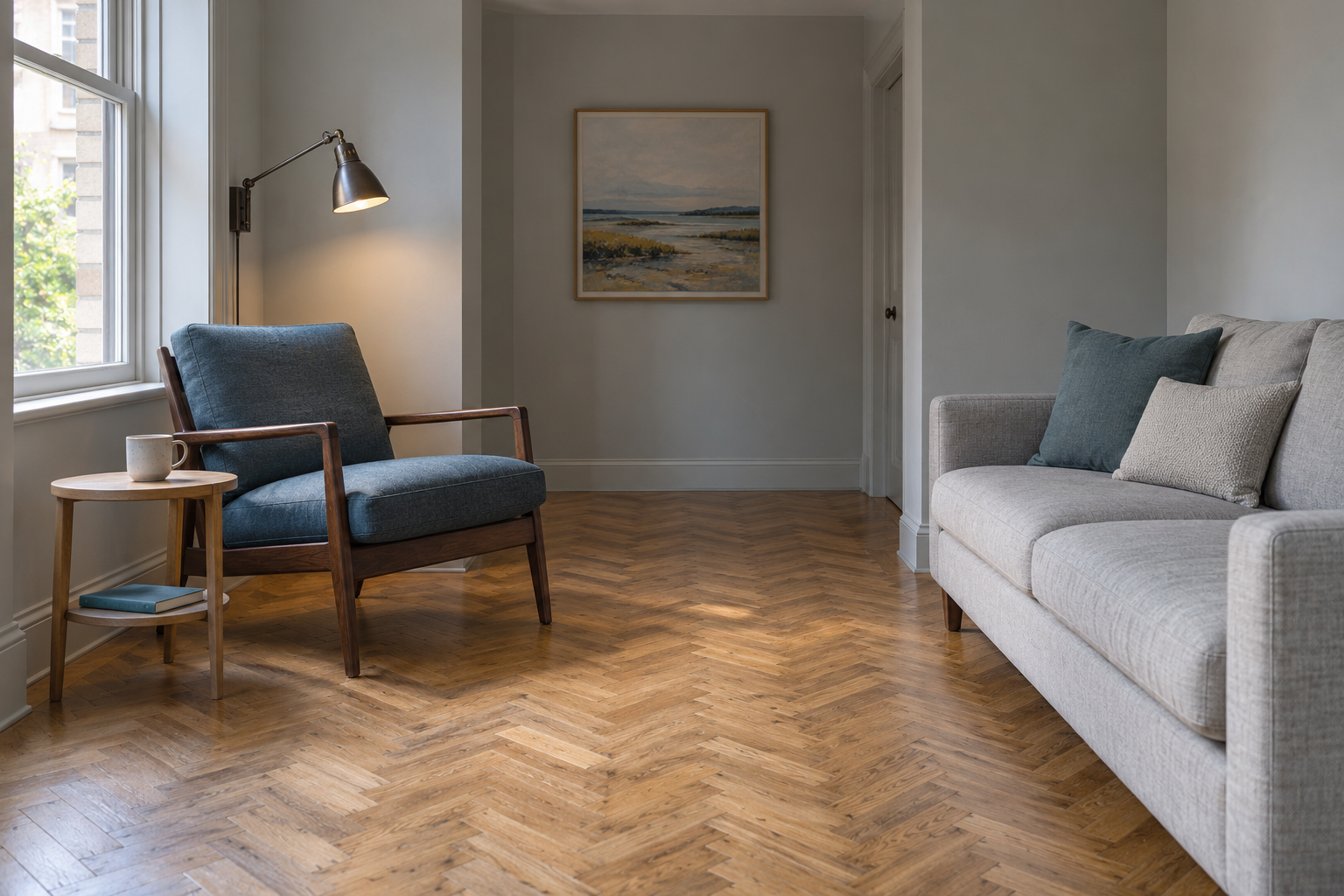 Concept image
A reading corner can share the living room’s seating instead of becoming a separate furniture cluster. Try a blue chair angled toward the sofa, a small beige drink table and focused light—or give an existing sofa seat the same reading support.
Explore the ideas
- 1. Angle a window-side chair toward the sofa
- 2. Give a short-wall chair a book pocket
- 3. Make the side table a mug stop
- 4. Move the reading light onto the wall
- 5. Claim one sofa seat for reading
- 6. Let an existing cabinet hold the books
- 7. Give one chair two positions
- 8. Give the footstool a parking place
1. Angle a window-side chair toward the sofa
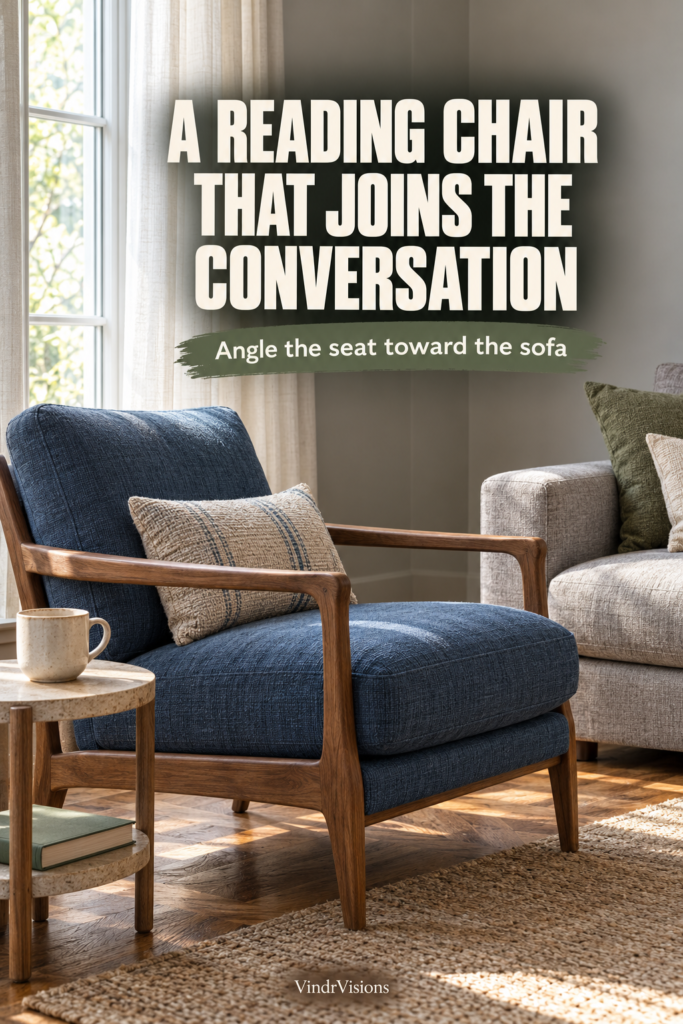
Place a blue upholstered chair beside the window with its seat facing diagonally toward the sofa. A walnut-toned frame gives the blue a warmer companion against cool walls and worn parquet. This arrangement is a good fit if you want a window-side spot that still participates in conversation; facing straight toward the glass makes a more inward-looking retreat.
Set the chair’s direction before adding a table or light. An angled chair occupies a different patch of floor than one squared against the wall, so judge the layout with the chair turned as you would use it. Keep the curtain accessible and the room’s everyday route usable; the illustration establishes neither fit nor personal comfort.
Lexicon · Blue · Walnut Frame
Blue linen-look upholstery and a walnut-finish frame suit window-side reading and guest seating when the listed footprint suits your room.
Product details
Lexicon · Blue · Walnut Frame
- Color: Blue
- Size: Walnut Frame
- Material: Fabric, Foam, Rubberwood, Wood
- Product Dimensions: 32"D x 28.5"W x 31.5"H
2. Give a short-wall chair a book pocket
For a short wall, try an upright chair with a slim profile and a fabric book pocket on the wall beside it. Keep the pocket beside the seat rather than behind your head, with only current reading inside. A slate-blue pocket against a pale gray wall makes a quieter combination than a separate stack of colorful book spines.
This suits someone who reads one book at a time and wants a defined seat without another storage cabinet. Choose a pocket intended to hold books and follow its mounting instructions. If wall mounting is unavailable, keep the current book in an existing nearby cabinet rather than adding a floor basket to the same tight spot.
3. Make the side table a mug stop
Choose a small round natural-beige table beside the chair when the real job is holding a mug and the current book. Its circular top offers a different outline beside a chair’s rectangular seat and arms. Leave most of the top clear; a vase-and-tray display turns this useful landing place into something you have to rearrange before reading.
A lower shelf can hold the book while the mug stays above, but skip the extra surface if a nearby cabinet already does the job. This arrangement is a good fit if you bring a drink to your seat. Position the table from the seated chair so using it does not require leaning around an arm or standing up.
Natural-beige round side table
A small round wood-look table gives the reading chair a mug surface and a lower book shelf.
Product details
VASAGLE round side table with lower shelf, Natural Beige, 1 pack
- Listed dimensions: 15.8 D × 15.8 W × 19.7 H in
- Listed frame: Particleboard
- Selected finish: Natural Beige
4. Move the reading light onto the wall
Where mounting is permitted, use a directional wall reading light beside the chair instead of a floor lamp. An understated metal finish keeps this support visually separate from the blue upholstery and wood frame. Direct the light toward the open book; retain an existing shaded room lamp for background illumination rather than asking one fixture to do both jobs.
This suits a corner where a floor-lamp base would compete with the chair or table. Wall suitability, power access and the selected light’s adjustment range still determine whether the placement works. If mounting is unavailable, try a directional table lamp on an existing cabinet, provided its base leaves enough surface for what you already keep there.
5. Claim one sofa seat for reading
If another chair would crowd daily use, make one end of the existing sofa the reading seat. Keep the current book beside that end and arrange a reading light for that position. A muted teal cushion can mark the spot without introducing another furniture footprint; omit it if the sofa already has the support you prefer.
If you lack a usable cabinet top, a directional floor lamp is another option, provided its listed footprint leaves the everyday route usable. This is the useful choice for someone who mostly reads alone but still needs the sofa for shared evenings. Use the same side surface for reading and ordinary lounging rather than building a permanent book display around it. If another person regularly occupies that end, keep the book portable so the arrangement remains easy to share.
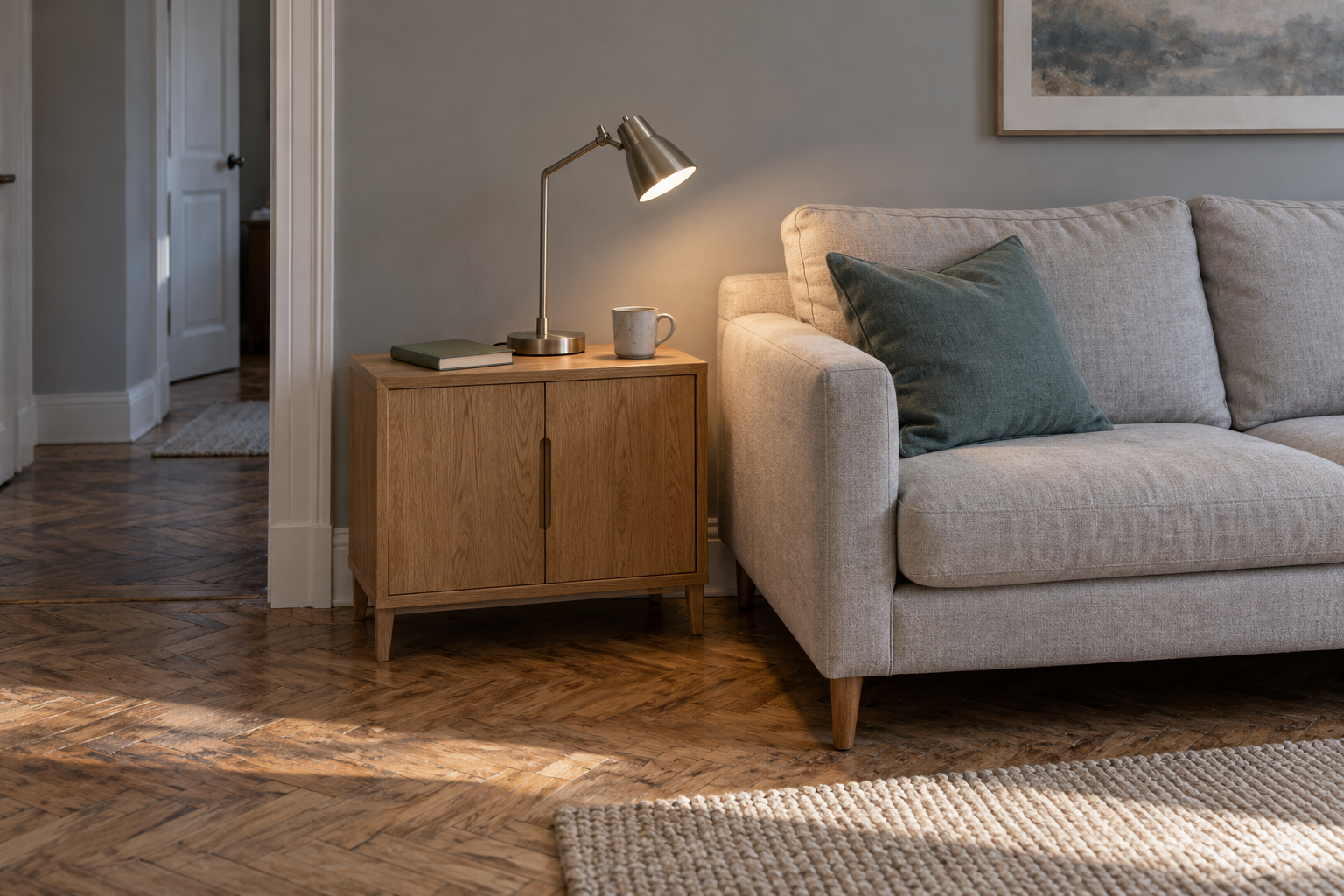
Gold Leaf reading floor lamp
A gold floor lamp replaces the illustrated cabinet-top lamp when no usable top is available; check its listed footprint against everyday routes.
Product details
Brightech Leaf pharmacy reading lamp, Gold
- Listed dimensions: 19 D × 19 W × 53 H in
- Selected finish: Gold
- Listed function: Dimmable reading lamp
6. Let an existing cabinet hold the books
Place the chair beside a cabinet you already use, with its doors or drawers still able to open. Give current reading one accessible shelf or compartment instead of adding a bookcase. Blue upholstery beside a walnut-toned cabinet offers a coordinated pairing; a pale gray cabinet is a worthwhile alternative if you prefer less contrast with the wall.
If you have several books in rotation and want them put away between sessions, try this arrangement. If the cabinet top is a comfortable place to set your mug, it may also replace a side table. Avoid wedging the chair directly against the cabinet simply to close a gap: the storage needs to remain usable.
7. Give one chair two positions
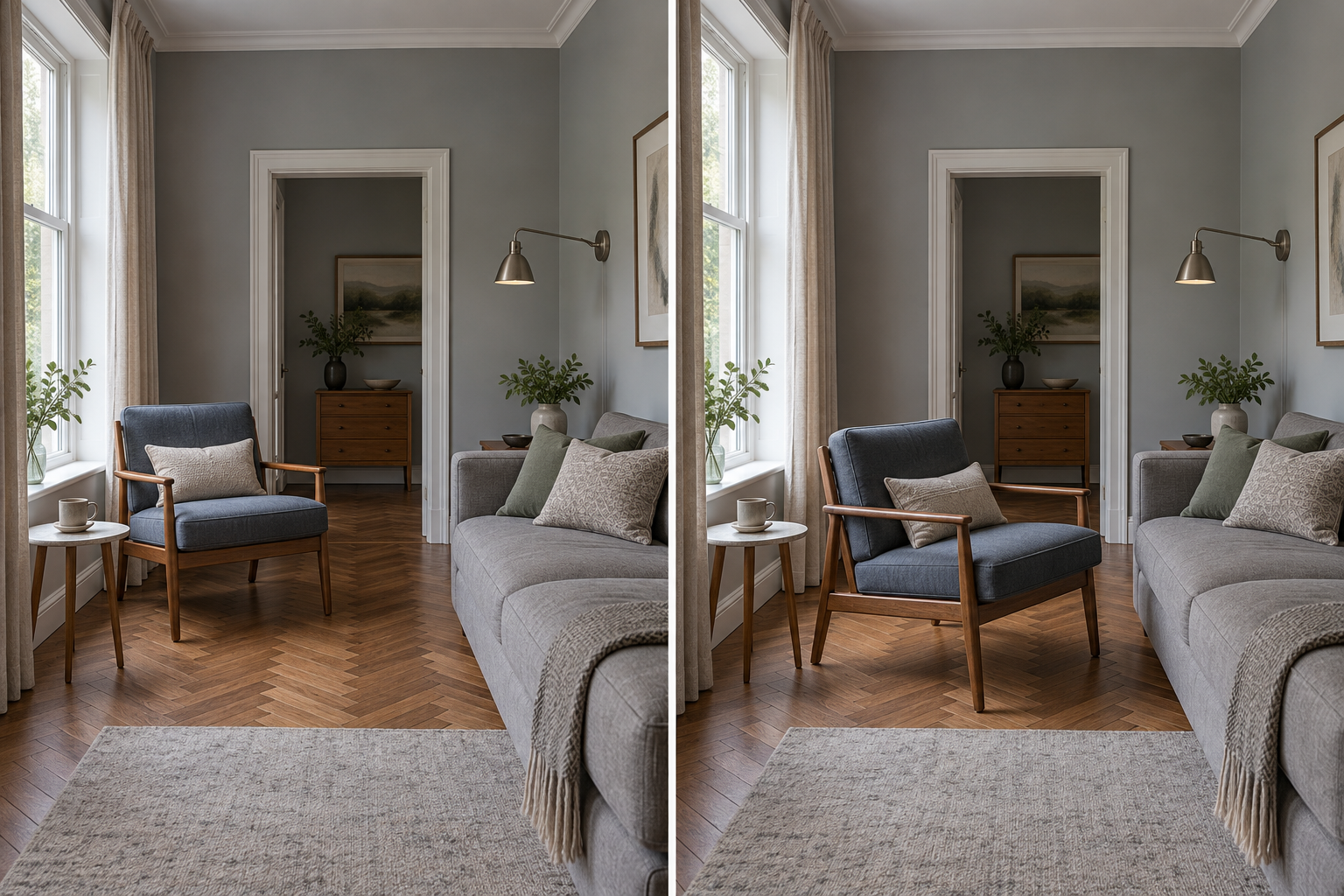
Treat a chair as shared seating with two deliberate positions: beside the window for reading, then turned and brought closer to the sofa for guests. Keep the drink table at the reading spot so moving the chair does not require moving an entire vignette. This arrangement works well if you entertain occasionally and want the same seat to serve both routines.
Choose a chair you can safely reposition on your floor; appearance alone does not establish that it is easy to move. Try both arrangements with the actual chair before relying on this plan. If moving it is awkward, keep it permanently angled toward the sofa as in the first idea, letting conversation come to the reading position.
8. Give the footstool a parking place

Add a separate footstool only after choosing where it will sit during reading and where it will wait afterward. A gray upholstered stool can sit beside the chair when parked, then move in front for use. It works well if you prefer your feet raised but do not want a permanently extended seating arrangement.
The parked position alone is not enough: the stool in front of the chair changes how people pass through the room. Try that working position during normal household use. If it interferes with the route or another seat, omit the stool; a visually matching accessory is still optional when its everyday placement is inconvenient.
BRIAN & DANY · Grey
A gray linen footstool offers separate foot support if both positions suit everyday routes; its base finish is unverified.
Product details
BRIAN & DANY · Grey
- Color: Grey
- Product Dimensions: 15.4"D x 11.6"W x 9.25"H
Affiliate links. As an Amazon Associate I earn from qualifying purchases. Not hands-on tested; the illustrations do not show these exact products.