Keep a magnetic shoehorn beside the shoes you wear most, with a low tray for the pairs in everyday use. Plan where you take it down and put it back, then choose a wall color that works with your entryway.
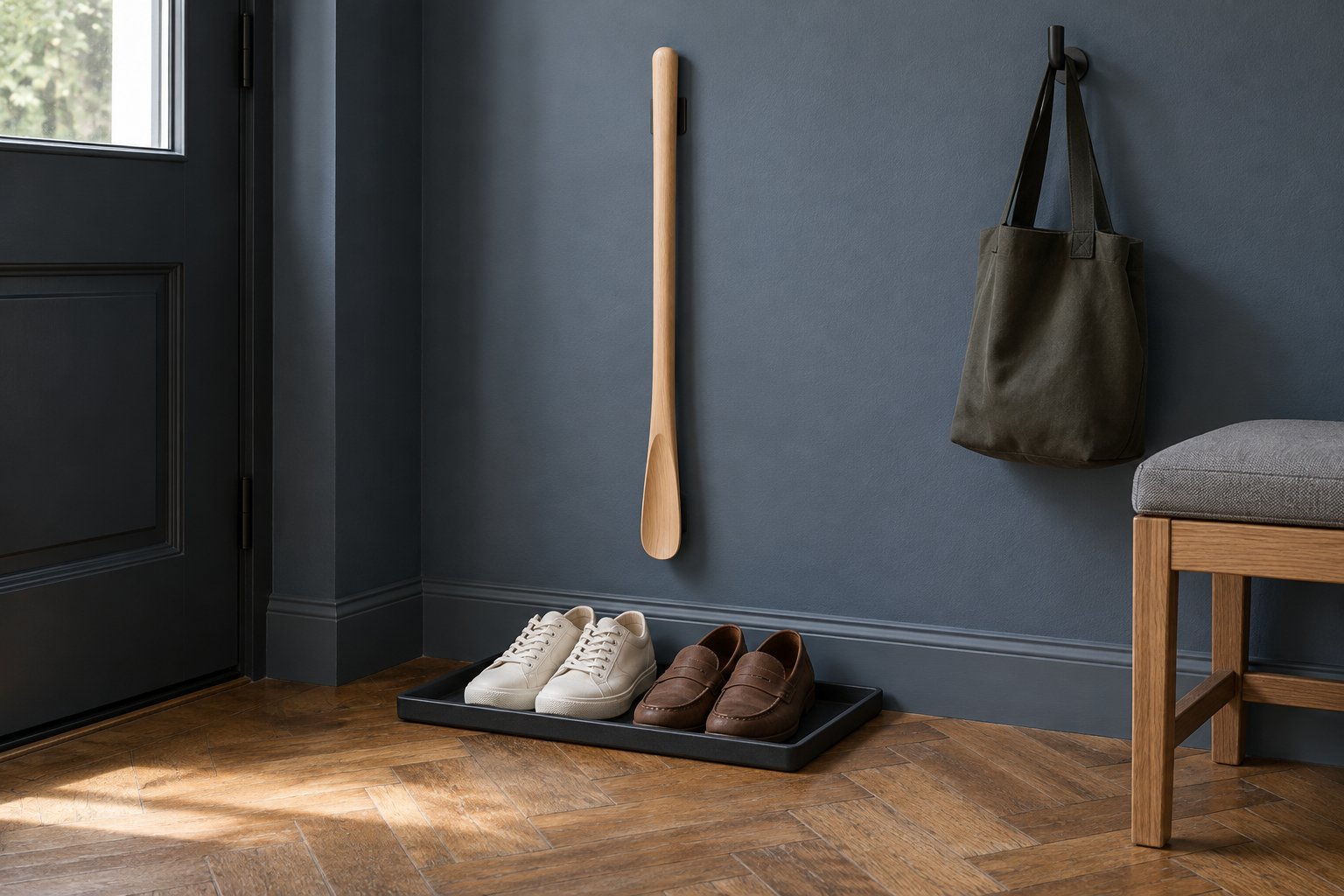 Concept image
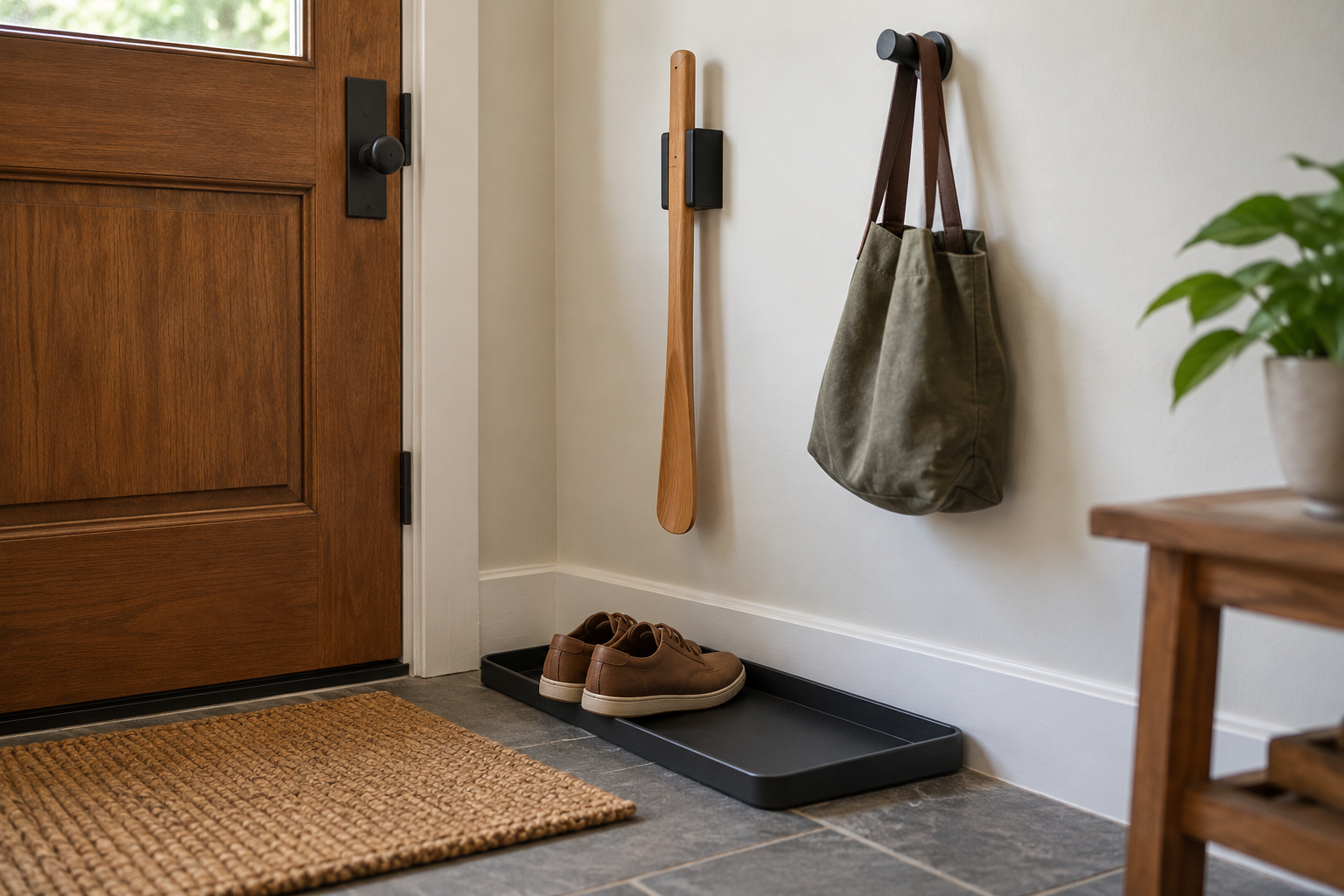
Give the shoehorn a fixed return spot beside where you put on shoes, away from coats and hanging bags. Keep daily pairs together in a low tray below or nearby. The useful choice is the whole routine: a shoehorn you can take down and return easily, with shoes gathered in a place that leaves your walkway open.
Put the return spot beside the shoes
Treat the shoehorn as the vertical detail of your shoe-changing spot. Place its holder beside where you put on shoes, above the tray rather than among coats. If you use a seat, let that position guide the placement. Keep hanging bags beyond the space needed to remove and return the shoehorn.
The verified natural-wood option is beechwood, with magnets connecting the shoehorn to its holder. Wall attachment is unspecified, so follow the exact item's instructions. The illustration shows a generic arrangement; it does not establish the recommended item's appearance or fit.
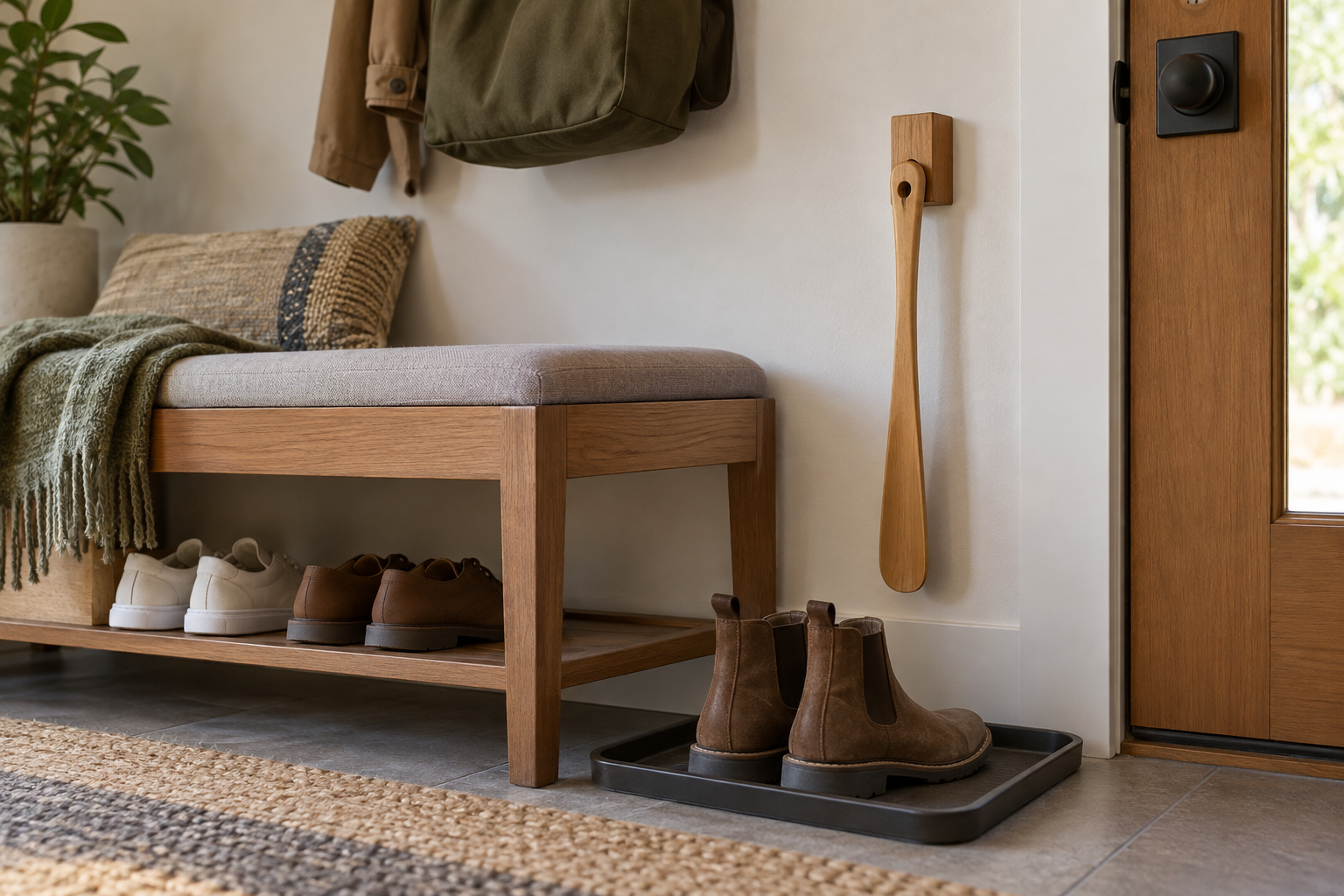
Choose slate blue or chalk white
Matte slate blue gives pale wood a distinct backdrop and makes the charcoal tray part of a cool, restrained palette. Choose it if you want the shoe-changing spot to read as a small composition. Chalk white offers a quieter alternative: the wood grain becomes the gentle focal detail, with charcoal supplying a crisp outline below.
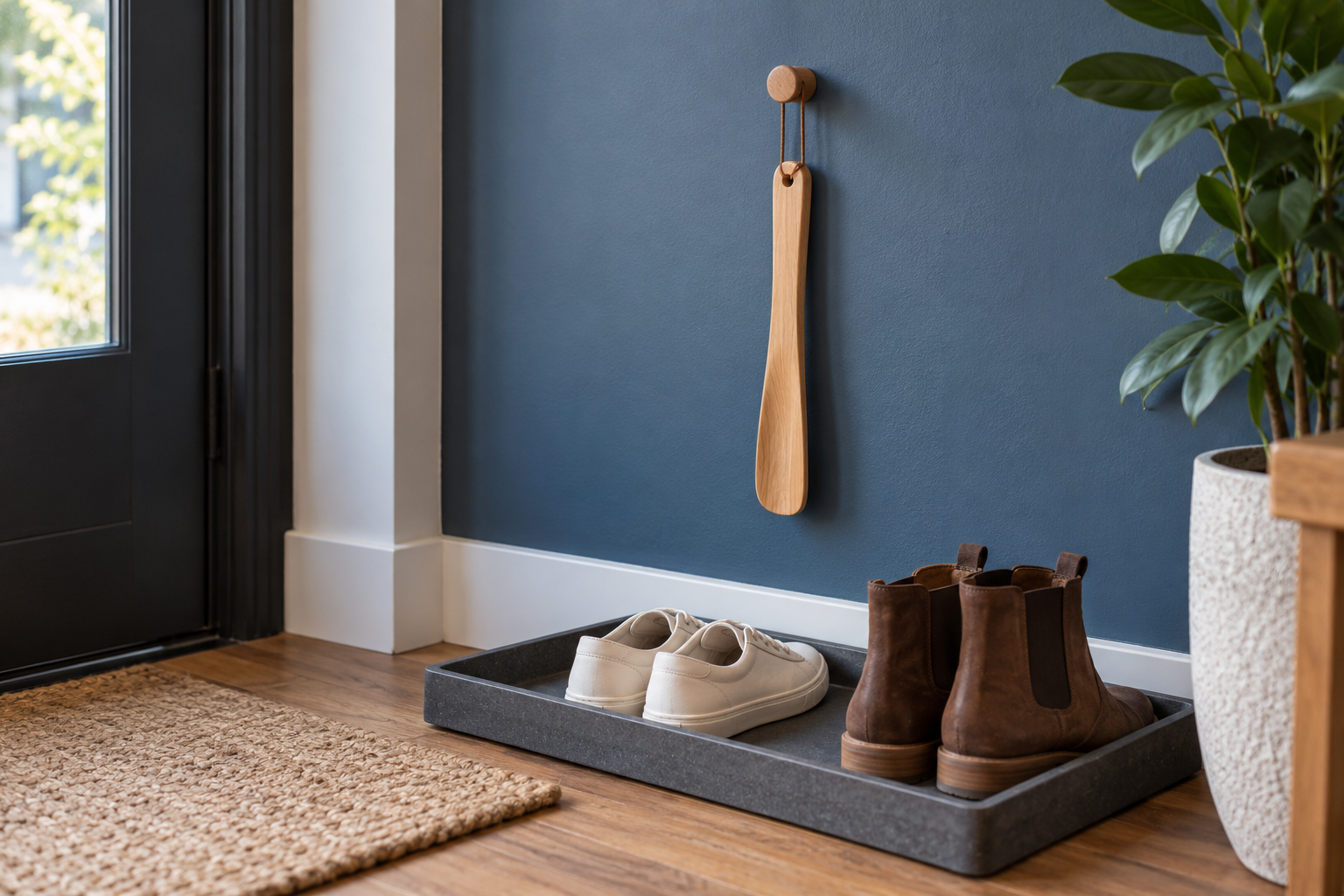
Give daily pairs a horizontal outline
Arrange everyday pairs side by side in a shallow rectangular charcoal tray, with their toes facing the same direction. The repeated shoe shapes reinforce its horizontal outline beneath the long shoehorn. Keep occasional pairs elsewhere so the tray remains a useful landing place for daily arrivals rather than a pile you must rearrange.
If several pairs stay in regular rotation, an existing open shoe shelf may suit the routine better. Give each pair a visible place and position the shoehorn beside that station. You trade the tray's single low outline for stacked rows, but gain an arrangement that accommodates more everyday shoes without piling them together.
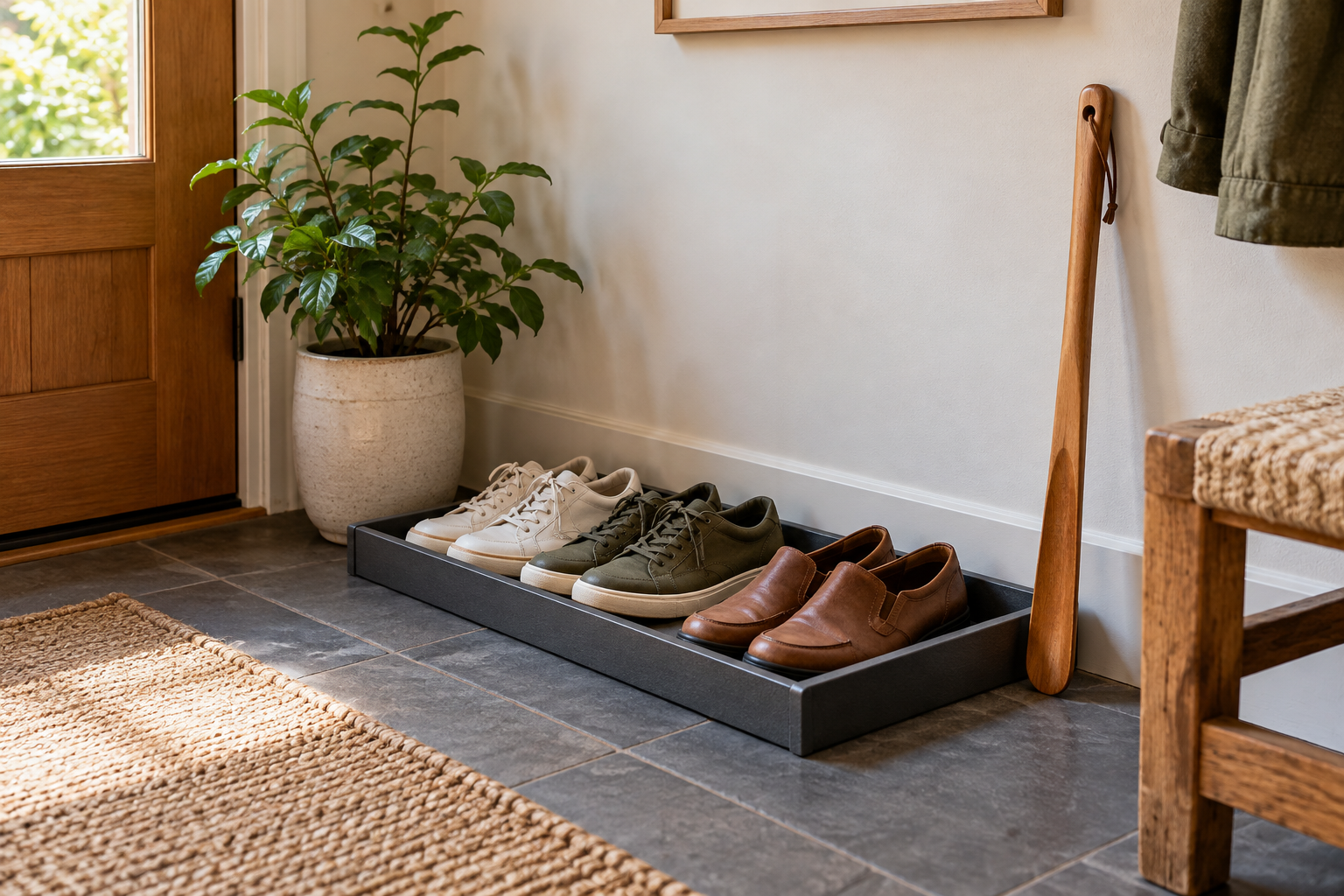
Repeat charcoal once, with a purpose
Place a single charcoal hook to one side for a bag, beyond the shoehorn's removal path. Its small dark shape repeats the tray while serving an everyday job. If a nearby door already has charcoal hardware, use that as the repeat instead; the arrangement doesn't need extra decorative objects.
Plan the whole shoe stop, not just the shoehorn
A small entryway works when everything you need on the way in and out has one place. Around the shoehorn and tray, that usually means:
- Somewhere to sit, if there is room. A bench or stool around 18 inches high, a common seat height, makes putting on shoes easier.
- A mat just inside the door, so grit stays off the tray and the floor.
- One hook per person for the bag or coat used every day, mounted where it does not block the shoehorn.
- A small dish or wall pocket for keys, so they do not end up in shoes.
Keep the path clear
An entryway is a walkway first. Keep about 36 inches of clear floor where people walk in, and at least the width of the door swing free of trays and baskets. If the tray sits behind the door, check that the door still opens fully when shoes are in it.
Wet and muddy days
A solid, rimmed tray holds water from wet boots; a slatted shelf lets shoes dry but drips onto the floor below. In wet seasons, keep a boot tray for outdoor shoes and the neat tray for daily pairs. Wipe the tray weekly so dirt does not build up under the shoes.
More ideas for a small entryway
If you have no room for a console table, our guide to a small entryway without a console shows how a wall shelf, hooks and a mirror can do the same job in less floor space.
Pieces to consider
ALTO · Natural Wood
The ALTO Natural Wood beechwood shoehorn adds a useful vertical accent beside everyday shoes, with magnets connecting it to its holder.
Product details
ALTO · Natural Wood
- Color: Natural Wood
Affiliate links. As an Amazon Associate I earn from qualifying purchases. Not hands-on tested; the illustrations do not show these exact products.