Choose creamy vegetables with a crisp topping, sweet cornbread squares, or soft rolls by what your meal needs—and how you want to prepare it.
 Concept image
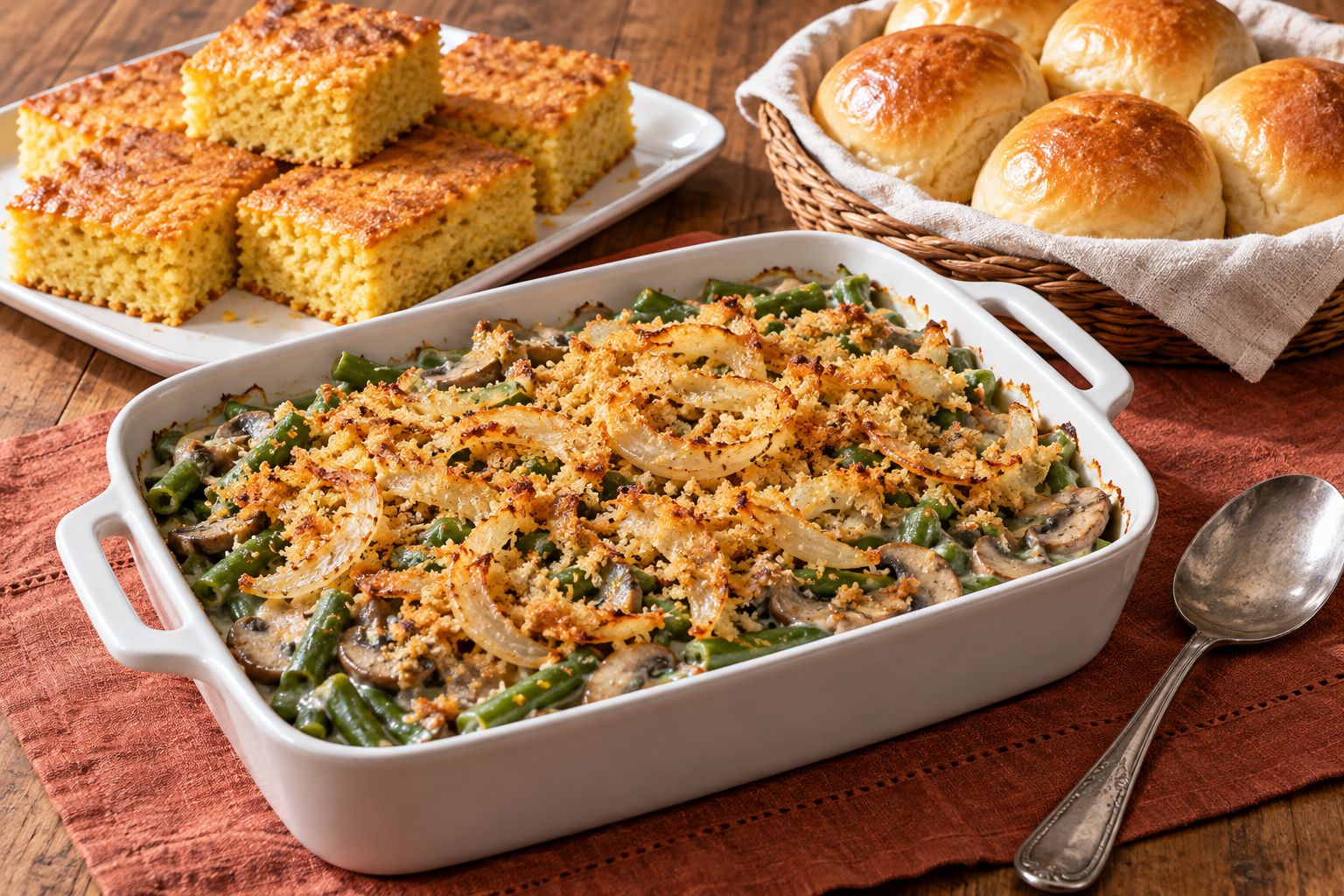
Choose green bean casserole for vegetables in creamy mushroom sauce with onion crunch, cornbread for a sweet accompaniment without yeast rises, or dinner rolls for soft individual bread portions. Each brings a different texture and preparation method to Thanksgiving.
Explore the ideas
At a glance
The three originals side by side, so you can choose before you open them.
| Recipe | Choose it for | What the preparation involves |
|---|---|---|
| Green bean casserole Sally’s Baking |
Vegetables in a creamy sauce with a crisp onion topping | Three separate parts: blanched beans, baked panko-coated onions and a mushroom-garlic sauce |
| Cornbread Sally’s Baking |
Sweet squares to slice beside a savory meal | A mixed batter with no rising, baked in a square pan |
| Dinner rolls MaryJane Robbins · King Arthur Baking |
Soft, individual bread portions | Kneading, shaping and two rises before baking |
1. Green Bean Casserole for Creamy Vegetables and Onion Crunch
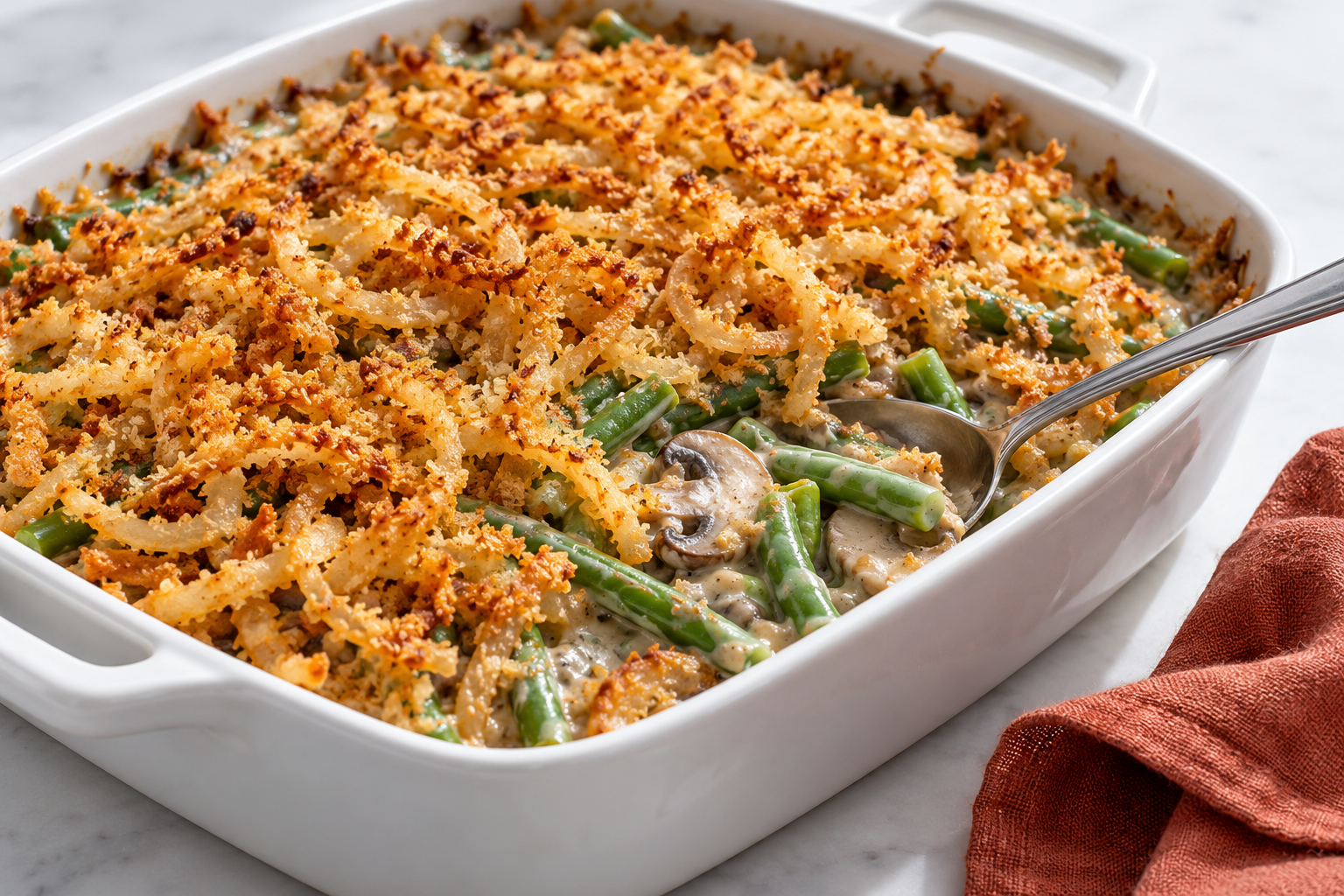
Choose the green bean casserole when your menu needs a vegetable dish with a creamy sauce and a crisp topping. Fresh green beans and sliced mushrooms give it substance, while panko-coated baked onion slices provide contrast. It suits a meal where you want vegetables served in a rich sauce rather than another bread accompaniment.
The preparation has separate components: blanching and cooling the beans, coating and baking the onions, and making the mushroom-garlic sauce with broth and half-and-half. Some onions go into the casserole; the rest form its topping. Choose it when you can accommodate that assembly work, then serve from the baking dish with a spoon to include beans, sauce, and onions.
Recipe by Sally · Sally’s Baking. Get the full Creamy Green Bean Casserole from Scratch recipe ↗
2. Cornbread for Sweet Squares Without Yeast Rises
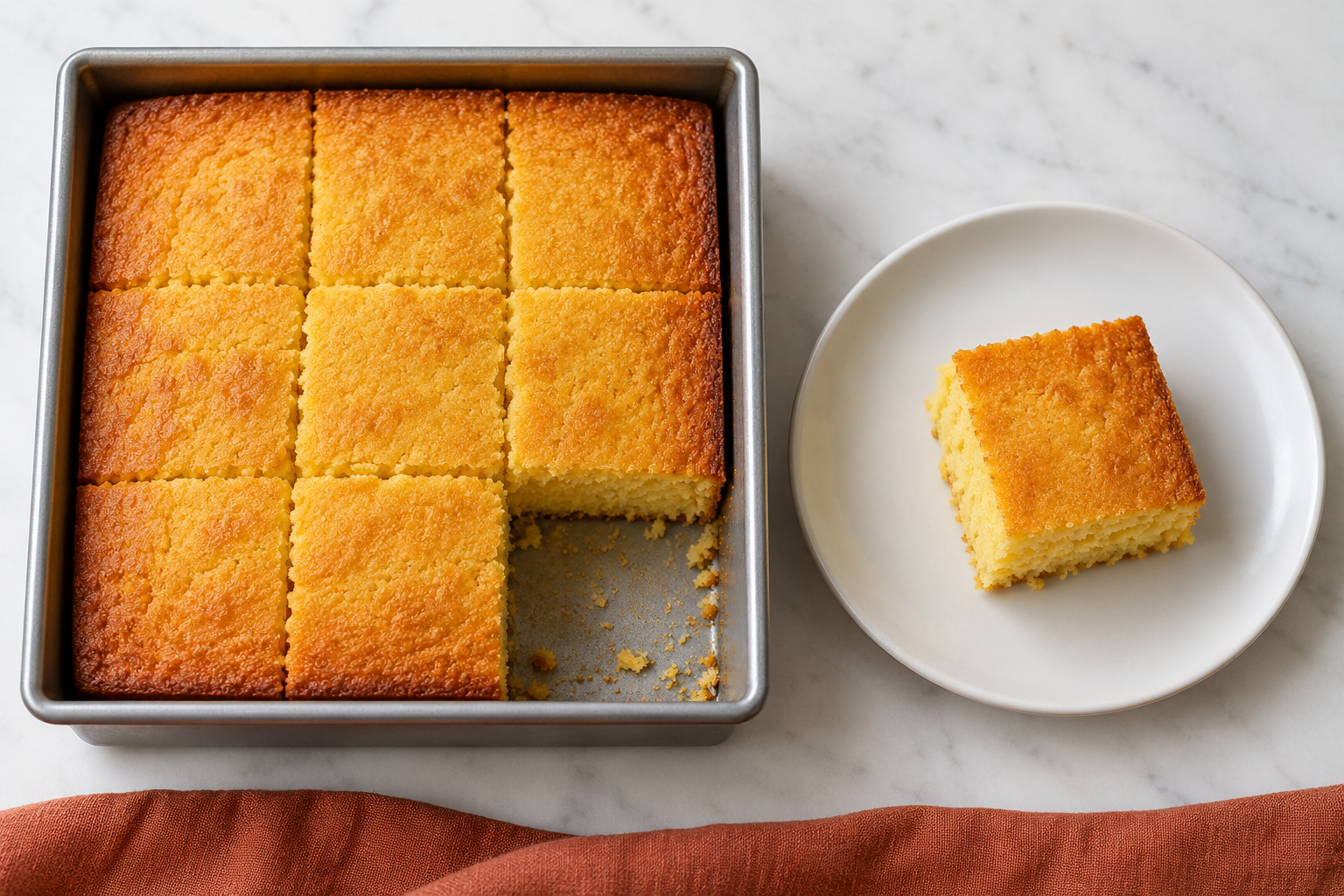
Choose cornbread when you want sweetness alongside a savory meal and prefer sliced bread to individual rolls. Fine cornmeal and all-purpose flour form the batter, while melted butter, brown sugar, and honey contribute richness and sweetness. Golden squares with their cut edges showing make that different role visible on the table.
Unlike the rolls, it starts with a mixed batter rather than a dough that needs rising. The wet and dry mixtures are combined before baking in a square pan, then the bread cools slightly before slicing. Serve the squares on a low platter so guests can select a piece; choose rolls instead if you want round portions without the brown-sugar-and-honey sweetness.
Recipe by Sally · Sally’s Baking. Get the full My Favorite Cornbread Recipe recipe ↗
3. Dinner Rolls for Soft Individual Bread Portions
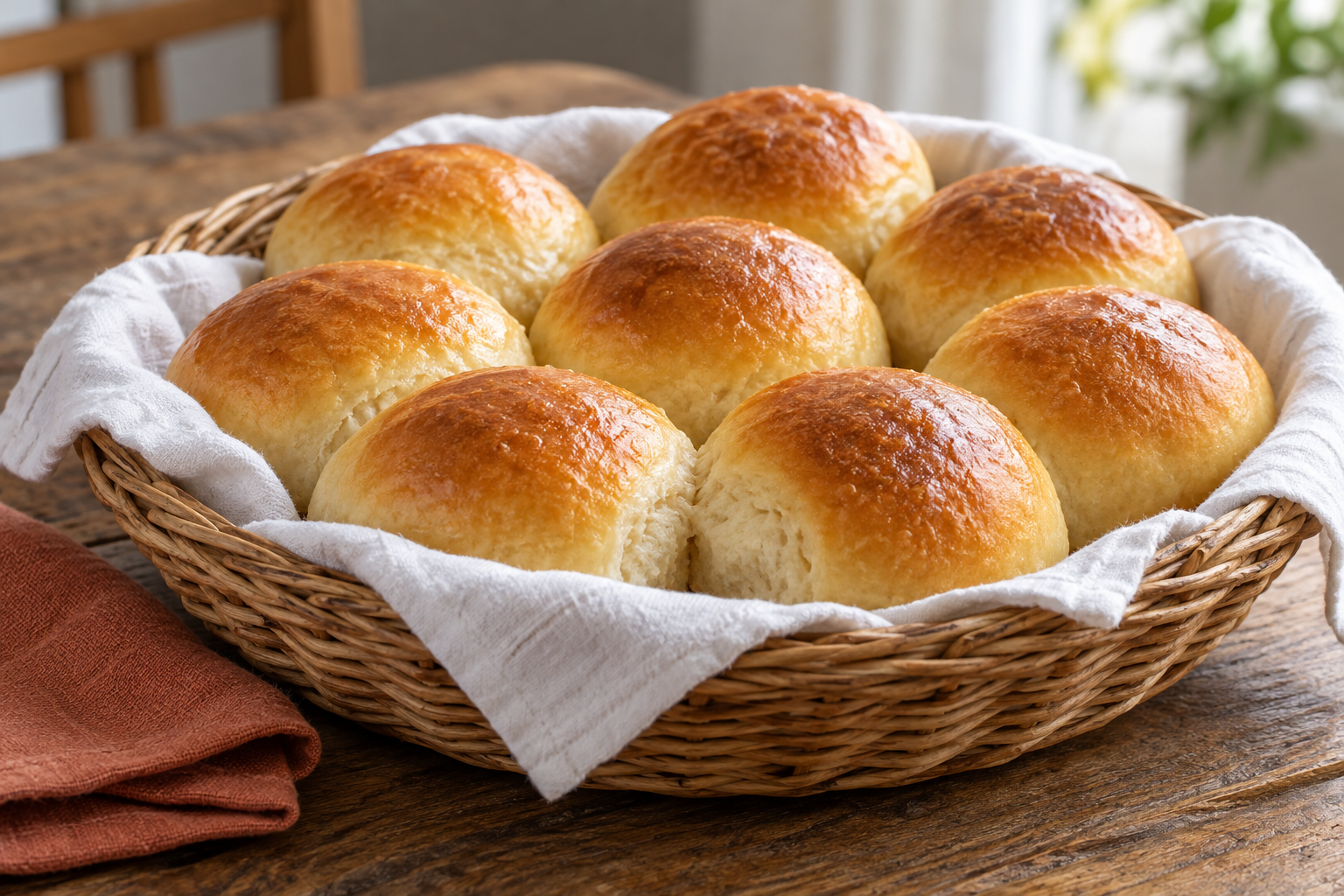
Choose dinner rolls when you want guests to take a soft, individual bread portion rather than a slice of sweet cornbread. The dough combines milk, water, butter, sugar, instant yeast, salt, and flour. Rounded tops and an optional melted-butter finish give these rolls a different presentation from cornbread’s golden squares and exposed crumb.
The recipe is called quick, but it still includes kneading, shaping, and two rises before baking. That makes it a choice for someone willing to handle dough and return to it between stages; cornbread suits a preference for mixing batter. Serve the warm rolls in a shallow, cloth-lined basket that keeps their round shapes visible and easy to select.
Recipe by MaryJane Robbins · King Arthur Baking. Get the full Big Batch Quick Dinner Rolls recipe ↗
Plan your cooking time
- Least hands-on time: the cornbread, because the batter needs no rising.
- Most timing to plan: the rolls, with two rises you need to return to.
- Most components: the casserole, with beans, onions and sauce made separately; check the original for which steps can be done in advance.
- Bread choice: cornbread and rolls do the same job on the table, so most menus need only one of them.