Compare cutouts, cinnamon-sugar rounds, oat shortbread and a simple peanut butter cookie from two original creators, then plan the tools and kinds of cookies you want to make.
 Concept image
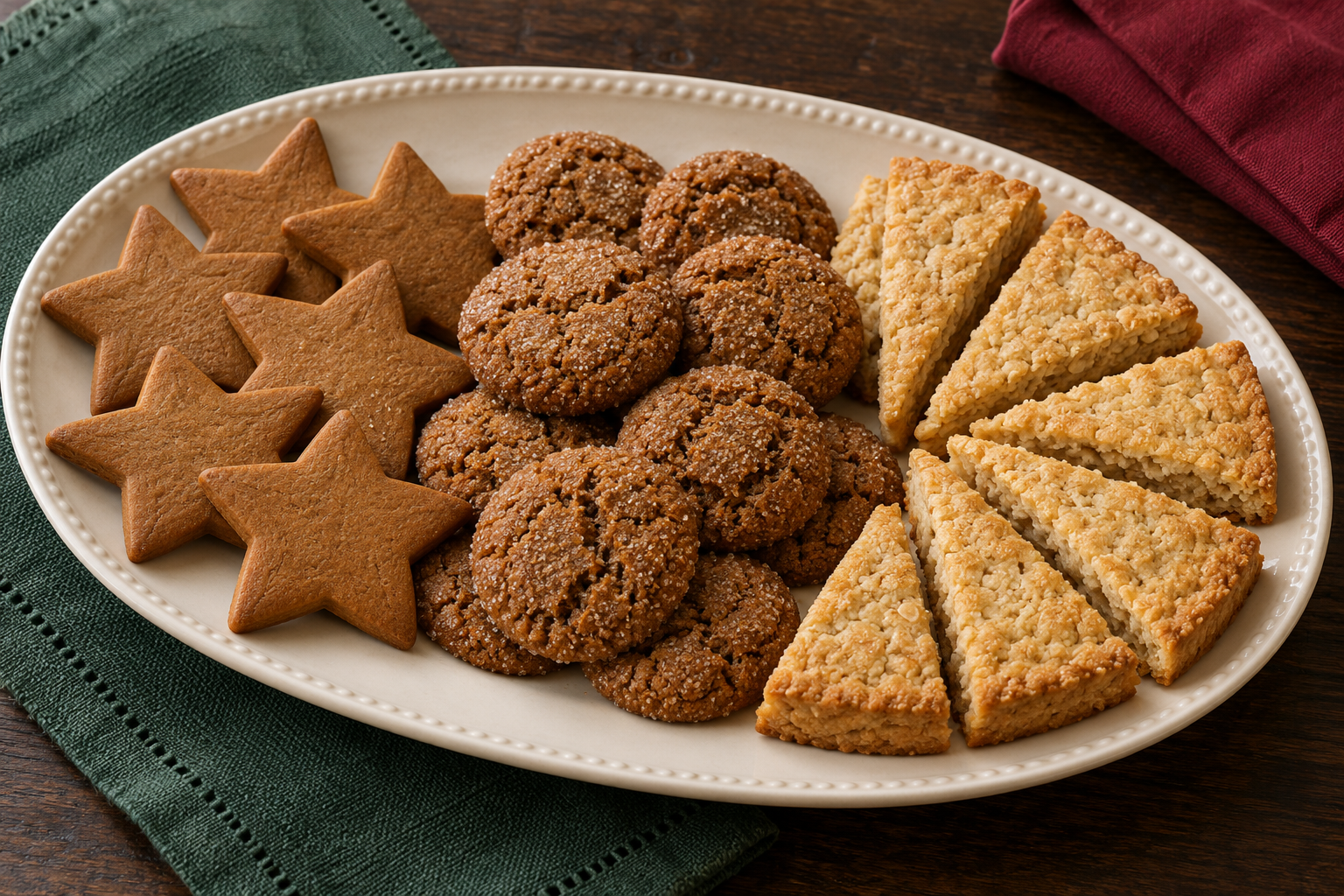
Choose gingerbread for rolling and cutting, gingersnaps for shaping dough balls, or oat shortbread for pressing into one pan. Together, their plain silhouettes, sugar-coated rounds and golden wedges give a Christmas cookie plate distinct shapes and surfaces.
Explore the ideas
Choose by the work you want to do
The first three recipes are by PJ Hamel at King Arthur Baking; the additional peanut butter cookies are by Yumna Jawad at Feel Good Foodie. We selected them for different shaping jobs, not a claim that one tastes best: rolling and cutting, rolling balls, or pressing into a pan. We have not baked them ourselves. Use the linked originals for complete quantities and instructions; the food pictures are illustrations.
| Recipe | Listed hands-on / total time | Listed yield | Main shaping tools |
|---|---|---|---|
| Gingerbread cutouts | 35 min / 1 hr 45 min | 36–42 cookies at 3 inches | Rolling pin and cookie cutters |
| Cinnamon-sugar gingersnaps | 12 min / 23 min | About 60 cookies | Scoop or spoon; shallow coating dish |
| Oat shortbread | 5 min / 40 min | 16 wedges | 8-inch round pan and knife; food processor easiest |
| Plain peanut butter cookies · Yumna Jawad | See the original recipe for the complete timing | See the original recipe for its batch yield | Bowl, scoop and fork; a different shaping method from cutouts or wedges |
Times and yields are the original publisher’s figures checked October 18, 2026, not our measured results. Allow for your oven’s tray capacity, cooling and other kitchen work. The gingersnap header’s 23 minutes, for example, should not be treated as a promise that every tray of a full batch will be ready to serve in that time.
1. Plain Gingerbread Cutouts
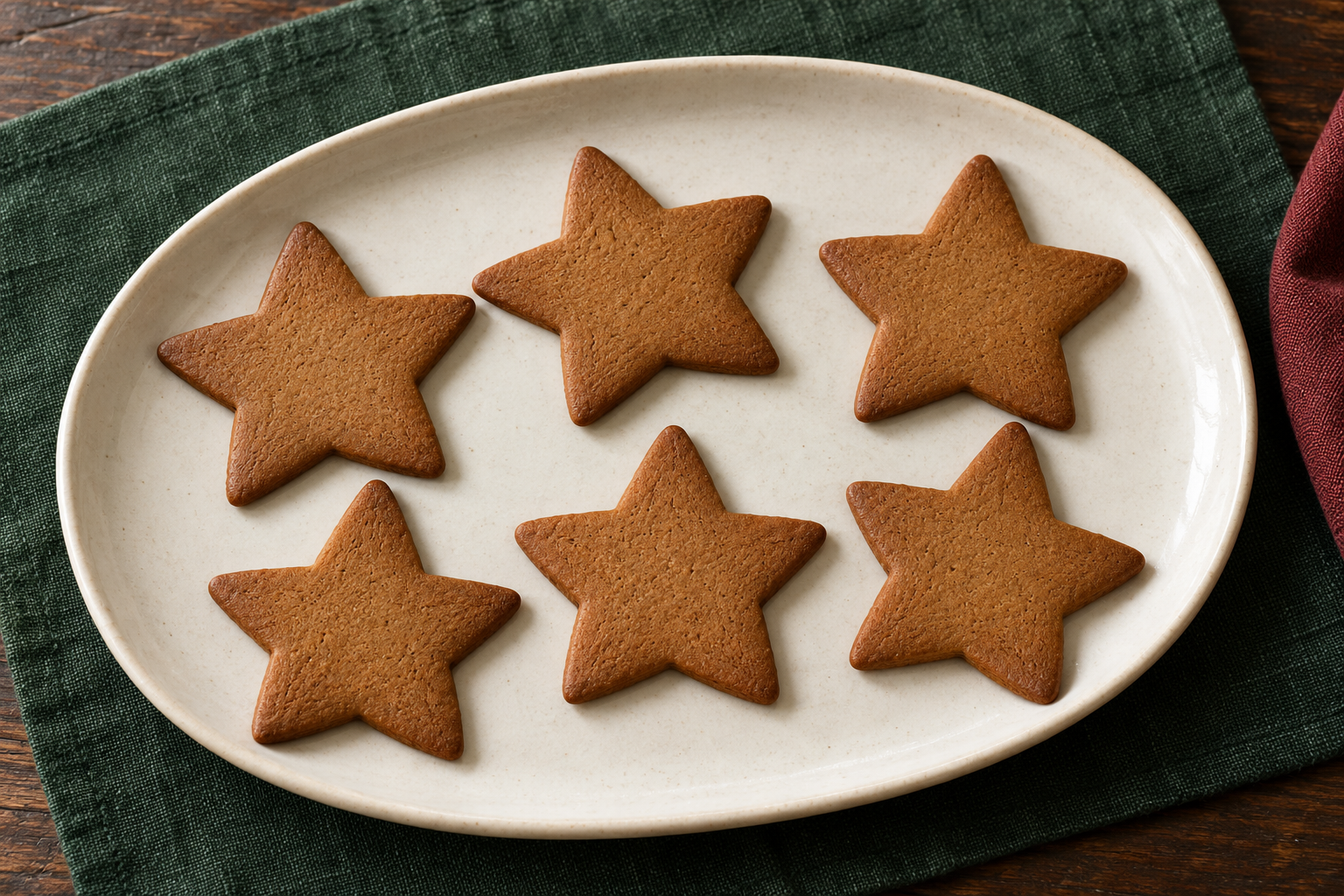
Choose gingerbread if rolling dough and cutting shapes is part of the holiday baking you enjoy. Butter, brown sugar and molasses make the base, with ginger, cinnamon and allspice or cloves supplying the spice. Chilling firms the initially sticky dough before rolling; gingerbread works well for someone willing to include that pause.
Thinner dough makes crisper gingerbread, so thickness is a texture choice as well as a shaping choice. Serve the baked cutouts plain, with a little space between them so their outlines remain visible. Beside round gingersnaps or a fan of shortbread wedges, the cut shapes supply a different silhouette without added decoration.
Planning trade-off: the original requires at least an hour of chilling before rolling. Choose this when the cut shapes are part of the occasion and you have room to roll dough. We are featuring the plain baked cookies only; this selection does not include icing, glaze or added decorations.
Recipe by PJ Hamel · King Arthur Baking. Get the full Gingerbread Cookies recipe ↗
2. Cinnamon-Sugar Gingersnaps
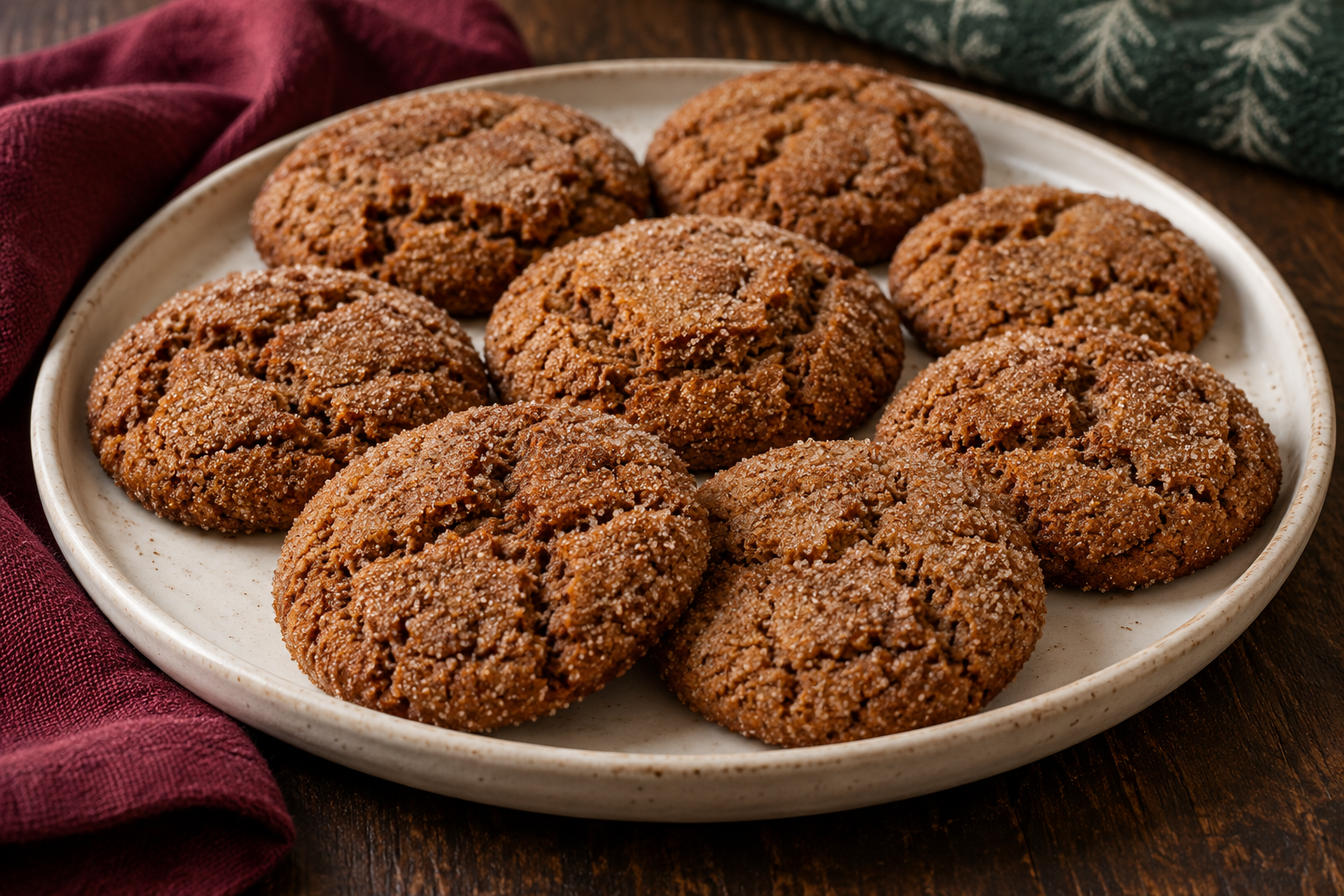
Choose gingersnaps if you would rather roll dough balls than use cutters. Their molasses dough uses vegetable shortening and an egg, with ginger, cloves and cinnamon for spice. A cinnamon-sugar coating gives the rounds a visibly different surface from plain gingerbread. The balls spread during baking, so they need space on the baking sheet.
Gingersnaps offer a choice between crisp edges with flexible centers and crunch all the way through. The original recipe distinguishes those results by baking time; choose the endpoint that suits your preferred bite. On the serving plate, try a loose cluster with the sugar-coated tops showing, rather than a tight stack that conceals their surface.
Planning trade-off: there is no cutter work in the linked method, but the batch still means shaping and coating many individual balls. The original offers different baking endpoints for a flexible center or an all-through crunch. Keep that choice in the recipe rather than treating every round as interchangeable.
Recipe by PJ Hamel · King Arthur Baking. Get the full Gingersnaps recipe ↗
3. Golden Oat Shortbread Wedges
Choose oat shortbread if you prefer pressing dough into one pan to shaping individual cookies. Butter, oats, flour and confectioners’ sugar make this the alternative to the two molasses-and-spice choices. The dough can be mixed in a food processor, then pressed into a round pan and scored into wedges before baking.
The shortbread bakes until firm and golden, and the scored wedges are cut through while it is still warm. For serving, fan the cooled wedges beside the darker cookies so their triangular shape and golden color stay visible. This arrangement suits a mixed plate; for a shortbread-only plate, repeat the fan around the center.
Planning trade-off: pressing one pan avoids shaping individual cookies. The original gives a longer oven slot than the other choices and a specific cutting sequence after baking. Read that sequence before the pan goes in, rather than discovering it while preparing the serving plate.
Recipe by PJ Hamel · King Arthur Baking. Get the full Classic Scottish Shortbread recipe ↗
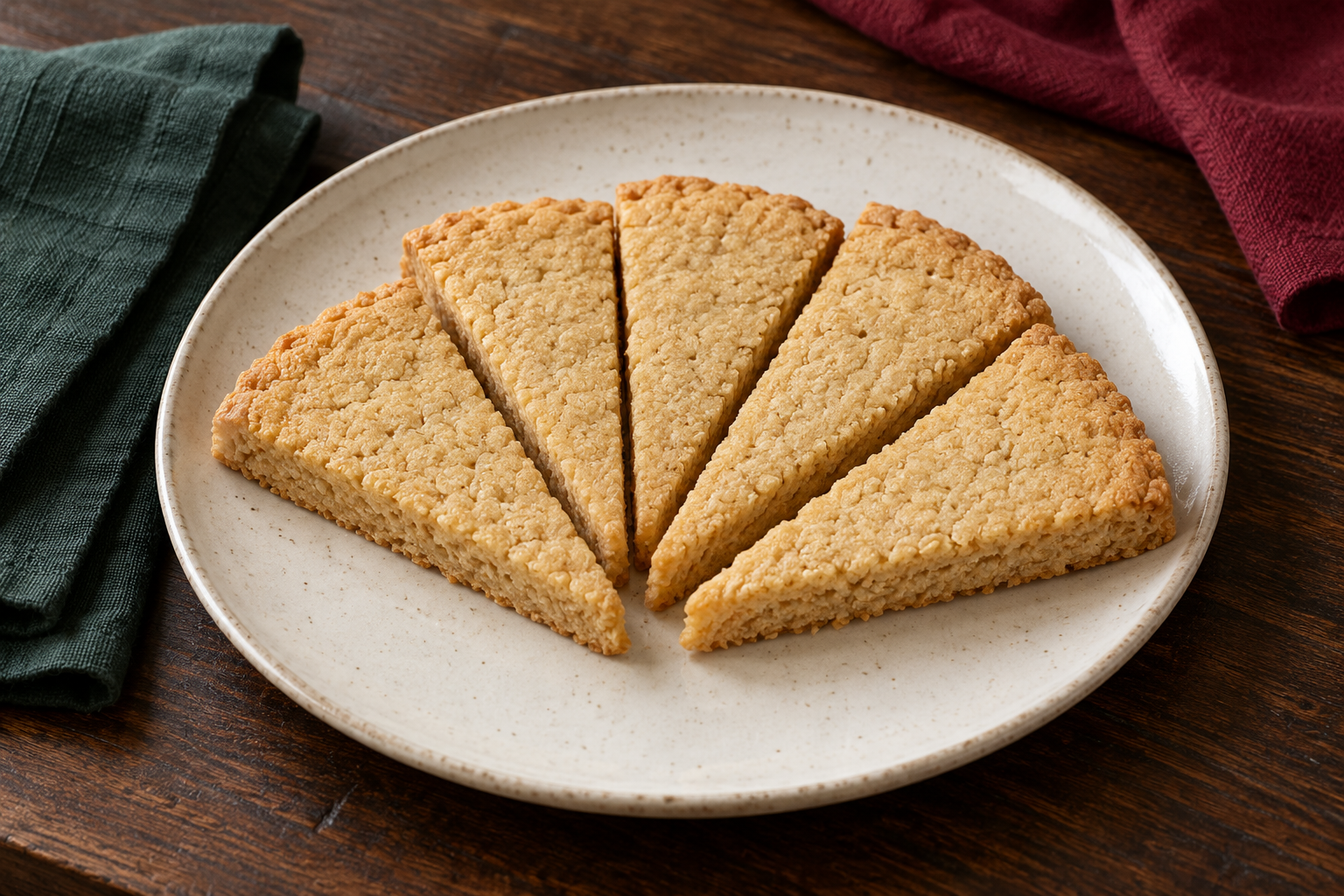
Choose the plate before baking full batches
Decide whether this is the only sweet, part of a larger dessert table or a take-home gift. That determines whether you need every shape and whether whole batches make sense. Three recipes are three choices, not an instruction to bake all three.
As a serving-planning example, 12 guests with one of each type means 12 cutouts, 12 rounds and 12 wedges: 36 pieces on the table. That is an allocation example, not a recommendation about how much anyone should eat. The original yields would produce roughly 112–118 pieces if you made all three full batches, so plan where the extras will go before you start.
For a smaller gathering, choose two shaping methods instead. Cutouts and wedges create different outlines; rounds and wedges avoid rolling out a sheet of dough. Let the occasion and the work you enjoy make the choice, rather than adding a third recipe only to fill a list.
Make a baking-session plan from the actual recipes
- Open the originals first. Check the ingredient lists, pan sizes and equipment you own. Make a shopping list from those quantities, not the illustrations or the short descriptions here.
- Mark the pauses. Put the gingerbread chill on your plan. Decide whether another task fits into that gap without claiming the whole three-recipe session will take the sum of the headline times.
- Plan the oven separately. Note each recipe’s temperature, the trays you can actually use and the shortbread pan. Do not assume the recipes can all share one oven setting.
- Leave a cooling area. Reserve clear space for the racks and the finished pieces before filling every surface with bowls or gift packaging.
- Choose a stopping point. If the cutouts are the main project, the pan-shaped option may supply enough contrast. Keep a two-recipe plate as a real option.
For advance preparation, follow each original’s storage guidance rather than applying one rule to all three. The shortbread source gives a specific wrapped-storage period; use that page for the detail. A gift date, travel plan and the chosen cookie need to fit together.
Arrange and label a mixed plate
Use three loose groups rather than piling the shapes into one mound. Turn the plain gingerbread outlines outward, show the sugar-coated round tops and fan the wedges where they can be lifted individually. This is our presentation suggestion; it is not a photograph of a plate we baked.
For gifts, put the cookie names and original recipe links on a small card so the recipient can check ingredients. Do not label a mixed plate allergen-free from its appearance. Check the complete originals and the packages you used, and agree any dietary requirements with the people you are baking for.
Your plan: guests ___; types chosen ___; pieces to serve ___; original batch yields ___; oven slots ___; cooling space ___; serving or gifting date ___. That short list turns an appealing cookie picture into a manageable baking project.
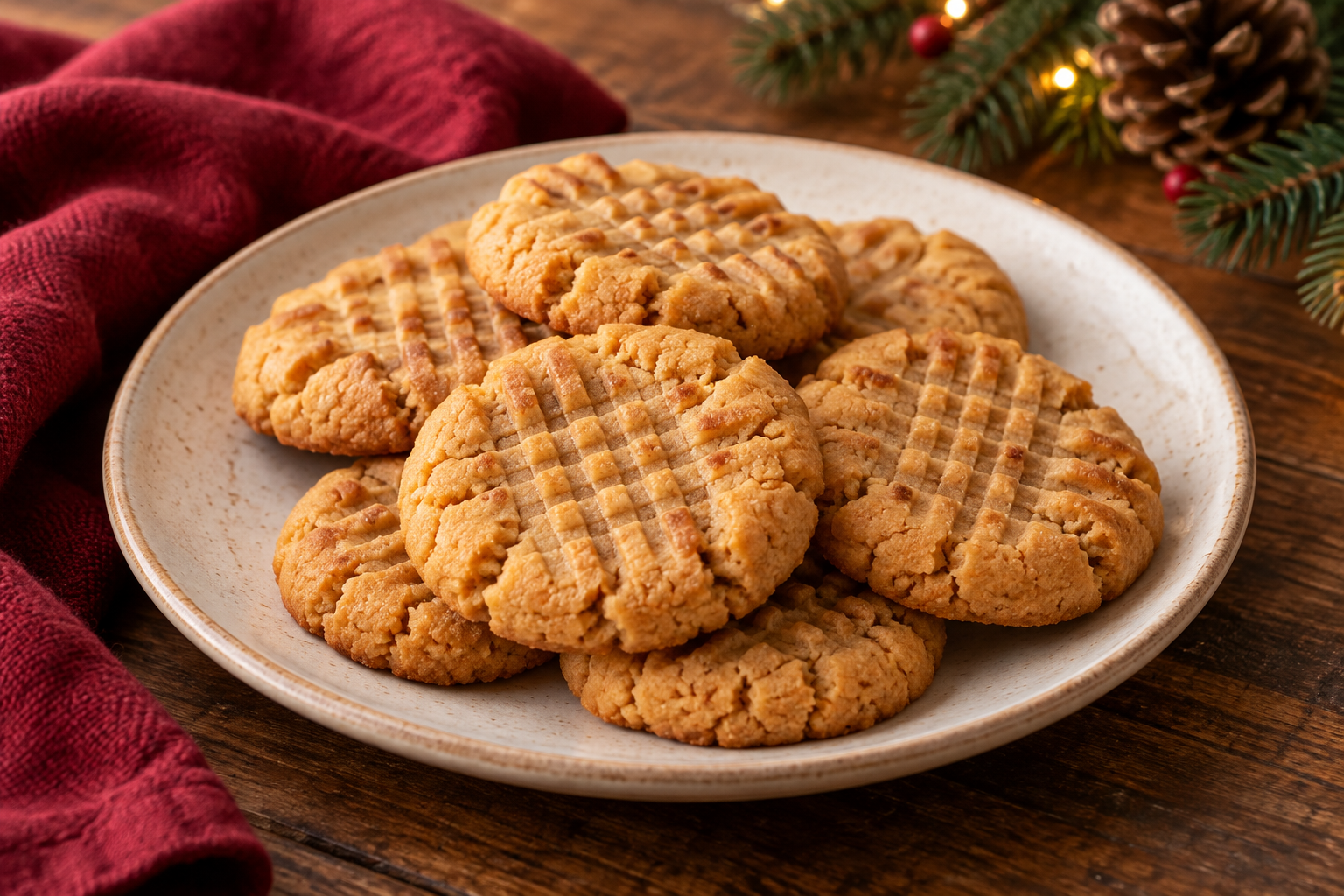
4. Plain fork-pressed peanut butter cookies
Recipe by Yumna Jawad · Feel Good Foodie. Get the original 3 Ingredient Peanut Butter Cookies recipe ↗
Yumna Jawad’s three-ingredient peanut butter cookies add a different method and ingredient base to the plate. Her original uses no-sugar-added creamy peanut butter, granulated sugar and an egg. The cookies are portioned, flattened and marked with a fork to create the familiar criss-cross surface. There is no icing or decorative topping in this original, so the illustration keeps the cookies plain.
This option belongs beside the cutouts, coated gingersnaps and pan-shaped shortbread as a different baking project. Pick the form of cookie you want to make before deciding that a Christmas plate must include elaborate decoration. Fork marks can supply the visible detail for this particular recipe. Follow the original for quantities, baking and cooling instructions; our comparison is not a replacement method.
The peanut and egg ingredients also make clear labeling useful on a mixed plate. Describe each recipe by its actual original ingredient list, and do not present a plain-looking cookie as suitable for every guest. If you are choosing a gift, include the creator’s recipe link so the recipient can read the complete details. We have not baked or tested any recipe in this selection.